"Modeste Mignon" by Honoré de Balzac, summary
 Automatic translate
The novel "Modeste Mignon" was written by the French writer Honoré de Balzac in 1844. This book is a psychological study on the nature of love’s illusions and their inevitable clash with the practicality of bourgeois life. It is part of the grand cycle "The Human Comedy," occupying a place in the section "Scenes from Private Life," alongside such works as "Eugénie Grandet," "Père Goriot," and "A Woman of Thirty."
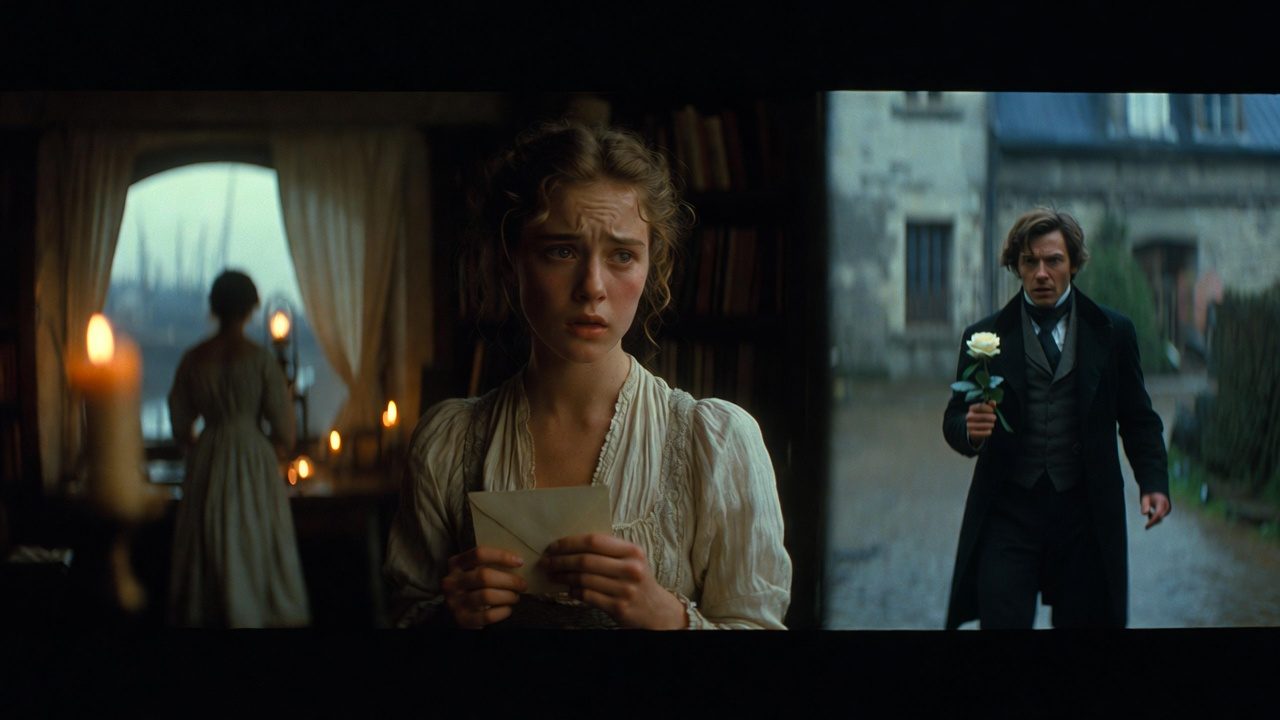
The background and life of the Mignon family
The action begins in the autumn of 1829 in the Le Havre suburb of Ingouville. The de Labastie family, a former French aristocrat, has suffered a series of terrible blows. The head of the family, Count Charles Mignon, a former colonel in Napoleon’s army, made a fortune as a merchant in Le Havre but lost his eldest daughter, Bettina-Caroline. The girl was seduced and abandoned by the gambler Georges d’Estourny, after which she died of grief, and her mother, Bettina Mignon, went blind from grief.
In 1826, a financial crisis severed Mignon’s bank’s trading links, leading it to bankruptcy. Wanting to cover his creditors and recoup his lost wealth, Charles Mignon sold his assets and sailed to the East. The Count entrusted the care of his blind wife and youngest daughter, Modeste, to his former cashier, Bernard-François Dumas, and the notary, Simon-Babylas Latournelle.
Dumais signed a twelve-year lease for a small cottage, "Chalet," with the estate’s new owner, Wilken. The loyal cashier swore to guard Modesta’s innocence with soldierly sternness, keeping loaded pistols and trained German shepherds at her bedside.
The Mignon family settled in "The Chalet." Twenty-year-old Modesta, overprotected by her mother, the Dumas, and the Latournelles, finds refuge from the provincial gloom by reading. The poetry of Byron, Goethe, and Schiller instills in her a passionate understanding of love. Dreaming of a brilliant life partner, Modesta decides to choose her own lover.
Mysterious correspondence and deception
Having spotted a portrait of the fashionable poet Melchior de Canalis in a bookseller’s window, Modesta sends him an anonymous letter signed "O. d’Est-M." The poet, living in Paris at the expense of his patron, the elderly Duchess de Chaulieu, treats the message with disdain. He passes the letter on to his secretary, Ernest de Labrière.
Ernest is a modest and honest young man, holding the position of rapporteur at the Supreme Court of Auditors. Touched by the stranger’s sincerity, he replies on behalf of Canalis, warning her against rash moves and comparing her impulses to Bettina von Arnim’s infatuation. A lively correspondence develops between Modeste and Ernest, mediated by their maid, Françoise Cochet.
Having secretly arrived in Le Havre, Ernest sees Modesta in the window of the Chalet and falls in love with her. He continues to write her heartfelt letters, full of profound thoughts. Modesta is convinced she has found her true ideal. She arranges a meeting with the poet at the church in Le Havre, asking him to come wearing a white rose in his buttonhole.
Ernest arrives at the temple with a flower. Modesta sees it and is convinced she’s met her chosen one. Unaware of the deception, the girl sends a letter of confession, casually mentioning her supposed million-dollar dowry.
The return of the father and the revelation of deception
Meanwhile, Charles Mignon returns from Asia. He managed to earn around seven million francs trading in indigo and opium in China. The colonel arrives in Marseille on his own ship, the "Mignon," and announces his victory to the cashier, Dumais.
Dumas rushes to Paris, eager to find the poet Canalis and save Modesta from making a rash move. Visiting the poet’s luxurious apartment, Dumas is confronted with his arrogance: Canalis declares he’s never heard the name Modesta Mignon before.
Meanwhile, Ernest de Labrière comes to Charles Mignon at the hotel and confesses everything. He tells him about their correspondence and declares that he loves Modeste without any consideration, even if she has no money. The colonel decides to test him: he invites Ernest and Canalis to come to Le Havre so that the woman can make her own choice.
In Ingouville, Modesta accidentally mixes up the envelopes and gives Dumas a letter to Canalis instead of one to her father. Her father reveals the harsh truth to his daughter: the young man from the church is not the poet Canalis, but his secretary, Ernest de Labrière. The proud Modesta feels deeply insulted and experiences the collapse of her romantic illusions.
The Test of the Suitors in Inguvil
Two suitors arrive in Ingouville: Melchior de Canalis, who, having learned of Mignon’s enormous wealth, dreams of marrying Modeste, and Ernest de Labrière. They are soon joined by a third suitor — the impoverished aristocrat Duke d’Hérouville, to whom his aunt and sister are seeking to wed the girl.
The notary’s senior clerk, the hunchbacked Jean Butcha, intervenes in the events. Unrequitedly in love with Modesta, he decides to protect her from greedy suitors. Butcha gets Canalis’s valet, Germain, drunk and spreads rumors that Charles Mignon is ruined and his ship belongs to Chinese merchants.
Canalis immediately changes his tone. He tells the colonel that he cannot marry without the guarantee of a million-dollar dowry. Modesta notices the poet’s mercantilism and the duke’s arrogance.
On the contrary, Ernest de Labrière displays sincere and selfless devotion. To please Modeste, he secretly leaves for Paris and spends his entire savings — seven thousand francs — on a precious whip crafted by the master craftsman Stidman, complete with a ruby and a chased handle, which he gives to the girl through Butsha.
Hunting in Rosemary and Conflict Resolution
The struggle for the heiress’s hand moves to the Château de Rosembray, where the Duke of Verneuil is hosting a lavish hunt in honor of the princess. The Duchess de Chaulieu also arrives. The poet Canalis finds himself in a humiliating position: he is torn between his haughty mistress and Modesta, finally exposing his vain and petty nature.
Modesta makes a decisive declaration to the suitors. She rejects Canalis and nobly refuses the Duke of Herouville, promising him her father’s assistance in the financial project to drain the Herouville marshes.
The girl gives her heart to Ernest de Labrière, having learned of his noble deeds and sincere love. Modesta hands him a precious whip, asks her father to buy Ernest’s favorite painting by Van Ostade, and begs him to bless their union.
The renowned surgeon Desplain successfully operates on Ms. Mignon, restoring her sight. The happy mother blesses her daughter’s choice.
Modesta marries Ernest. The King signs the marriage contract and grants Labrière the title of Viscount de Labastiè-Labrière with the right to inherit the Mignon estate. Modesta finds true family happiness, based on mutual respect and sincere feelings.
You cannot comment Why?