"The Provincial Muse" by Honoré de Balzac, summary
 Automatic translate
Honoré de Balzac’s novel, written in 1843, is an ironic and dramatic exploration of provincial mores, vanity, and the futility of adultery. It centers on a gifted woman who seeks relief from the spiritual emptiness of the provinces in the arms of a Parisian literary figure, only to encounter the egotism and underbelly of the capital’s bohemian life. The work is part of the famous cycle "The Human Comedy," forming part of the section "Scenes of Provincial Life" (the etiquette group "Parisians in the Provinces"), where it occupies the seventh place. Along with this novel, this section includes such famous works by the writer as "Eugénie Grandet," "Lost Illusions," and "The Old Maid."
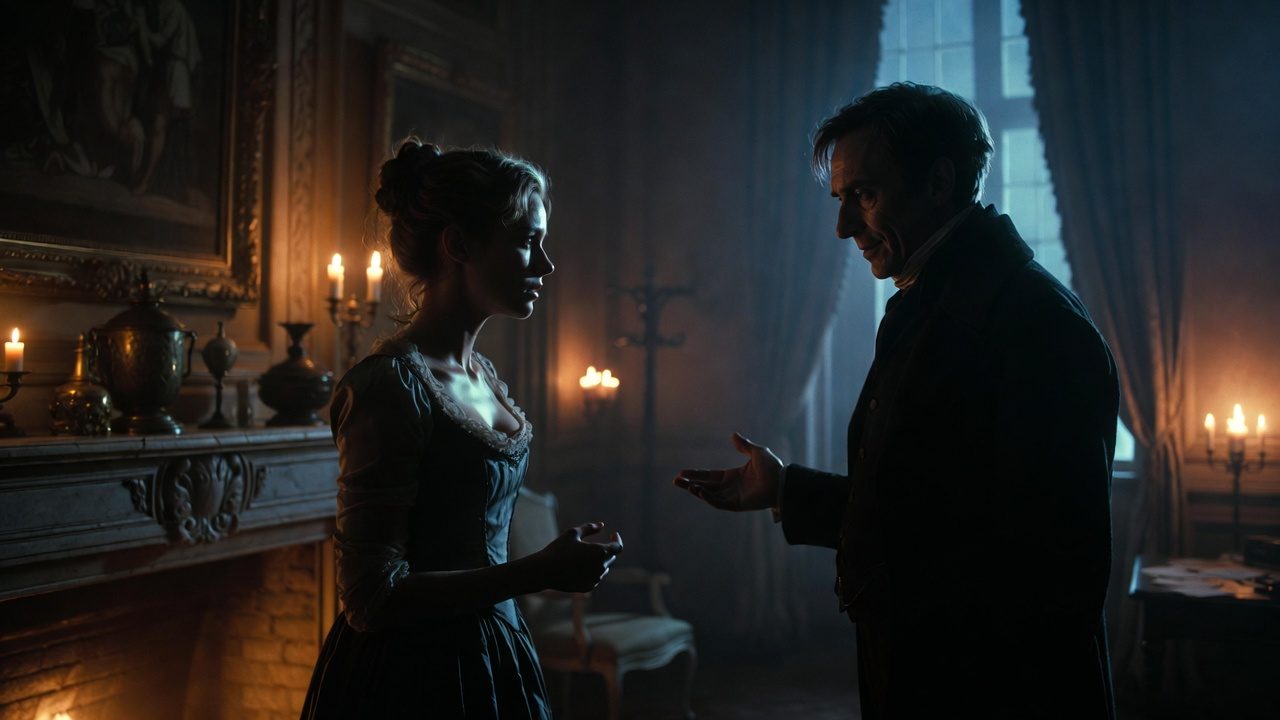
The Provincial Life of Dina de la Baudraye
The action begins in Sancerre, a once glorious historic town now an isolated province. The story centers on Dinah Piedefer, the daughter of an impoverished Calvinist. At seventeen, driven by ambition, she converts to Catholicism under the patronage of the Archbishop of Bourges. In 1823, she is married to the forty-four-year-old Baron Polydore de la Baudraye, a sickly, short, and extremely stingy man. Having betrothed the beautiful and educated girl, the baron pursues personal gain: thanks to the cardinal’s connections, he repays his father’s debts, receives rank, and in 1827 purchases the Château d’Anzy, establishing an entailed estate in 1829.
Dinah quickly realizes that her husband views her as nothing more than a tool and severely limits her income. Seeking relief from boredom, she transforms her home into a cultural center, amassing Renaissance collections and earning the ironic nickname "Saint-Satur’s Sappho." The local ladies begin to hate her for her intelligence, but the men openly worship her. Prosecutor de Clagny, Sous-Prefect de Chargeboeuf, and Tax Inspector Gravier are prominent among her regular guests. Prosecutor de Clagny falls deeply in love with Dinah, unfailingly fulfilling her every whim.
Out of despair and melancholy, Dina begins writing poetry under the Spanish pseudonym Juan Díaz. Her poem "The Sevillian Paquita," imbued with dark passion and disillusionment, causes a stir in the department. Prosecutor de Clagny publishes the works of "Juan Díaz" as a separate book. Baron de la Baudraye, knowing his wife’s secret, harbors a deep, icy hatred against her, as society begins to pity him.
Arrival of Parisian celebrities
By 1836, Dinah had become completely disillusioned with her provincial admirers. Dreaming of escaping to Paris, she decided to nominate one of the capital’s celebrities as a candidate for the Sancerre seat. Two natives of the area — the renowned physician Horace Bianchon and the feuilletonist Étienne Lousteau — arrived at the Château d’Anzy.
The arrival of the Parisians turns into a test for the provincial muse. Étienne Lousteau is a cynical, prematurely aged thirty-seven-year-old journalist, worn out by poverty and debauchery. Seeing Dinah’s pretentiousness, he and Bianchon decide to play a joke on her. That evening at the Château d’Anzy, the guests tell dark tales of wives’ infidelities and husbands’ harsh revenge. Through wax seals on the doors, the Parisians are convinced of Dinah’s physical virginity.
However, Lousteau is determined to win the provincial girl’s unspent heart. Taking advantage of her thirst for the glitter of the capital, Étienne unleashes his arsenal of seduction, writing poetry in her album and entertaining the crowd by reading excerpts from a pulp novel. The next day, during a trip to Cosne, Dr. Bianchon advises Dinah to have an affair with Lousteau for the sake of her health and beauty. To further compromise Dinah, Lousteau deftly wrinkles her muslin dress in the carriage, forcing her to change, and cunningly sends away her young admirer, Gatien Boirouge. Dinah succumbs to her budding feelings, and a passionate affair blossoms between them, lasting throughout October at the Château de l’Anzy.
Escape to Paris and the collapse of illusions
In November 1836, Lousteau returned to his usual carefree life in Paris. He quickly forgot Dinah, threw her passionate letters into the fireplace, and prepared for a profitable marriage with Félicie Cardot, the daughter of a wealthy notary, arranged by the courtesan Madame Schontz.
In January 1837, a pregnant Dinah unexpectedly arrives at Lousteau’s apartment on Rue des Martyrs. Her appearance at the door, in the presence of her future mother-in-law, shatters Étienne’s disastrous marriage. Realizing the marriage is off, Lousteau decides to keep Dinah, hoping for the quick death of her elderly husband and the arrival of his fortune.
In July 1837, Dinah gave birth to a son, Polydore. The devoted prosecutor de Clagny, along with Dinah’s mother, Madame Piedefer, became godfather. The prosecutor saved Dinah’s reputation: he destroyed the scandalous birth notices, printed by Lousteau under his own name, and replaced them with official notifications in the name of Baron de la Baudraye. The child was officially registered as the baron’s legitimate son.
Dina takes on all the responsibilities of Lousteau’s household. Having discovered his laziness and inability to work systematically, she becomes his secret collaborator: she sketches out plots, writes articles and entire chapters for his novels, restoring the magazine’s former popularity. However, Lousteau quickly becomes accustomed to his lover’s sacrifices. He begins to treat her coldly, is embarrassed by her modest, altered dresses, conceals his income, and openly cheats on her with the actress Fanny Beaupré. Dina witnesses her idol’s selfishness and downfall, but continues to forgive him, transforming her passion into maternal care.
The Finale and Return to Society
In 1840, Baron de la Baudraye arrived in Paris. Taking advantage of Dinah’s uncle’s death in New York, he obtained her power of attorney to handle the inheritance. The stingy old man turned out to be a shrewd, calculating businessman: he used the proceeds to buy up government securities and extensively improve the Anzy estate, increasing his income to one hundred and forty thousand francs a year.
By 1842, Baron de la Baudraye had received the title of Count, became a Peer of France, and a Commander of the Legion of Honor. Desiring to establish a prestigious salon in the capital, he offered Dinah a settlement through the prosecutor de Clagny: an annual salary of forty-eight thousand francs and a luxurious mansion on the Rue des Arcades in exchange for his return to society and the transfer of custody of his children to their father upon their six-year-old age.
Prosecutor de Clagny opens Dinah’s eyes to Lousteau’s infidelities. Realizing that her sacrifices are pointless and the journalist sees her as nothing but a burden, Dinah accepts her husband’s proposal. In May 1842, she pays all of Étienne’s debts, invites him to a farewell dinner at the Rocher de Cancale restaurant, and announces their final separation. Étienne attempts to reproach her, citing Benjamin Constant’s novel Adolphe, but Dinah remains adamant.
Dinah moved into the de la Baudraye mansion, reestablished her position in high society, and organized a brilliant salon. In the summer of 1843, the Countess de la Baudraye and her family returned to Sancerre, having found peace in motherhood and social success.
You cannot comment Why?