"Open Book" by Veniamin Kaverin, summary
 Automatic translate
A novel by Soviet writer Veniamin Kaverin, completed in 1956. The plot is based on the true biography of Zinaida Yermolyeva, the creator of Russian penicillin. With documentary accuracy, the author recreates the long history of Soviet microbiologists’ struggle to develop antibiotics and establish new scientific ideas. The work describes the lives of scientists under extremely difficult historical circumstances.
The work has been adapted for the screen twice. A full-length feature film was released in 1973, and a television series was produced in 1977. Both adaptations were warmly received by audiences.
Childhood in Lopakhino
Tanya Vlasenkova lives with her ailing mother in the poor village of Zamość and works as a dishwasher in a tavern. Her father, Pyotr Nikolaevich, has tried many professions and long ago left for Kamchatka. One winter evening, Tanya accidentally witnesses a duel between two high school students — the tall Mitya Lvov and the portly Raevsky. The students are shooting in a vacant lot. Mitya deliberately shoots to the side and seriously wounds Tanya in the chest.
The girl is brought to the Lvovs’ house, which houses a "Piano and Upright Piano Rental Depot." Agnia Petrovna, Mitya’s mother, manages the establishment. There, Tanya meets Mitya and his younger brother, Andrei, who meticulously keeps a "table of lies," recording the motives behind people’s actions. The girl slowly recovers from her serious injury, surrounded by the care of her new acquaintances.
An elderly doctor, Pavel Petrovich Lebedev, lives in the house. He is Agnia Petrovna’s brother, and he long ago abandoned medical practice due to a severe leg ailment. He spends his days writing a large scientific paper and conducting strange experiments. The old man becomes attached to the skinny Tanya, telling her about germs and the fabulous night watchman Leeuwenhoek. Pavel Petrovich tutors the girl in school subjects. This acquaintance forever determines the girl’s future and instills in her a passion for medicine. Tanya promises the old man to study hard.
Youth and first losses
Tanya returns home. Her mother earns a living by sewing and telling fortunes. Several years pass. Tanya grows up, actively participates in Komsomol activities, and becomes close friends with her classmates Volodya Lukashevich, Nina Bashmakova, and Gury Popov. She is secretly in love with Mitya. Andrei sincerely confesses his love to Tanya, but she is not yet able to reciprocate. She believes her feelings for Mitya are stronger.
Mitya is expelled from school and given a black mark for political unreliability. He soon becomes passionately infatuated with fellow student Glasha Rybakova. Suddenly, she elopes with the wealthy Raevsky, but returns to town a year later. Tanya votes against Glasha at the school council, depriving her of the opportunity to teach geography due to her meager knowledge. Mitya is outraged by Tanya’s actions. Soon, Tanya’s mother dies suddenly of heart disease. Mitya tries in vain to save her. Left alone, Tanya decides to leave Lopakhino.
Choosing a profession and starting work
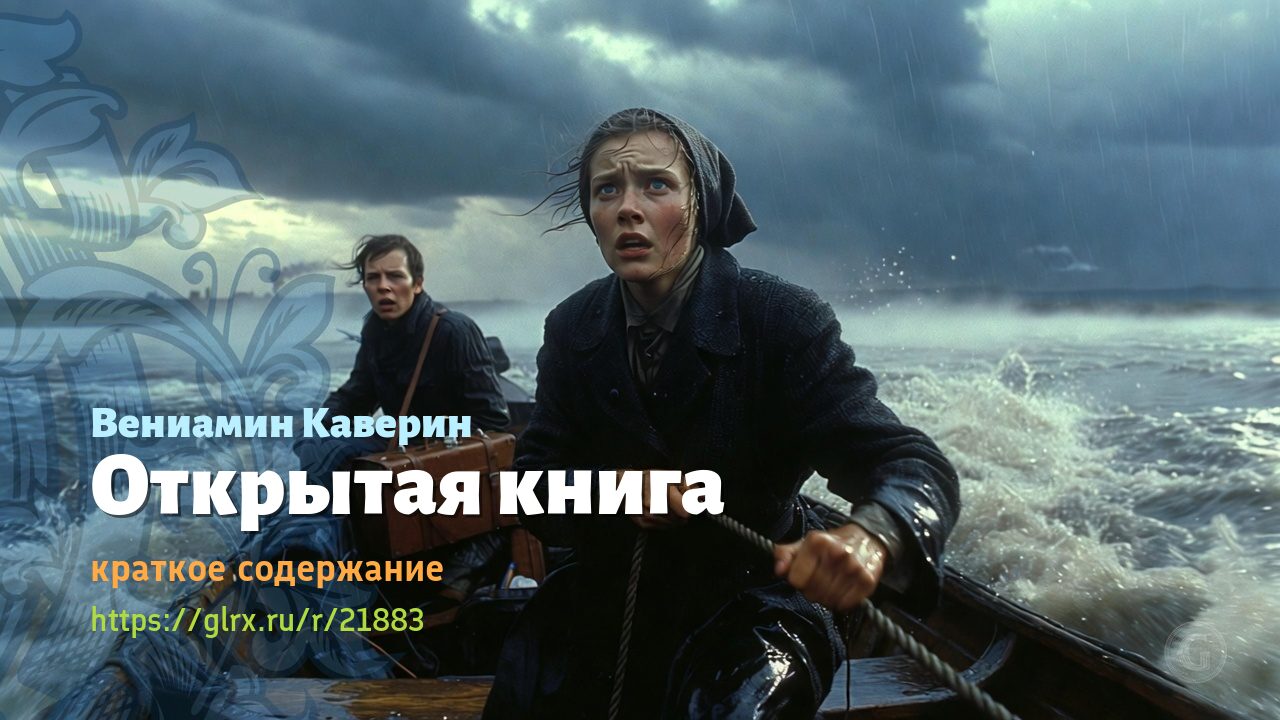
Tanya goes to Petrograd. Dreaming of a career as a film actress, she applies to the Institute of Screen Art. During her exams, a famous director categorically advises her to choose a different specialty. Tanya heeds this advice and enrolls in medical school. Professor Nikolai Vasilyevich Zaozersky finally captivates her with microbiology. During her student internship, Tanya travels to the remote Anzersky Posad in the north to fight a diphtheria epidemic. To deliver the vaccine on time, she has to cross a turbulent river by boat.
There she meets Andrei Lvov again. He works as a local doctor and lives in a converted bathhouse. The young couple struggle together. Andrei contracts a severe case of relapsing fever, nearly dying. Tanya faithfully nurses him back to health. The young couple grow closer, and Tanya reciprocates Andrei’s feelings. They soon register their marriage in Salsk.
After graduating, Tanya worked on a farm at Zernosovkhoz-5. There, she successfully eliminated a fake cholera outbreak involving mechanic Borodulin, who had simply been poisoned by mushrooms. She discovered luminescent vibrios in laboratory samples. Later, the experienced Dr. Drozdov came to her aid. During a business trip to Astrakhan, she and her friend Lena Bystrova defeated the veteran foreman Zimin in a dispute over preserving granular caviar. Vlasenkova successfully used an extract of lysozyme, a natural antibacterial enzyme, to extend the shelf life of the product.
Scientific struggle in Moscow
Tanya moves to Moscow with Andrey, to an apartment on Serebryany Lane. They have a son, Pavlik. Vlasenkova takes a job at the Institute of Microbial Biochemistry, a prestigious institution headed by Professor Valentin Sergeevich Kramov. Glasha Rybakova becomes Kramov’s wife, enjoying her husband’s affluent lifestyle and position. Tanya diligently studies the antimicrobial properties of green mold, developing the ideas of the old Dr. Lebedev. Kramov obstructs her laboratory in every way, pursuing his own interests and terrified of competition. His supporters deliberately undermine the dissertation defense of the talented scientist Viktor Merzlyakov, Tatyana’s student.
Tanya learns that the late Lebedev’s manuscript has been stolen. Raevsky had fraudulently purchased it from Tanya’s father, who had just arrived in Moscow, and handed it over to Kramov. The director of the institute concealed the valuable scientific work. Glafira had previously sent the old man to a nursing home to take over his room, and he died alone. However, Glasha’s life becomes unbearable under the oppression of her tyrannical husband. She commits suicide by throwing herself down a flight of stairs. Before her death, she manages to visit Tanya and gives her the drafts of a slanderous denunciation. The authors of the papers are Skrypachenko and other supporters of Kramov. The denunciation is directed against Andrei Lvov, who successfully runs the Institute of Prevention. Andrei is arrested on false charges.
Creation of the drug
The war begins. Tanya oversees anti-epidemic efforts in Stalingrad and other frontline cities. She miraculously survives the collapse of a bombed-out building. In the hospital, she shares a ward with surgeon Elizaveta Sergeyevna Gordeeva and learns that she was Mitya Lvov’s second great love.
During the evacuation and upon her return to Moscow, Vlasenkova continued to work on mold. She and chemist Ivan Kolomnin succeeded in isolating the medicinal drug crustosin. The medicine saved seriously wounded soldiers from sepsis, including Tanya’s longtime friend, naval officer Volodya Lukashevich, who was awarded the title Hero of the Soviet Union. Tatyana obtained official approval and organized mass production of the drug at a new plant.
Kramov supports clinical trials of British penicillin. British scientist Norcross brings a sample to Moscow. Tatyana agrees to a comparative trial of the two drugs at the hospital. The trial proves the superiority of the domestically produced Crustozin. Vlasenkova’s penicillin treats patients with doses ten times lower than its British counterpart.
Restoring justice
Tatyana persistently fights for her husband’s release. She has been proving his innocence for years. Vlasenkova sends a letter to the Prosecutor General, supported by official archival documents. She exposes the slander orchestrated by Skrypachenko and Kramov. Her efforts are crowned with success. Andrei is released and returns home.
The Lvov brothers reconcile after years of estrangement. During the war, Mitya was captured by the Germans, tortured, disguised as a beggar, and managed to get word to his family. Now, Mitya, who has developed a viral theory of cancer’s origins, convinces Andrey to join his research. They begin working together, putting old disputes behind them. Mitya is reunited with his love, the surgeon Elizaveta Sergeyevna.
The novel ends on New Year’s Eve, 1956. Tanya is surrounded by loved ones in her Moscow apartment. Among the guests are Pyotr Rubakin, Lena Bystrova, Viktor Merzlyakov, and Ivan Kolomnin. She reminisces about the journey she’s taken and mentally reaches out to old friends who gave their lives for the good of science.
You cannot comment Why?