Charles Bukowski’s "Factotum" Summary
 Automatic translate
Published in 1975, this novel chronicles the author’s alter ego, Henry Chinaski,’s wanderings across the United States during World War II and the immediate postwar years. Declared unfit for military service, the hero survives on odd jobs, sleeps in cheap rooming houses, drinks constantly, and sends handwritten short stories to literary magazines. In 2005, the book was adapted into a film by Norwegian director Bent Hamer, starring Matt Dillon. This work is the second installment in the autobiographical Henry Chinaski series, which also includes Post Office (1971), The Women (1978), Ham on Rye (1982), and Hollywood (1989).
Road through the southern states
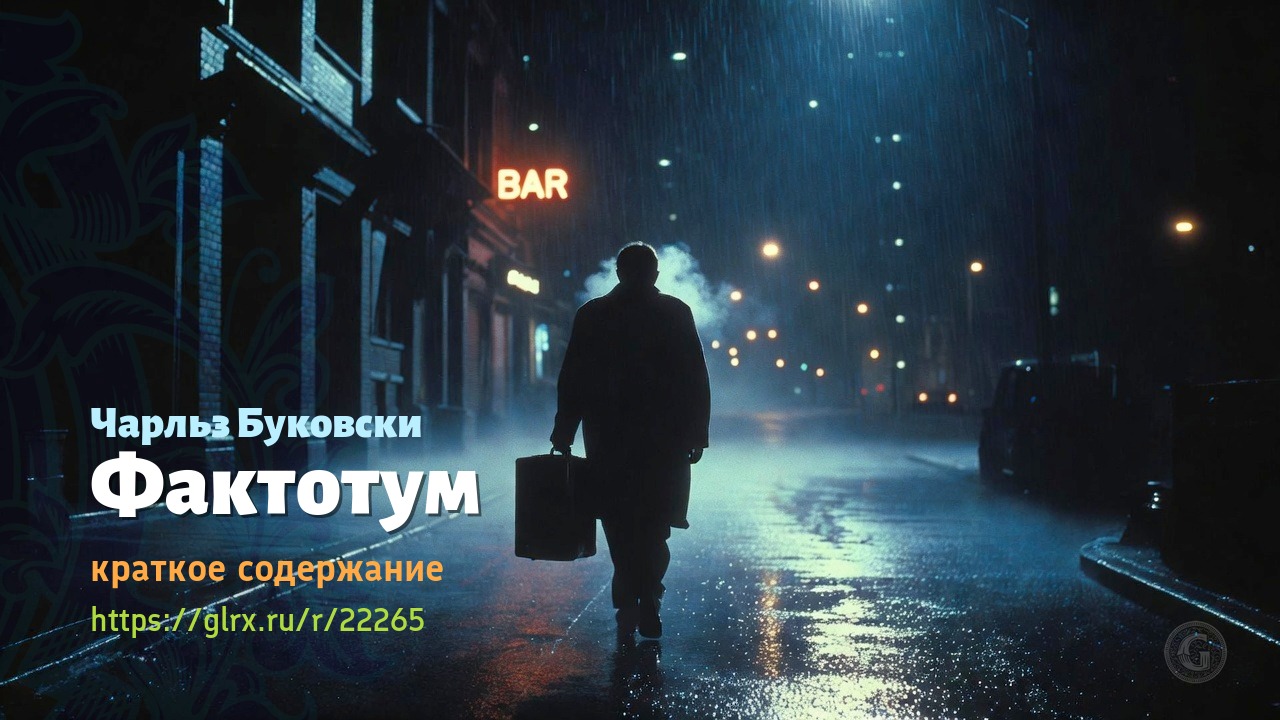
Henry Chinaski arrives by bus in rainy New Orleans with a tattered cardboard suitcase stained black with shoe polish. Taking up residence in a cheap room across from a bar, he scrimps, eats once a day, and searches unsuccessfully for work. Heathercliff’s office hires him as a magazine packer, but he quits after a few days for refusing a raise. The local newspaper’s typesetting department, led by the weary Mr. Belger, doesn’t keep the drifter for long either: his overweight partner drives Henry out with frequent trips to a nearby five-cent saloon.
A train carries a group of seasonal workers through Texas. During an overnight stop in El Paso, Chinaski gives his hotel room ticket to a local beggar and falls asleep on a park bench next to a pond where a drunken sailor is unsuccessfully wrestling a real crocodile.
Returning to the parental home
Los Angeles greets him with the familiar domestic sultriness. His father immediately sends his son a bill for rent, board, and laundry. Henry spends his days in the empty house, listening to the radio, watching his neighbor on the porch, and in no hurry to go to the stock exchange.
A drinking binge ends with a late-night arrest in a locked bar and a return home in a patrol car. The father, enraged, tries to shove his drunken son’s face into the stained Persian rug, but a well-aimed blow knocks him onto the sofa, and the enraged mother leaves deep, bloody scratches on Chinaski’s cheeks.
The colonial-style steps of a morgue become a sleeping arrangement after a drinking session with an old friend, Timmy. The Culver City court imposes a thirty-dollar fine for obstructing traffic. The father, in tears, pays the ransom and immediately adds the amount to the debt.
After moving out of his parents’ apartment on Flower Street, the young man gets a job at an auto parts warehouse. His neighbor, Marta, a heavyset woman with gnarled veins on her legs, bursts into the room with a bottle of wine, starts a wild erotic dance, and furiously torments him until dawn to the music of Mahler.
Night workshops of eastern cities
New York City stuns with the buzzing crowds around Times Square. A room on Third Avenue overlooks the elevated railway: rattling trains repeatedly illuminate the walls with flashes of hellish light. A worn blue suit bought for seven dollars from Herman the Tailor bursts at the seams on the very first night.
Subway service turns into a nightmare. His elderly partners deftly tear down old posters with can openers, while Henry freezes twelve meters above a deep subway pit and, terrified, steps over a golden contact rail, fleeing. A dog food factory greets him with flames from five-meter-high furnaces. Two weeks of stifling heat and burns culminate in a drunken riot and a flight to Philadelphia.
There, the bartender pours whiskey for cleaning dusty blinds, and the establishment’s patrons help Chinaski finish washing the slats in the second room for a shared drink.
In St. Louis, Henry comes down with a fever. His landlady, Mrs. Downing, brings him hot broth, and neighbors Hilda and Gertrude visit him. Taking a job in the basement packing room, Henry endures constant nagging from his superiors, squabbling colleagues, and long hours of overtime.
At night, he sends handwritten texts to editors. A letter from editor Clay Gladmore, announcing the sale of his story "My Beer-Drunk Soul Is Sadder Than All the Dead Christmas Trees in the World," for twenty-five dollars, brings his first pure joy.
Life of Fancy in an Oxnard Mansion
Returning to the West Coast, Chinaski meets Laura at a bar on Alvarado Street. The couple buys drinks at the expense of elderly millionaire Wilbur Oxnard and settles into his two-story wooden house with peeling paint. The inn’s floor is strewn with coins, an electric organ stands in the center of the room, and the owner’s girlfriends, Grace and Jerry, are drinking whiskey at the table. One-armed Wilbur dreams of staging his own opera and asks his guest to write the libretto.
A trip to San Pedro in an ancient car culminates in a sailing trip on the harbor’s largest yacht, the Oaksville. The old man, angered by Grace’s whims, turns the boat around, and abandons the group in their luxurious cabin.
A cold night on the dock turns into a drunken orgy with Jerry and Grace, and the next morning the owner returns and causes a scene over a dice game. A couple of days later, Wilbur suddenly dies in a living room chair with a bottle of vodka in his hand, and an enraged Grace smashes a policeman’s cheek with her handcuffs while attempting to storm the deserted house.
Alliance with Jan and the Hippodrome Fever
Mr. Hansen’s bicycle warehouse gives Chinaski friendships with the unflappable Hector and the thieving Alabama. A brief encounter with Carmen, the secretary, in a dark freight car leaves only a feeling of aching emptiness, and constant lateness leads to yet another payday.
At a fast food stand, Henry meets Jan Meadows. She takes him in, and the couple begins to regularly bet on the races, following the simple rule of betting on jockey Willie Harmatz in the eighth race. The thirty-five-dollar jalopy navigates potholes without headlights, but consistently brings in winnings.
Happiness quickly fades. Lack of money forces him to subsist on bland, dry pancakes made from flour and water on the brink of an abyss in a tiny rented shelter. Henry tries to steal a cucumber from a grocery store, but shamefully returns the vegetable to the cries of a watchful shopkeeper.
Having secured a job as an auto parts clerk on Flower Street, Chinaski and his colleague Manny organize an underground betting operation among the workers. The arrival of excess cash, expensive yellow shirts, and cigars disrupts the peace of the home. A disgruntled Jan goes out drinking, sparking a violent brawl on Sixth Street.
Chinaski loses his job with Mr. Mantz and registers for unemployment. A quarrel breaks out at the Los Alamitos Racetrack with old man Tony Endicott: Chinaski throws the brazen rich man from the eleven-meter grandstand right into the aisle between the boards. Finding no news of the murder in the newspapers the next morning, Henry splits his meager savings, leaves his car with his girlfriend, and buys a ticket east.
Escape to the South and a New Fall
Miami greets Mr. Adams with humid heat and death behind the thin wall of a furnished room. Refusing an offer to collect trash in 90-degree heat, the drifter takes a job as an assistant store manager at a Miami Beach clothing store. The road there lies along a narrow concrete spit across the bay. Boredom in the reception area pushes him to steal a pair of sparkling brown trousers right under Mr. Silverstein’s nose, which immediately ends with his dismissal.
The journey back to Los Angeles brings Henry back to Jan, a maid at the Durham Hotel. This new phase of their relationship is marred by parasites. A severe burn from a poisonous green pharmacy ointment forces Jan to wrap her lover’s legs and groin in thick gauze.
Chinaski arrives like this as a night janitor at the Times newspaper. Superintendent Barnes sends the newbie to polish the brass railings and then replace long light bulbs on a rickety stepladder high up in the ceiling. Old Hugh attacks Henry in the locker room, earning a knee in return. Sleeping on a soft couch in the women’s restroom ends his career, but a personal visit to editor-in-chief John Handler helps him secure the paycheck he’s owed.
A series of random places flashes by with alarming speed. Packing brake pads on Main Street gives way to a taxi driver course with the crazy instructor Smithson, who fires a pistol to test the students’ reflexes. Previous drunken convictions bar a trip to the taxi depot.
The art supply store "Colorful Cherub" introduces Henry to the director Bud, the gorgeous secretary Mary Lou, the elderly Frenchman Maurice, and the salesman Paul, who swallows handfuls of colorful pills. An attempt to seduce a limping Japanese colleague on the paint boxes ends in yet another scandal.
His work at the Christmas warehouse and the all-night candy factory, where Chinaski pours white coconut flakes into a huge machine, doesn’t last long. At the fashionable Sans Hotel, he unloads crates of live lobsters, and on Sundays, he hires homeless people to wash dishes, throwing pennies into the screaming crowd. A drunken late-night lecture on prostitutes and restaurant management, delivered to a cornered assistant manager, closes the doors of the staff cafeteria forever.
The curtain at the Roxy Theatre
Jan finally moves in with the plump real estate agent Jim Bemis. At the farm labor exchange, a crowd unsuccessfully storms a truck headed for the Bakersfield tomato picking season, but the foreman throws Henry’s hand off the side.
At a commercial agency, a casual acquaintance shares cheap port on a sunny windowsill. The enraged owner throws them both out, cutting Chinaski’s eyebrow with a heavy ring.
Having spent his last cents on a ticket, Henry enters the dimly lit auditorium of the Roxy Theatre. A skinny stripper named Darlene dances on stage in black velvet and shiny panties, pressing herself passionately against the dusty curtain under the pink spotlight. The audience freezes in tense anticipation, while Chinaski watches indifferently as someone else’s passion unfolds, feeling a sense of utter devastation.
You cannot comment Why?