Bernhard Schlink’s "The Return" Summary
 Automatic translate
Peter Debauer investigates the ending of a pulp novel about a soldier’s escape from a Siberian prison camp. The search uncovers the truth. The plot of the novel is based on a reimagining of Homer’s Odyssey, set against twentieth-century backdrop, addressing questions of personal guilt, flight from the past, and the cynical evasion of German intellectuals from moral judgment in the face of history. Author Bernhard Schlink wrote this book in 2006.
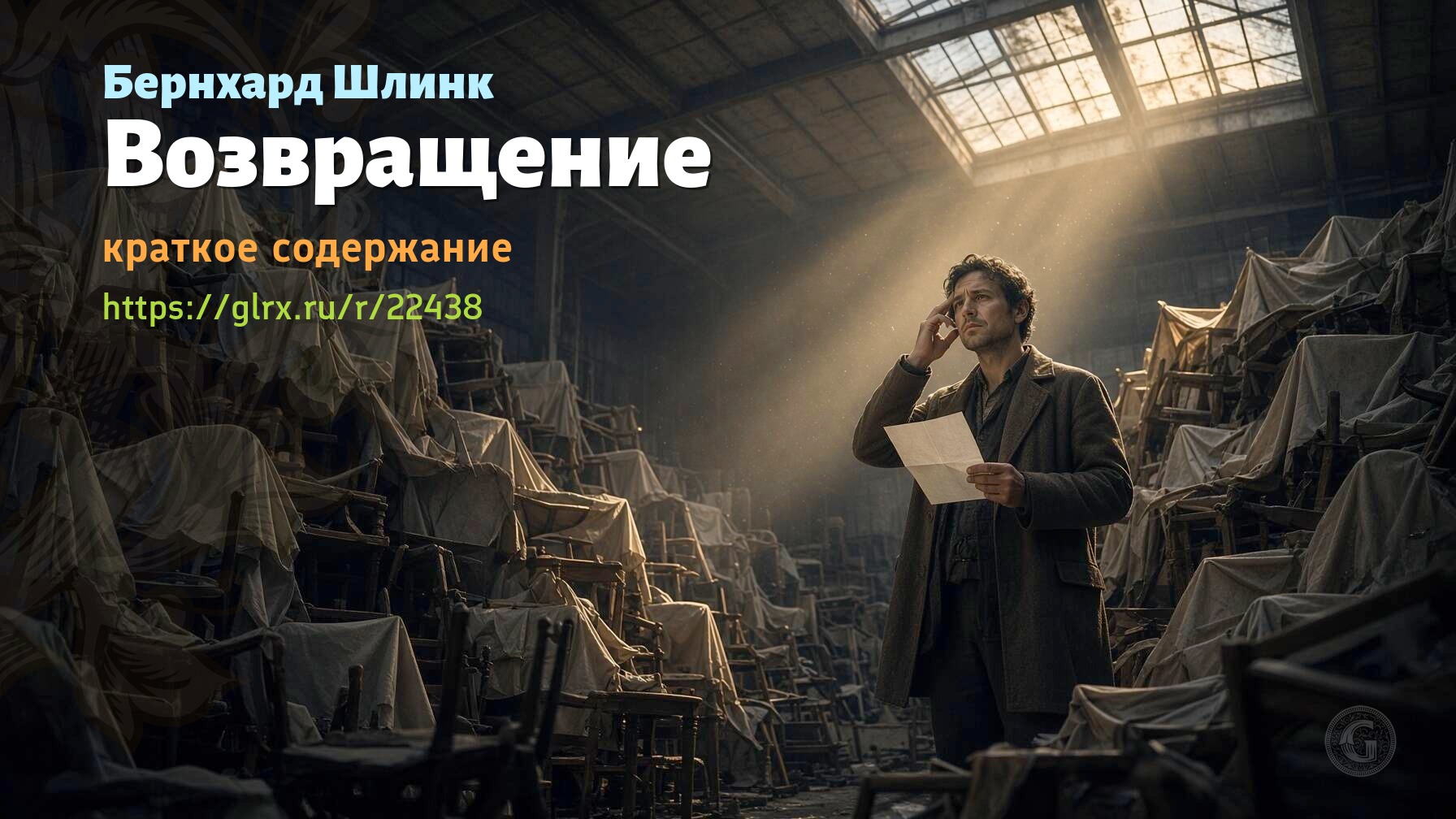
Fragments of a soldier’s odyssey
As a child, the boy would go on vacation every summer to visit his grandparents at their Swiss lake house. The old man would meet his grandson on the platform. During their walks, the grandfather would send him to get a shovel to collect horse apples for compost. The boy obediently carried the bucket. The fertilizer was intended for the raspberry and bean bushes in the backyard.
In the evenings, in the quiet dining room, under a low lamp, the elderly couple diligently proofread the galleys of their sentimental series "Novels for Pleasure and Pleasant Entertainment," composing tiny moralizing articles for each issue about brushing teeth or the benefits of rural beekeeping. The pages of proofs were used as drafts. Years later, the adult hero accidentally came across a thick scrap of paper containing the adventures of infantryman Karl. The end of the book was torn out.
In the fictional text, the infantryman cut off his comrade Jurgen’s rotting hand with a kitchen knife, stayed on a raft with the ruler of free Aolia, and shared a log cabin with the mountain beauty Kalinka for nine months.
The soldier was stubbornly striving to get home. Upon reaching his hometown, the infantryman would find a strange man with his wife. At this point, the manuscript would break off. Peter searched in vain for a full issue among hundreds of brochures, until a drunk driver fatally struck a Swiss couple on a village sidewalk near a grocery store. His grandfather’s desk was run over by his grandson.
Trail on Kleinmeierstrasse
Peter abandoned academia. Soon after moving to a neighboring town, the former graduate student found work at a law publishing house and rented a spacious three-room apartment with access to a garden. A familiar address appeared in a dream. The editor immediately went to the gloomy house — number 38 Kleinmeierstrasse. The second-floor door was opened by a barefoot teacher, Barbara Bindinger, whose late mother had once lived there with her two young daughters.
Joint trips to abandoned furniture warehouses in the province brought the casual acquaintances together. They bought armchairs. A love affair blossomed in Eifel hotel rooms, marred by disturbing news from East Africa. Barbara’s ex-husband had disappeared there. American war correspondent Augie Markowitz suddenly appeared on the landing, clutching dusty bags, forcing his embarrassed rival to scurry off into the street.
Ghosts of Wartime Breslau
Peter alleviated his loneliness with strange beds and conversations with the schoolboy Max. The boy demanded tales of chivalry. The investigation into the origins of the old book was revived after a visit to the lame keeper of the family archive, Margarete Bindinger. A tattered cardboard folder contained yellowed letters from the front, written by a certain Volker Vonlanden, who had courted the young woman’s affections during the bloody battles of 1942. Enclosed with the letters was a philosophical sketch.
The typewritten manuscript cynically justified the right of the strong to mercilessly exterminate their neighbors for the sake of the nation’s biological survival. A frontline publicist coined the "iron rule." Those who are willing to die without complaint on the battlefield gain the moral right to murder other people’s unarmed children, condemn the residents of besieged Leningrad to starvation, and demand absolute self-sacrifice from their own people. Party governor Karl Hanke abandoned Breslau in May 1945. Before his ignominious flight, the Silesian governor hosted lavish nightly banquets with champagne and mirrors in an underground bunker. All of the Gauleiter’s comrades perished.
For decades, Peter’s biological mother maintained a stubborn silence about the nightmare she had endured. During a joint trip to Tessin, Switzerland, the stern woman suddenly revealed a fleeting affair with a dapper lawyer in a tweed jacket. His father allegedly died in Breslau. The concrete border between the two divided German states prevented any verification of this romantic theory about the Swiss man’s death.
Academic Masquerade in Berlin
The fall of the Berlin Wall turned the editor’s measured life upside down. In December 1989, a West German lawyer accidentally posed as a visiting professor at the capital’s university. The teaching assignment lasted several months. An archived letter from the veteran communist Rosa Habe suddenly revealed the fugitive’s new identity. In 1945, Vonlanden had taken a job in the cultural department of an East Berlin newspaper, posing as a Viennese Jew, Walter Schoeller, with a camp number tattooed on his forearm. The adventurer fled before being exposed.
On a flight back to Frankfurt, a tired passenger unexpectedly bumped into Barbara in the aisle. The couple resumed dating. An attempt to legalize their marriage was met with a refusal from a government official due to the mother’s forged birth certificate. The mother confessed to lying. In the fall of 1946, the fugitive father lived in her apartment for ten weeks, babysitting the baby, selling manuscripts, and then sailed overseas forever.
Professor de Baur and the Adirondack Trap
The publisher received an English-language copy of Columbia University professor John de Baur’s treatise, "The Odyssey of Law." The style was his father’s signature. After completing a six-month internship under a false name, the researcher flew to the United States to confront his father. The elderly philosopher delivered brilliant lectures on the deconstruction of morality, captivating enthusiastic audiences. In private conversations, the youthful professor preached the relativity of good, insisting that a state of emergency liberates a strong personality from bourgeois prejudices and the rule of law. The son remained anonymous.
In January, the mentor gathered a small group of students at an abandoned mountain lodge in the snowy Adirondack forests. A brutal experiment began. In an unheated house with no food or phone service, the students encountered a gang of armed hunters methodically tormenting the freezing townspeople. The lodge’s occupants quickly broke down. Over a bowl of cheap soup and some life-saving birch firewood, the future lawyers quarreled among themselves, and Debauer himself rigged the lottery and publicly begged forgiveness from the drunken mercenary leader in front of his comrades. Hidden cameras were hidden in the rooms.
In the morning, a cynical production of the nightmare unfolded, featuring guest performers from a New York theater. The hunters turned out to be hired actors. From a neighboring cottage, the professor secretly directed the torture via monitors, demonstrating the inevitability of the decline of human decency in the face of primitive violence. Peter left immediately. That night, in his room, the fugitive composed a detailed exposé of de Baur’s Nazi past and handed the manuscript over to an American attorney. The morning flight carried the passenger to Europe.
True Return
In the chilly morning air, the gloomy house on Kleinmeierstrasse greeted the wanderer with its front door wide open. Barbara waited joyfully. All the nagging suspicions of infidelity and strange suitcases in the hallway instantly melted in the warm embrace of their rightful owner. Life resumed its usual course. The editor readily returned to his magazine manuscripts and friendly trips to the cinema with Max.
An exposé about the American professor’s Nazi past was published in newspapers thanks to independent investigations by meticulous overseas reporters undaunted by the high-profile scandal. The old man easily parried the attacks. At a prestigious academic conference, the philosopher masterfully distilled his own texts into meaningful bits, finally freeing himself from the burden of his actions. His son turned off the television. Peter dialed his mother, listened to her mocking jibes about his last name, and silently hung up.
You cannot comment Why?