Clifford Simak’s "The Grotto of the Dancing Reindeer," a summary
 Automatic translate
An American archaeologist discovers a hidden cave with rock frescoes in the Pyrenees and encounters a man who has lived on Earth for over twenty thousand years. The story combines the rigorous scientific study of paleontology with the drama of the absolute loneliness of an immortal Cro-Magnon. The author wrote this fantastic novella in 1980.
In 1981, the novella won the highest science fiction awards: the Hugo, Nebula, and Locus awards.
The last day of the expedition to Gavarnie
On the stone terrace in front of the cave, a local mountaineer named Louis sat playing a primitive bone flute. Excavation director Boyd climbed a steep path, carrying a lantern and a geological hammer. The season’s work at Gavarnie had concluded. The scientists had photographed the flint artifacts, fire embers, multicolored clay, handicrafts, Pleistocene animal bones, and a severed human hand. The scientific camp had emptied two days earlier. A strange inner unease compelled Boyd to return to the excavation site before leaving for Paris. It seemed as if some elusive detail had gone unnoticed during the group’s efforts.
Louis assisted the researchers as a laborer. Over the ten years they had known each other, he had demonstrated remarkable mental agility and meticulousness. Boyd sat down on the grass next to him, studying the smooth, wrinkle-free face of the young Basque in a black beret. They began a leisurely conversation about the valley, the Ice Age pastures, and Boyd’s recent trip to Roncesvalles to the ruins of Charlemagne’s chapel. According to legend, masses for fallen paladins were still celebrated in the local village church. Louis unexpectedly invited the scientist to share a farewell meal, promising to cook an omelet with tomatoes, peppers, and homemade smoked ham. The researcher agreed and promised to bring a bottle of good wine.
The Mystery of the Walled Passage
Boyd’s flashlight beam slid along the far wall of the cave. Barely visible cracks formed man-made masonry. The tip of his hammer easily entered the joint between the boulders. The American removed several heavy stones and opened a narrow passage. With a transoceanic flight due the following morning, the scientist decided to take a risk and squeezed inside on his stomach.
The narrow passageway stretched forward for about thirty meters. Suddenly, a smooth stone partition blocked further progress. Boyd rolled over and shone his light upward. A round hole gaped in the ceiling. The archaeologist pulled himself up and found himself inside a domed chamber about two meters in diameter. The walls and ceiling resembled an ancient air bubble frozen in molten rock.
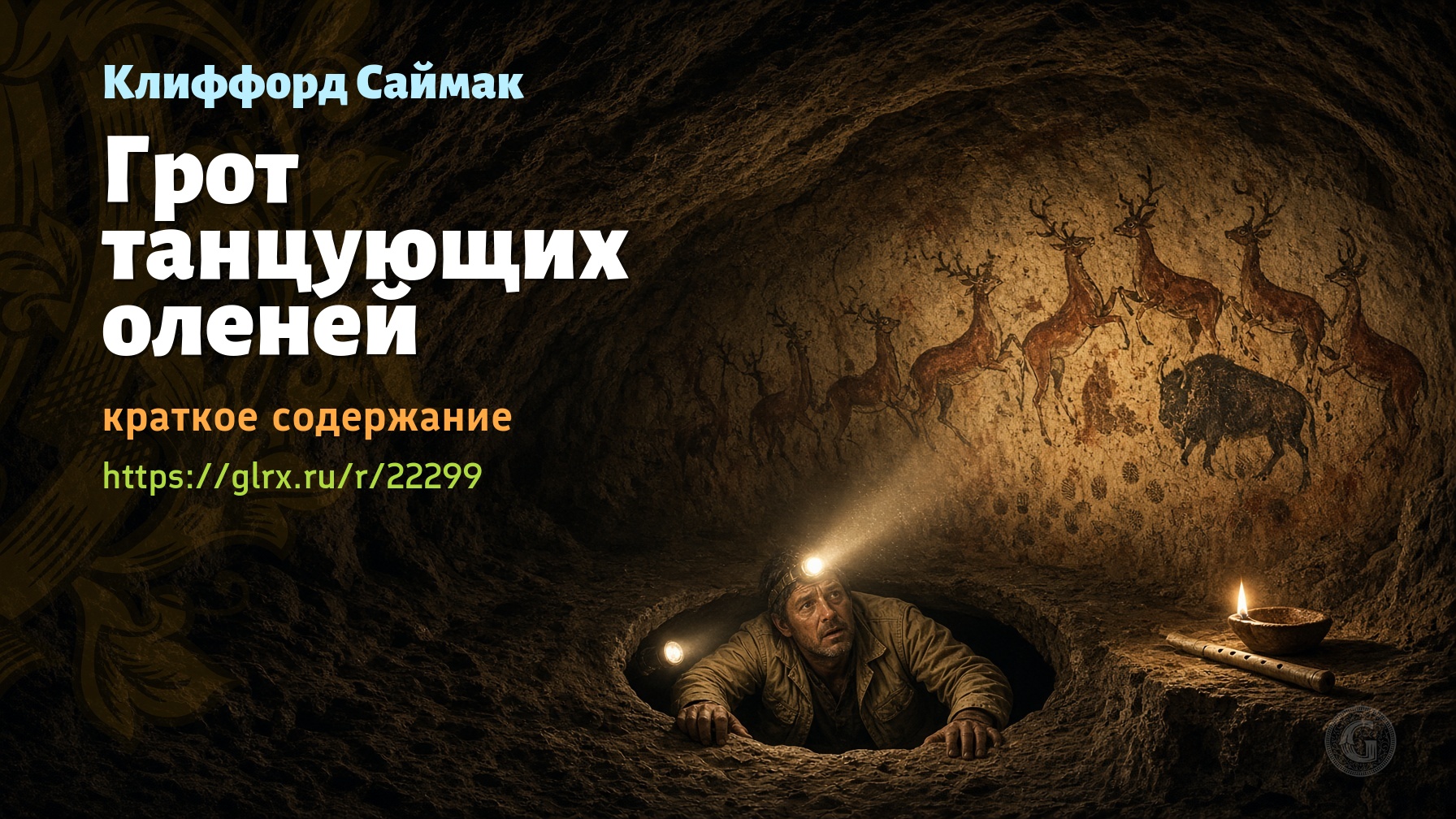
The walls of the secret hall were awash with vibrantly colored drawings. The artist depicted galloping bison, galloping horses, and tumbling mammoths. Upright deer danced in a circle along the base of the vault. The animals stood on their hind legs, clasped their front hooves, and gracefully swayed their branched antlers. The ancient master rejected the dark magic of hunting rituals. He painted with a relaxed and joyful spirit, anticipating the animated plasticity of the distant twentieth century.
A deer shoulder blade lay on a stone ledge next to a tallow lamp carved out of sandstone. Petrified clumps of primeval paint had hardened on the bone’s surface. The artist’s deep fingerprints were clearly visible in the dried clay. Behind the lamp, a bone flute with an oblong slit and two drilled holes gleamed white. The flute turned out to be an exact duplicate of the four-note whistle Louis had played by his tent.
The archaeologist carefully wrapped the bone palette and pipe in his windbreaker. He left the stone lamp, still covered in soot, on the ledge. Once outside, Boyd carefully restored the masonry and camouflaged the seams with handfuls of earth.
That evening, the companions drank the wine they’d brought and ate a hot omelet. The scientist secretly hid the empty wine bottle in his luggage.
Expertise in Washington
John Roberts waited for Boyd on a city park bench on a cloudy October afternoon. Leaves swirled over the alleys of the American capital in a chill gust of wind. Using his connections in the Federal Bureau of Investigation, Roberts conducted a secret forensic examination. A smuggler he knew arranged for the shipment of the antiquities through Paris customs.
The laboratory test results stunned the experts. Fingerprints on the fossilized paint of the ancient scapula perfectly matched the skin patterns on the Gavarnie wine bottle. Radiocarbon dating of the organic fats in the pigment revealed an age of 22,000 years, with a margin of error of approximately 300 years. It is technologically impossible to counterfeit such a composition or preserve fresh traces on ancient bone.
Roberts hid the unique finds in a secure safe. Scientists understood that official academic institutions like the Smithsonian would refuse to exhibit the relics due to anti-smuggling laws and the improbability of the evidence. Boyd told a friend the story of a Basque man whose youthful features contrasted with the ancient expression in his eyes. Roberts recalled the hypothesis that the Basques are direct descendants of European Cro-Magnons.
Revelation of a Long-Lived Man
The autumn sun illuminated the Pyrenees Mountains when Boyd climbed back up to the tent at the cave entrance. A four-note melody softly echoed over the rocky cliff. The American pulled out a new bottle of wine and sat down on the yellowed grass. Louis uncorked the bottle and calmly admitted he had been waiting for the secret to be revealed. The endless centuries of solitude weighed on him ever more heavily. The heavy burden of obscurity demanded at least one living soul capable of understanding the truth without superstitious terror.
The highlander revealed his rules for survival among mortals. About twenty thousand years ago, his tribesmen noticed the hunter’s eternal youth, declared him an evil spirit, and banished him. Since then, the fugitive followed a strict code of personal safety: avoid publicity, never display bravery, remain in the shadows of other people’s conflicts, and avoid taking on civic responsibility to the tribe or the state. He always remained a detached observer.
Louis recalled the battle at Roncesvalles Pass on August 15, 778. Local Basques stoned the rearguard of Charlemagne’s army, seeking to plunder the knights’ rich baggage train. A lookout had abandoned the scene of the plunder early, obeying a centuries-old sense of danger. A night storm triggered a mudslide in the mountains, and all the plunderers perished under the rubble, along with the golden spurs and purses of the Frankish paladins.
Boyd’s interlocutor had traveled through ancient Sparta, attended lectures at the University of Paris in the fourteenth century, and studied at Oxford under assumed names. His livelihood came from hidden hoards of gold stashed across the continent. The ancient master explained the appearance of grotesque drawings in the secret grotto of Gavarnie as a desire to create a joyful art to counter the strict witchcraft of his fellow tribesmen. He deliberately left a flute and a bone with fingerprints on a stone ledge, relying on the American’s keen observation.
Boyd promised to keep his friend’s secret and not publish the report on the discovery of the secret grotto. Before parting, the Basque handed the archaeologist a hand-drawn map of the mountain canyon with a mark on the site of Charlemagne’s buried convoy. Louis rose, threw on his beret, and walked down the trail. The centenarian disappeared into the valley, remaining the loneliest inhabitant of the planet.
- The oldest cave paintings in Europe found in Spain
- Clifford Simak’s "Photographs of the Battle of Marathon," Summary
- "Pale Fire" by Vladimir Nabokov: The Magic of Artistic Discovery "- the opening of Brian Boyd
- $ 23 Million Claims Filed Against Christie’s Warehouses For Careless Storage Of Art
- “The Crossing” by Cormac McCarthy
You cannot comment Why?