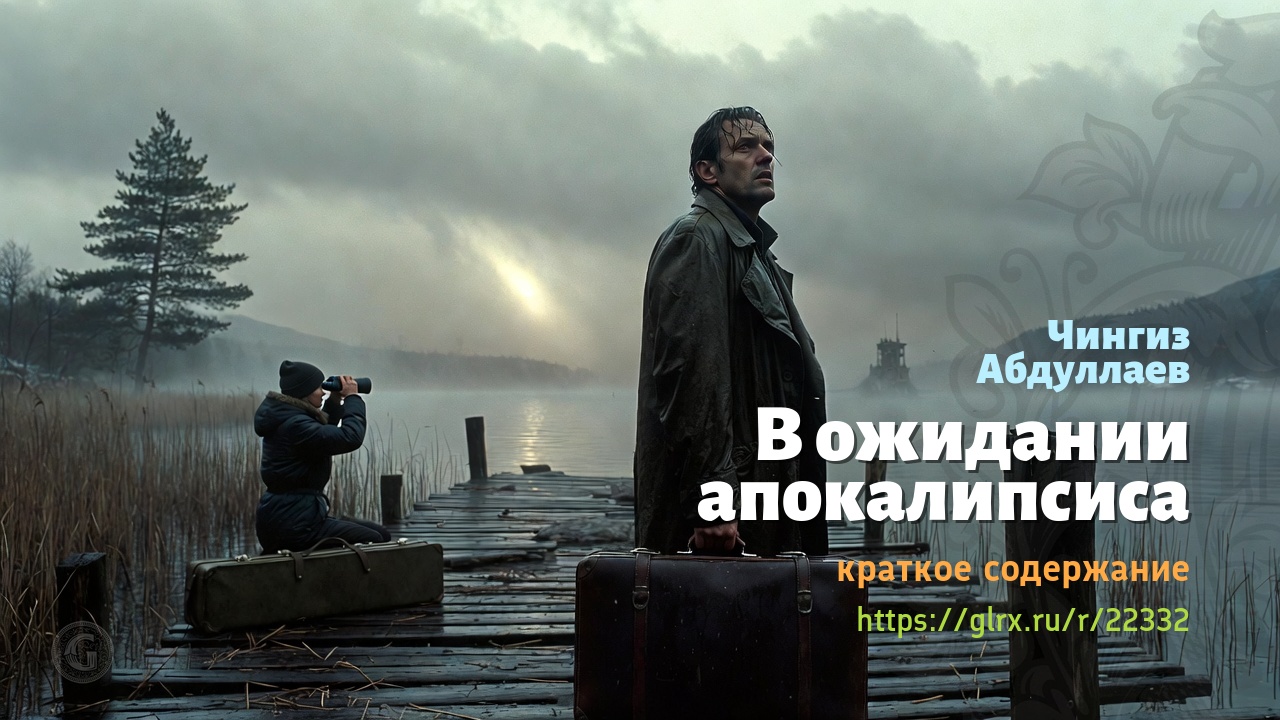
"Waiting for the Apocalypse" by Chingiz Abdullaev, summary
 Automatic translate
This spy novel lays bare the cynical anatomy of a secret intelligence war in an era of geopolitical upheaval, showing how career agents are transformed into bargaining chips in grand international politics. At the center of the intrigue is a former Soviet security officer who becomes bait in a foreign strategic game. The novel is set in 1993, when the collapse of the Soviet Union forced foreign intelligence to scramble for a future global rematch.
The book is part of a larger detective series about the expert analyst Drongo. In this series, the hero’s investigations continue the events of the novels "Blue Angels," "Ocean of Hatred," and "Darkness Under the Sun," and the story itself ranks sixth in the overall series about the famous detective.
Recruiting live bait
A liaison officer from the illegal intelligence department approached the analyst right in the middle of a bustling street in his native southern coastal town. The direct threat of arrest was immediately effective. Employees of a sports complex outside Moscow brought the summoned specialist to General Dmitry Alekseevich’s office, where the foreign counterintelligence leadership revealed to the stunned guest the plot of a grand scheme using the former expert as a convenient victim. The recent Vienna tragedy created a flawless cover story.
Western analysts remembered the recent deaths of the hero’s close associates in Vienna. Foreign headquarters sincerely believed it. Moscow was sending a valuable professional abroad with a false passport belonging to Belgian André Friedman, only to stage a demonstrative failure and subsequent arrest. Steven Harleth was declared the first target. The generals chose to completely conceal the second objective from the executor, hoping to confide the analyst in the details of the operation only after rigorous Western polygraph tests, once the entire grandiose operational game had appeared to have failed completely. Psychologists guaranteed the analyst’s consent.
German trap and blood in the bathtub
The silent Tallinn liaison handed over a leather briefcase containing twenty thousand brand-new German marks. Maria Groth was assigned as their partner. The sullen employee of the special 13th Department wore dark glasses, smoked strong tobacco, and methodically prepared to shoot any recalcitrant participant in the scheme, including her partner himself, at the slightest threat of the enemy prematurely capturing the Center’s classified information. A sniper rifle lay at the ready. Bavarian Lake Starnberg greeted them with the lapping of cold, dark waves against the side of the boat.
Soviet intelligence officer Alfred Greve, decommissioned twenty years ago, had long since acquired a family and a comfortable Bavarian home. Bitterness was building in his soul. Experienced illegal Jürgen Heise had spent twenty long years playing the role of a respectable foreign citizen, waiting to be needed by the Center, until historical upheavals and the collapse of traditional state values reduced the former ideals of a loyal officer to dust. The next step lay in Magdeburg. A city park became the setting for a meeting with retired East German intelligence colonel Erich Heinstock. The officer chose a private life. Instead of obeying orders, he was met with pleas for a day’s leave to secretly escape with his gravely ill wife to distant South America to save his family’s happiness. Heise signaled his agreement.
The secret deception was revealed instantly. That evening, in a noisy bar, a devious substitution of a pocket-sized metal radio jammer was discovered. A cold-blooded partner intercepted a secret conversation with the apostate, tracked down the address of the Magdeburg house, and mercilessly dealt with the defenseless victim to eliminate the slightest chance of disrupting the Moscow intelligence center’s grand strategic plan. The bathroom was covered in blood.
The Paris Ambush and the Brussels Forest
The small, sleepy pharmacy in Dedeleben greeted visitors with the distinctive scent of Indian plaster. Suddenly, thick glasses flashed. Former state security major Edith Lieberman yearned for real operational work among boring medicinal bottles and readily accepted an offer to travel to Paris to make a show of surrendering to Western counterintelligence agents, posing as a desperate defector. The target was identified as the physicist Sténuit. Further events unfolded according to a tragic scenario of unforeseen accidents and mistakes.
The Parisian surveillance ended in disaster. Watchful French detectives suddenly appeared outside a quiet hotel on Boulevard Haussmann. A shootout in the dimly lit underground garage of the Parisian hotel allowed the armed fugitive to break through the cordon and reach Brussels, at the cost of a severe gunshot wound to a local counterintelligence officer, thus jeopardizing the Moscow Center’s secrecy. The sentence was handed down in Moscow. Colonel Oleg Nikolaevich brought back from Moscow a demand to immediately shoot his partner.
In the damp thicket, the body of Maria, who had shot herself, was cooling.
Brooklyn Bluff
Brussels detectives finally lost the Soviet analyst during his ostentatious escape through a department store back door. The well-fed overseas metropolis greeted him with a roar. Lyubarsky, a contact in the émigré residency, tearfully told of the brazen racketeer Lev Koganovsky, who had extorted large sums of money from the venerable doctor Semyon Betelman on the eve of his family’s planned departure for the British capital. They had to pull out their old Colt pistol. A brazen visit to the bandit’s home instantly cooled the extortionist’s criminal ardor.
The bustling Brooklyn café "Nargiz" beckoned to émigrés with the familiar, spicy aromas of Baku cuisine. Betelman turned pale with fear. A dangerous visitor appeared before the frightened doctor, directly threatening to expose his London relatives. The provocation worked perfectly. Panicked calls poured in overseas, begging for protection from British counterintelligence. Lyubarsky was demonstratively eliminated that night.
The noisy airport lounge overseas tore the last hypocritical masks from old school loyalties. Fingers groped for a listening device. Beneath the guise of a loyal friend lurked a staff assassin for the secret Thirteenth Department. Lona remained in America. Over the ocean, the heavy silver airliner set a direct course for Shannon Airport, the Irish transit airport.
Ahead lay the uncertainty of prison. The deep night ocean beneath the wing of the British plane reliably separated the lone traveler from American traitors and the ghosts of the recent past. Gradually, the aliens’ treacherous plans took shape in the flames of retribution. Retribution approached inexorably.
Underground counterintelligence bunker
A chilly Irish airport greeted the Soviet guest with a demonstrative seizure by British security officers. The trap sprang on schedule. A heavily armed escort delivered the prisoner to an underground bunker in Gloucestershire. A pulse detector monitored his pulse. The prisoner masterfully dosed dangerous confessions about the Belgian events and the Magdeburg massacre.
The arrogant British investigators openly celebrated their unqualified triumph over the routed Soviet intelligence machine. The testimony of their protégé matched perfectly. The body of Maria Groth, found in a Brussels forest, finally dispelled the British doubts about the sincerity of the confession of the arrested fugitive, who had decided to openly cooperate with the investigation for the sake of his own physical salvation from the retribution of his Eastern masters. The name of Colonel Hetgess surfaced. The capture of the East German veteran in Montreal led the British to the sleeping illegal immigrant Greve in Munich. Olving was openly jubilant.
General’s password
Kevin Riggs suddenly took the prisoner for a drive into a deserted, foggy park. The trees stood forlornly, black. The respectable British commander suddenly uttered General Dmitry Alekseyevich’s cherished code words about the unhealthy climate and the need to wear a warm wool scarf, revealing his own affiliation with the top Soviet intelligence service under the pseudonym Stephen Harleth. Finally, the true purpose was revealed. Hundreds of people had been sacrificed to save the only vital source.
A British mole transmitted a colossal array of highly classified ciphers and codes through a trusted messenger. Memory greedily absorbed them. After lengthy secret negotiations in Warsaw, the British handed the prisoner over to Russian intelligence services, paving the way for a nighttime debriefing in General Dmitry Alekseyevich’s spacious office in the middle of Moscow, plunged into the cold gloom of pre-dawn. The offered rewards were repulsive. The analyst firmly rejected the general’s tempting offer to head the intelligence agency’s analytical department. The empire was finally dead. A drunken former informant staggered near the exit of his native southern airport, uttering absurd political slogans. The detective strode away.
Gray dust near the station covered the worn-out shoes of a man who had voluntarily broken the bonds of the cynical secret services to gain personal independence. The past had turned to ashes. Ahead lay the long, lonely road of private detective practice, devoid of allegiance to foreign flags, party anthems, and the merciless ambitions of the state, which forever sacrificed living human destinies on the altar of cruel imperial conspiracies. Solitude brought peace. Even substantial transfers to a Viennese account could not drown out the bitterness of his experiences. Footsteps resounded dull and firm.
You cannot comment Why?