A summary of "Gloomy Morning" by Alexei Tolstoy
 Automatic translate
The novel concludes a vast epic trilogy, describing the final fates of the Russian intelligentsia in the crucible of the Civil War. Written in 1941, this text concludes the protagonists’ wanderings against the backdrop of bloody battles in southern Russia. The narrative brings together broken families, depicting the characters’ transition to the new government. The historical backdrop is meticulously crafted, and the characters themselves, after numerous mistakes, find their place in the emerging state.
The work received the first-degree Stalin Prize in 1943. The novel has been successfully adapted for the screen several times: from 1957 to 1959, director Grigory Roshal made a film of the same name, and later, multi-part television versions were released, attracting wide public attention.
This book logically closes the famous "Road to Calvary" series. It is the third book in the series, continuing the events of the novels "Sisters" and "The Eighteenth Year."
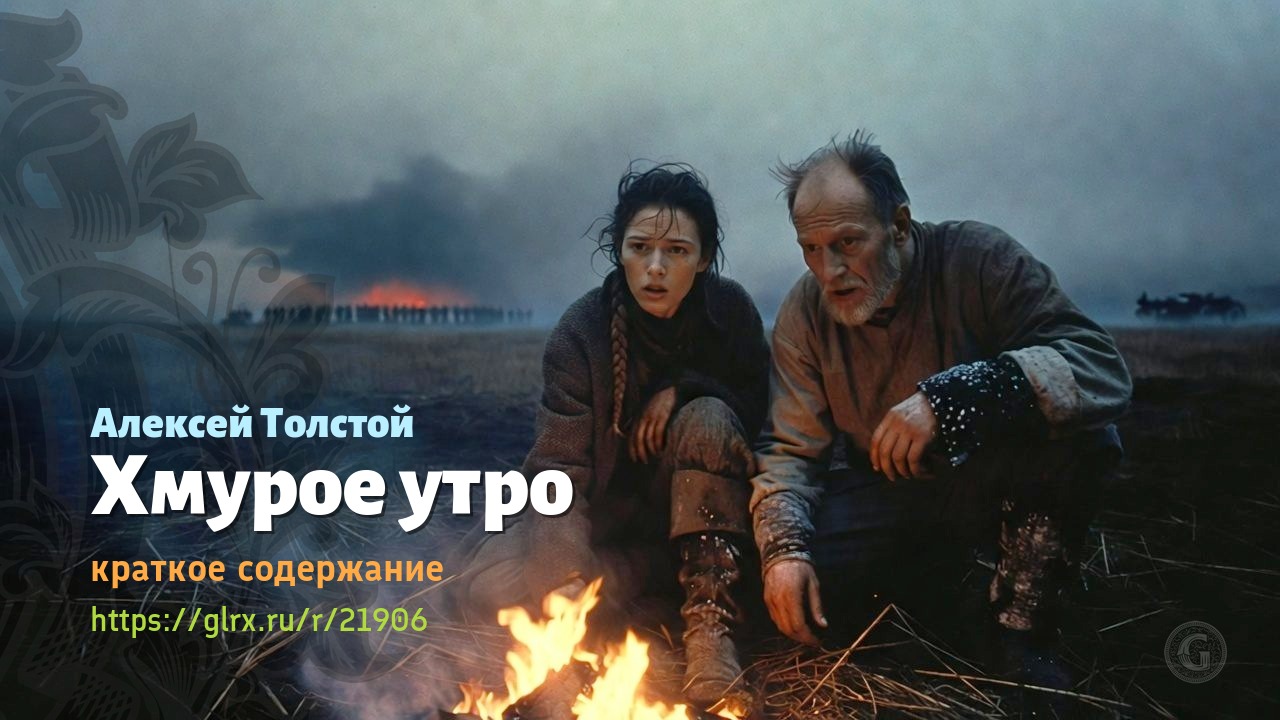
Dasha Bulavina and the defrocked priest Kuzma Kuzmich Nefedov sit by a campfire in the bare autumn steppe, having escaped from a train derailed by the Whites. At dawn, they are detained by a Red Army reconnaissance detachment, and the stern Red Army woman Agrippina, along with company commander Ivan Gora, bring the prisoners to headquarters. Regimental commander Pyotr Nikolaevich Melshin carefully examines their documents. Upon learning that Dasha is the wife of Ivan Ilyich Telegin, Melshin warmly welcomes her and informs her that Telegin is alive and fighting valiantly in the Red Army.
Meanwhile, Ivan Ilyich himself is sailing down the Volga on a tugboat. The ship is carrying ammunition and two guns for the defense of Tsaritsyn. The crew consists of experienced Baltic sailors: Latugin, Gagin, Zaduyviter, and a young Komsomol member, Sharygin. With them is the humble cook Anisya Nazarova. She recently lost her family: Cossacks burned her house and killed her two children. The sailors are sincerely moved by her grief. Upon arrival in besieged Tsaritsyn, Telegin meets his old friend, Sergei Sergeyevich Sapozhkov.
The regiment receives orders to form an artillery battery from the arriving sailors, and the soldiers take up positions near Voroponovo Station. Soon, General Mamontov’s White Cossacks launch a desperate assault on the Tsaritsyn fortifications. In a fierce battle, Telegin’s artillerymen roll a gun into an exposed position and repel an enemy cavalry attack, with Latugin sustaining a shrapnel wound. Melshin’s regiment also holds off the enemy’s furious attacks, while Dasha selflessly works as a nurse in a front-line hospital. While on duty, she approaches the bed of a seriously wounded commander and instantly recognizes her husband in the haggard patient, after which the couple are joyfully reunited.
Officer Vadim Petrovich Roshchin is burdened by his time in White Guard Yekaterinoslav. He is deeply disillusioned with the White movement. The violence and profiteering deeply disgust him. In a restaurant, a German soldier tells Roshchin about a recent encounter with Katya and how her train was suddenly attacked by Makhnovists. Roshchin unhesitatingly tears off his officer’s epaulettes and secretly leaves in search of his beloved. En route, he is detained by Makhno’s bandits and taken captive to Gulyai-Pole, where the head of counterintelligence, Levka Zadov, brutally beats him. Makhno interrogates Roshchin personally and, convinced of his open hatred of Denikin’s forces, takes the former officer to his headquarters.
Partisan freedom and new battles
Katya hides in the village of Vladimirskoye, where former soldier Alexei Krasilnikov hides her along with his daughter-in-law, Matryona. Alexei passionately desires to marry Katya, but she flatly refuses. Krasilnikov attempts to use force, but Matryona bravely stops him. Soon, the village falls to the Soviets, the visiting commissar Yakov carries out harsh food requisitions, and Alexei joins the band of the rebel ataman Grigoriev. Katya remains in the village and works as a schoolteacher.
After the hospital, Telegin and Dasha live quietly together on the farm while the Kachalin regiment rests before new battles. Sapozhkov energetically organizes the regimental drama theater, and the soldiers enthusiastically rehearse Schiller’s play "The Robbers." Anisya brilliantly plays Amalia, Kuzma Kuzmich masterfully plays the villain Franz, and Latugin plays Karl Moor. The play is a resounding success, and the Red Army soldiers sincerely empathize with the characters. However, this peaceful respite quickly ends, as the Don Army resumes its full-scale offensive.
Telegin’s regiment is unexpectedly surrounded, and the Cossacks furiously attack the Red positions during the night. A bayonet battle erupts on the muddy banks of the Manych River. Budyonny’s cavalry arrives just in time to rescue the Whites, and Ivan Gora raises the regimental flag and courageously leads his men in a counterattack. An enemy bullet suddenly ends the life of the fearless commissar, leaving Agrippina a widow, carrying his child. Latugin, over his fresh grave, vows to fight to the end for the just cause.
Roshchin, along with the Bolshevik Chugai and Levka Zadov, secretly arrives in Yekaterinoslav to prepare a workers’ uprising against Petliura’s forces. Vadim Petrovich meets a young Komsomol member, Marusya, who serves as a liaison for the local revolutionary committee and fearlessly carries out the most dangerous assignments. That night, workers’ detachments launch an offensive across the frozen Dnieper, and Roshchin personally leads the surprise seizure of the bridge. The Makhnovists storm the city, but immediately begin mass looting, while Petliura reinforcements arrive and drive out the partisans. During the difficult retreat across the bridge, Marusya is killed, and Roshchin is seriously wounded.
The path to reunification
Vadim Petrovich is hospitalized in Kharkiv, and after recovering, he voluntarily enlists in the Red Army. Command assigns him to Chugai’s cavalry regiment, and his unit quickly pursues Zeleny’s gang. The trail leads Roshchin straight to the village of Vladimirskoye, where he learns that Katya has recently left for Moscow. In an abandoned forest outpost, he stumbles upon Alexei Krasilnikov in hiding. A brief skirmish ensues, and Roshchin kills the bandit in cold blood with his carbine.
General Denikin’s White armies launch a massive offensive, taking Oryol and threatening Tula. The Red Front quickly retreats north, and in the chaos of the retreat, Telegin temporarily loses contact with his brigade. Left with just one squadron, he joins Semyon Budyonny’s cavalry corps. The Red cavalry tirelessly pursues Mamontov’s Cossack corps and deals a crushing blow to the White units in the thick morning fog. Shkuro and Mamontov’s cavalry suffers a crushing defeat.
During these battles, Telegin receives a new brigade chief of staff, and in the dimly lit room, Ivan Ilyich is shocked to recognize Vadim Petrovich. Roshchin speaks frankly of his long journey through doubt and pain, and the old friends embrace tightly. Their past differences are forever a thing of the past. Telegin reports that Dasha is now in Kostroma, having barely survived a severe case of typhus. Anisya and her faithful Kuzma Kuzmich are devotedly caring for her.
Katya safely reaches starving Moscow and settles into her old room on Arbat Street, where only the cynical intellectual Maslov lives. She finds a job at a school in Presnya, teaching lessons to the thin, emaciated children of workers. In the evenings, Katya diligently teaches adults how to read and write. Life seems unbearably difficult, but she finds solace in useful work. Winter brings severe frosts and a severe fuel shortage.
One day, Katya is called to a meeting of frontline soldiers’ wives, where a soldier arrives to give a detailed account of the situation at the front. Katya hears a stern, very familiar voice at the door and sees Vadim Petrovich with a bandaged head. Overwhelmed with joy, she faints, but Roshchin carefully scoops her up into his arms. Together, they walk through the freezing snow to Starokonyushenny Lane, where Vadim Petrovich passionately declares his undying love to Katya. He speaks of a new meaning in life, one he has deeply realized among the people.
In the spring, Dasha, Anisya, and Kuzma Kuzmich return to Moscow, and the sisters joyfully embrace in the cramped kitchen of their Arbat house. Dasha looks refreshed and rested, and she recounts in detail her service on the ambulance train. Later, Telegin and Roshchin arrive in the capital. The loyal friends gather together.
In the chilly five-tiered hall of the Bolshoi Theater, a historic meeting is taking place, where Gleb Krzhizhanovsky is delivering a detailed report on the country’s ambitious electrification plan. Lenin and Stalin are present on the presidium, and a huge map on the stage glows with the multicolored lights of future power plants. Telegin, Dasha, Roshchin, and Katya listen attentively; Ivan Ilyich dreams of returning to peaceful engineering work at the factory as soon as possible. Vadim Petrovich quietly speaks to Katya about the greatness of the past era, and they deeply realize that all the tears and bloodshed were not in vain. The country is confidently embarking on the path of peaceful creation and universal happiness.
You cannot comment Why?