"Echelon to Samarkand" by Guzel Yakhina, summary
 Automatic translate
This book is a poignant story of the rescue of hundreds of orphans transported from the Volga region, suffering from a terrible famine, to prosperous Central Asia. Created in 2021, the text stands out for its naturalistic descriptions of the lives of refugees and homeless children, where survival depended entirely on a stray handful of grain or a cup of clean water. The plot draws on the historical events of the autumn of 1923, when the Soviet government organized special ambulance trains to evacuate children to the south of the country.
In 2022, this novel won the readers’ vote for the prestigious national literary prize "Big Book."
Formation of the team in Kazan
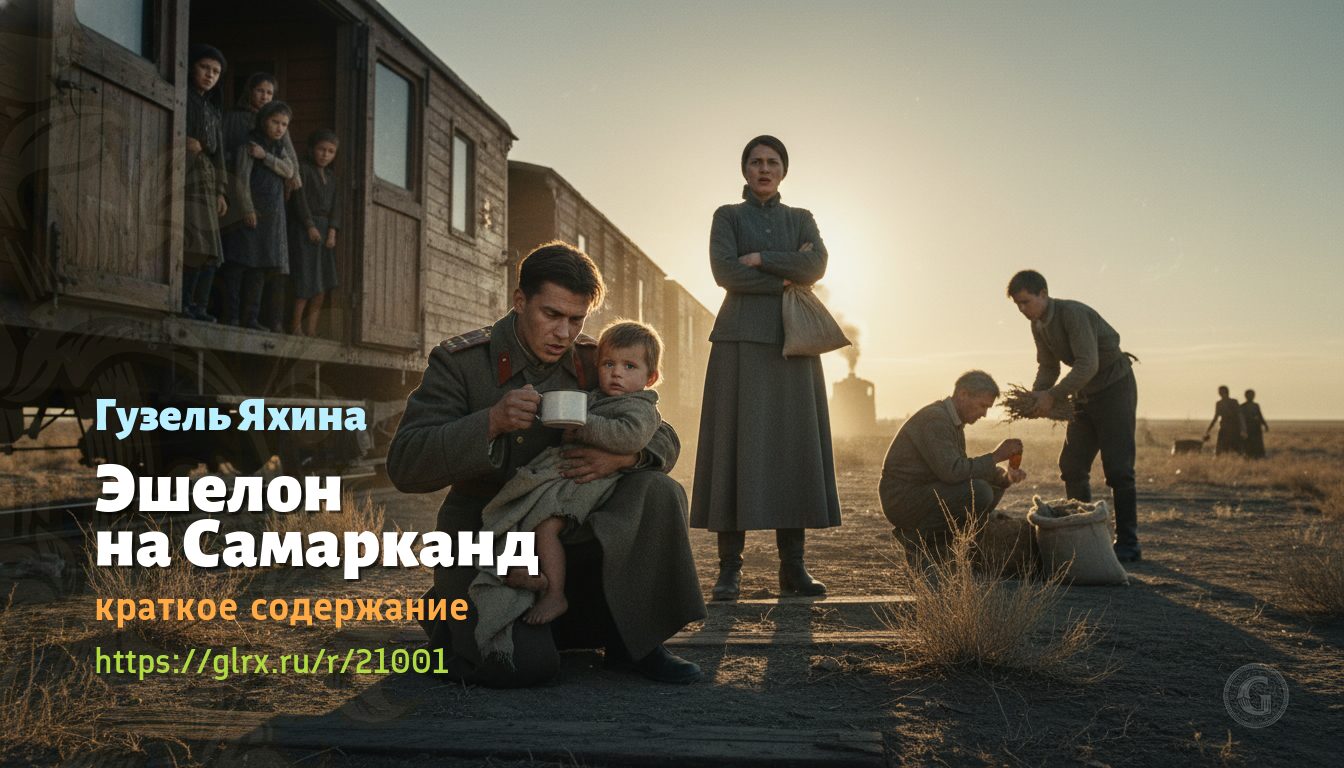
The action begins in Kazan in October 1923. A young Civil War veteran, Deyev, receives a difficult order. He is tasked with commanding a medical train and transporting five hundred emaciated children from local orphanages to Samarkand. The order to form the medical train was issued at the very beginning of autumn. Deyev is forced to personally visit the city’s orphanages, where complete unsanitary conditions and despair reign. He selects the weakest children to give them at least a minimal chance of survival.
The train’s composition is disorganized. It consists of five battered, old compartment carriages, a former first-class carriage, and a mobile church. This church has been hastily converted into a cramped infirmary. A makeshift kitchen-barn has been attached to the train. The train’s exterior resembles a tattered garland. The children are in terrible physical condition, many of them suffering from underlying health conditions.
A children’s commissar named Belaya is sent to assist Deyev. She is known for her strong character, integrity, and dedication to strict instructions. Deyev, on the other hand, is gentle at heart, often acting spontaneously and willing to risk everything to save the orphans. The relationship between the train commander and the commissar is strained. An elderly paramedic named Bug, a young cook named Memelya, and several nurses set off with them. The team loads the children into the train cars, and the train begins its 4,200-kilometer journey.
The first difficulties on the road
From the first days of the journey, the crew faces a severe shortage of food, medicine, and dry firewood. Deyev is forced to forage for food at each station using a variety of methods. He barters government property and begs local officials for at least minimal rations of flour and grain. Sometimes, the train master resorts to outright deception and cunning. For him, saving the starving becomes a personal matter. By caring for orphans, the young veteran attempts to atone for his own bloody sins from the previous war.
Belaya strives to maintain strict order in the carriages. She strictly controls the distribution of meager food supplies among the children, trying to prevent mass panic. Along the way, passengers see thousands of destitute people: peasants, soldiers, and refugees wandering along the roadsides, also seeking refuge from hunger. The train’s passengers endure the night’s cold and suffer from acute thirst. The locomotive is forced to stop in the middle of the deserted steppes due to breakdowns or lack of fuel. At such times, the crew must gather old wooden sleepers and dry brush to stoke the boiler.
Life of street children on the road
The train carries a wide variety of children: very young orphans and street-hardened teenagers. They are all united by the terrible experience of prolonged malnutrition. Their physical condition terrifies adults: many have bloated bellies, thin arms, and sunken eyes. During the journey, the little ones have to relearn how to live in a group and obey simple rules.
Inside the train cars, the orphans form a unique children’s community. They communicate in their own unique street slang, share harrowing memories of lost families, and dream of the prosperous south. Belaya tries to instill in them the basics of discipline and teaches them the rules of basic cleanliness. Deyev tries to warm their souls with human warmth, often telling the little ones encouraging stories before bed. The adult crew members do everything possible to preserve the sanity and dignity of their charges.
Collisions and dangers
The train’s route runs through the endless Kazakh steppes and scorching deserts to the mountains of Turkestan. Along this long journey, the train crew encounters a wide variety of people. Deyev encounters stern local security officers, former White Guards, peasants driven to despair by poverty, and brutal Basmachi units. Each such encounter threatens the train with imminent death or the loss of valuable property.
One day, the train commander is forced to directly negotiate with an armed group. Risking his own life, he convinces the commanders not to touch the hospital train carrying sick orphans. Deyev gives up some of his meager personal belongings and provisions in exchange for allowing the train through dangerous territory.
Belaya also demonstrates incredible fortitude. She protects orphans from the arbitrary actions of well-fed officials at major junctions. Gradually, a deep mutual respect develops between the two leaders, who are so different in character. They realize that only by joining forces can they bring at least some of their little passengers home alive.
Trials of infection and heat
While traversing the hot deserts, the convoy faces harsh conditions of intense heat and a lack of drinking water. Children begin to weaken from dehydration. Paramedic Bug works without adequate sleep, using all his medical skills and supplies of bandages. He struggles to fight cholera, typhoid, and scabies. With only a few medicines at his disposal, the doctor often resorts to folk remedies and simple herbs.
Memel’s cook displays miracles of ingenuity every day. He concocts thin soups from random ingredients, mixing flour with scraps of vegetables. Deyev searches for new water sources at abandoned railway stations, engaging in verbal altercations with locals over every bucket of clean water. The train moves slowly due to damaged rails and sand drifts. The coordinated work of the entire team helps prevent the mass death of children while crossing the parched lands.
Arriving at your destination
Having traversed hot sands and dangerous mountain passes, survived bandit attacks and terrible epidemics, the train approaches long-awaited Turkestan. Exhausted by the long journey, the children and adults are on the verge of severe physical exhaustion. Samarkand appears before them as a vast city of long-awaited salvation. It boasts a warm southern climate, an abundance of fresh fruit, and a steady supply of nutritious food. The arrival of the medical train is followed by the rapid distribution of the surviving children to the local spacious and clean shelters.
The train conductor hands over his charges to the city authorities in full compliance with all the necessary paperwork. For Deyev, the successful completion of this long journey becomes a cleansing of his conscience from old war sins. Belaya also changes her rigid outlook on life. She begins to understand the value of genuine human compassion over dry, bureaucratic orders.
After all the documents have been handed over and the orphans have been assigned to hospitals, the team’s work officially ends. Deyev decides not to return to Kazan. He remains in sunny Samarkand to find his place in the new, peaceful reality and try to start a peaceful life with a clean slate.
You cannot comment Why?