"Nightmare Dreams, My Love" by Anna Jane, Summary
 Automatic translate
Anna Jane’s novel "Nightmare My Love" was written in 2016 and first published in 2017; it’s a mystical thriller in which a love story is simultaneously linked to memory trauma, a series of murders, and the intrusion of a nightmare into ordinary life. The most powerful aspect of this book is the constant intersection of two narratives: a present-day police investigation and a long-standing personal horror that Jessica Malone has long been unable to name.
The prologue shows a man with a face disfigured by madness torturing a bound girl, speaking to her alternately tenderly and cruelly, and the entire episode is drowned in the sensation of absinthe, a music box, and a painful dream. This scene immediately sets the tone for the novel: the fear here is physical, obsessive, almost tangible, and love is prefigured as painful and destructive.
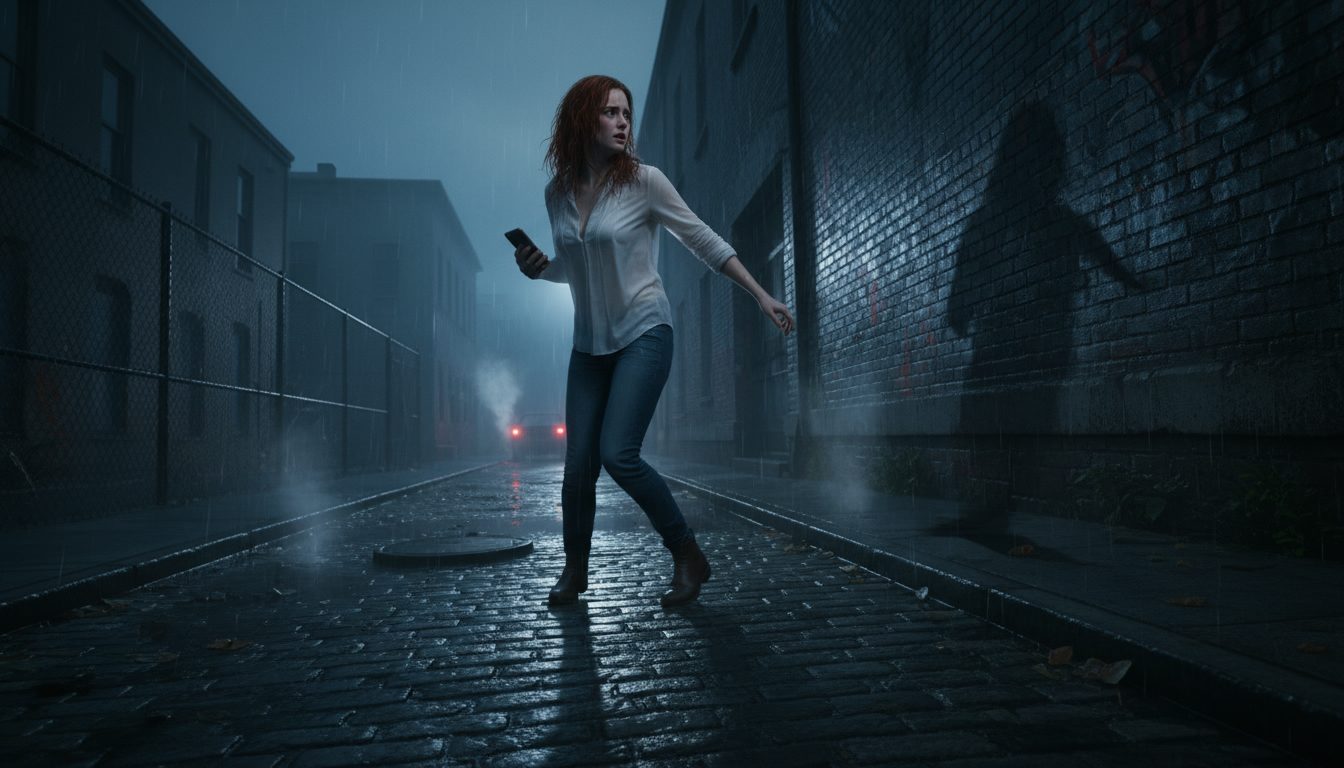
The action then shifts forward several months. Jessica Malone is living happily, preparing for her wedding to Eric, communicating with her parents, and trying to view her future as clear and calm, although deep down she already feels an unreasonable tension. Her life begins to unravel after a series of strange episodes, alarming calls, and encounters that too quickly transform an ordinary town into a hunting ground.
Murdered girls with frozen smiles appear on the streets of New Palmer, and the case is linked to a serial killer nicknamed "Kill Cold." Jess knew one of the victims, so she comes to the attention of the police. She recounts the events of the previous night over and over again, gradually noticing a terrifying detail: the dead girls bear a striking resemblance to her. The novel quickly shifts from an external investigation to a personal threat, as each new death seems to draw closer to Jess.
After the first powerful blow, Jess ends up in the hospital, and her condition can no longer be explained by anxiety alone. She dreams of labyrinths, glass domes, cold halls, blood, shadows, and a man whose cruelty is combined with painful tenderness; for Jess, sleep ceases to be a restful experience and becomes another place of persecution. Reality, too, is unstable: time is torn, memory is lost, and people and signs that are difficult to explain begin to appear around her.
Almost immediately, her personal life begins to crumble. Eric, who Jess once saw as a source of trust, becomes a source of lies, pressure, and humiliation, and then his connections with other women, particularly Diane, are revealed, shattering the last vestiges of trust. This storyline isn’t about domestic drama: through it, Jess realizes how long evil has been lurking around her, hiding behind a respectable facade and exploiting her confusion.
At the same time, the novel also explores Jess’s distant past, which remains fragmented. She once lived in another city, attended school, and was involved with Brent Elmer — a quiet, unassuming young man in the school orchestra with whom she developed a genuine connection. Their relationship ended after a terrible night in the field where Alice died, James was by her side, and Brent himself disappeared, leaving behind a void, guilt, and a gap in Jess’s memory.
It’s from this point on that the novel becomes a story of forcibly distorted memory. Jess increasingly feels like there’s a substitution within her memories: some images seem forced upon her, some feelings seem not her own, and in her dreams and visions, she encounters a seemingly different version of herself that prevents her from reaching the truth. Fear in the book functions as a control mechanism: it doesn’t simply frighten the heroine, but directs her thoughts, undermines her logic, and makes her doubt even her own eyes.
To figure things out, Jess pulls at several threads. She talks to the police, hires a private investigator, attends sessions with Dr. Firth, turns to people who know more about the dark side of what’s happening than they’re willing to admit, and slowly begins to piece together a map of connections between the murders, the past, and the creatures that live alongside human fear. Figures like Brooke Worker and Dr. Singleton emerge around her, and the familiar urban world increasingly drifts toward nightmare territory.
Some of the most difficult scenes involve direct attacks. Jess is wounded, awakens in the hospital, and experiences bouts of pain, lapses in consciousness, and encounters with something that is neither fully hallucinated nor fully realized. In one such scene, blood literally floods the space, and the heroine falls for the third time onto a familiar stone floor, emphasizing that her path is not linear; she returns again and again to the knot of old trauma.
Robert Walsh’s figure gradually emerges. After his death, the case is officially closed as quickly as possible; the authorities eagerly accept the convenient scheme, and Walsh’s guilt in the murder of seven young women is considered proven, even though too many inconsistencies remain. For Jess, this isn’t a denouement, but a further blow, because the formal answer fails to explain the most important thing: why all roads lead to her, who is really behind the events of ten years ago, and where is Brent.
Memory retrieval sessions only give Jess part of the truth. She sees more and more fragments of that school story, reliving the horror and guilt, but notices a crucial detail that disrupts the picture she’s already pieced together: in one of the original memories, there was no moon in the field, while in the implanted memories, the moon shines too brightly. This glitch convinces her that part of the past was artificially rewritten, meaning she still doesn’t know who killed Alice, why James was there, or what happened to Brent.
By the end, Jess has changed internally. At the beginning of the novel, she lives as someone unconsciously moving away from old pain, but by the end, she refuses to be a victim, stops believing convenient versions, and decides to get to the truth herself. Finding Brent becomes her primary concern, because it is through him that love, fear, disappearance, and the entire dark logic of this story converge.
The epilogue reveals Brent to be alive. He’s hiding, drinking absinthe, watching the nightly news, remembering Jess as "Candy," and remaining connected to the monstrous side of himself. Beside him is a blonde woman with a scar who calls him Scarecrow and reminds him that he’s already used up his shadow to meet Jess. At the same moment, a new murder with Killing Cold’s signature is reported on television, and the novel ends not with a resolution but with a new twist of threat: the case is officially closed, but evil remains at work.
You cannot comment Why?