Men’s suit:
cut geometry and figure proportions
 Automatic translate
Traditionally, the evaluation of classic men’s clothing boils down to the fabric color and nominal size. Buyers examine the wool content, but overlook the geometry of the cut itself — which determines how a person looks in the finished garment. A well-designed suit functions like a rigorous architectural design: precisely calculated structural lines conceal figure flaws and visually alter the body’s proportions.
The brain analyzes the directional vectors created by seams, hems, and trim details before the listener notices the quality of the fabric. Vertical elements draw the eye upward, creating a slimmer silhouette. Horizontal sections cut across the figure, adding width where needed. Understanding these principles allows you to control how a specific body type is interpreted in space.
Jacket architecture
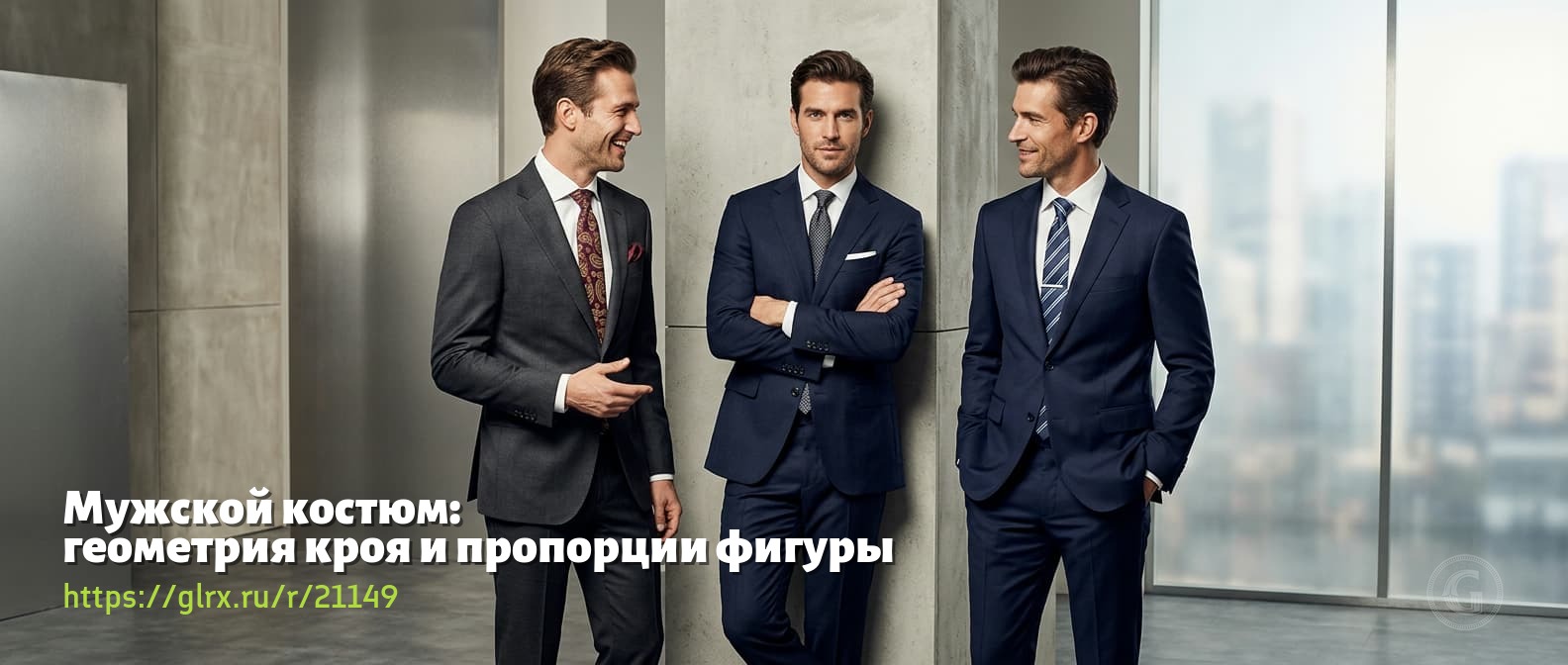
Lapel width is one of the most precise tools for balancing the upper body. Narrow collars, approximately 6 centimeters wide, create the illusion of a narrower shoulder girdle, which looks natural on slender men with a narrow chest. On a larger frame, these same fine lines create a sharp imbalance: the body appears disproportionately large against the small details of the jacket. Wide lapels, approximately 10 centimeters wide, harmonize well-developed muscles, maintaining the correct proportions of the head, neck, and shoulders. When evaluating ready-made styles at DOMINO or discussing a cut with a tailor at the atelier, it’s important to first check this balance of lapel width and shoulder seam — it’s noticeable to the eye before the quality of the fabric. The fastening point sets the geometric center of gravity of the entire silhouette. If the top button is sewn too high, the legs appear longer, but the torso is visually shortened, and the chest loses its masculine wedge shape. The low-set closure creates a long V-neckline, elongating the torso vertically. The jacket’s lapels flare out at an acute angle below the button — this tailored angle elegantly conceals fullness at the waist without resorting to any structural tricks.
The bust line plays an additional role — the point where the collar and lapel meet. A high bust line draws the visual line of the chest upward, adding a few centimeters to the appearance of height without altering the figure.
Wide lapels measuring approximately 10 centimeters (4 inches) harmonize well-developed muscles while maintaining the correct proportions of the head, neck, and shoulders. When evaluating finished garments at DOMINO or discussing a cut with a tailor at the atelier, it’s important to first check this balance between the lapel width and the shoulder seam — it’s easier to discern than the quality of the fabric.
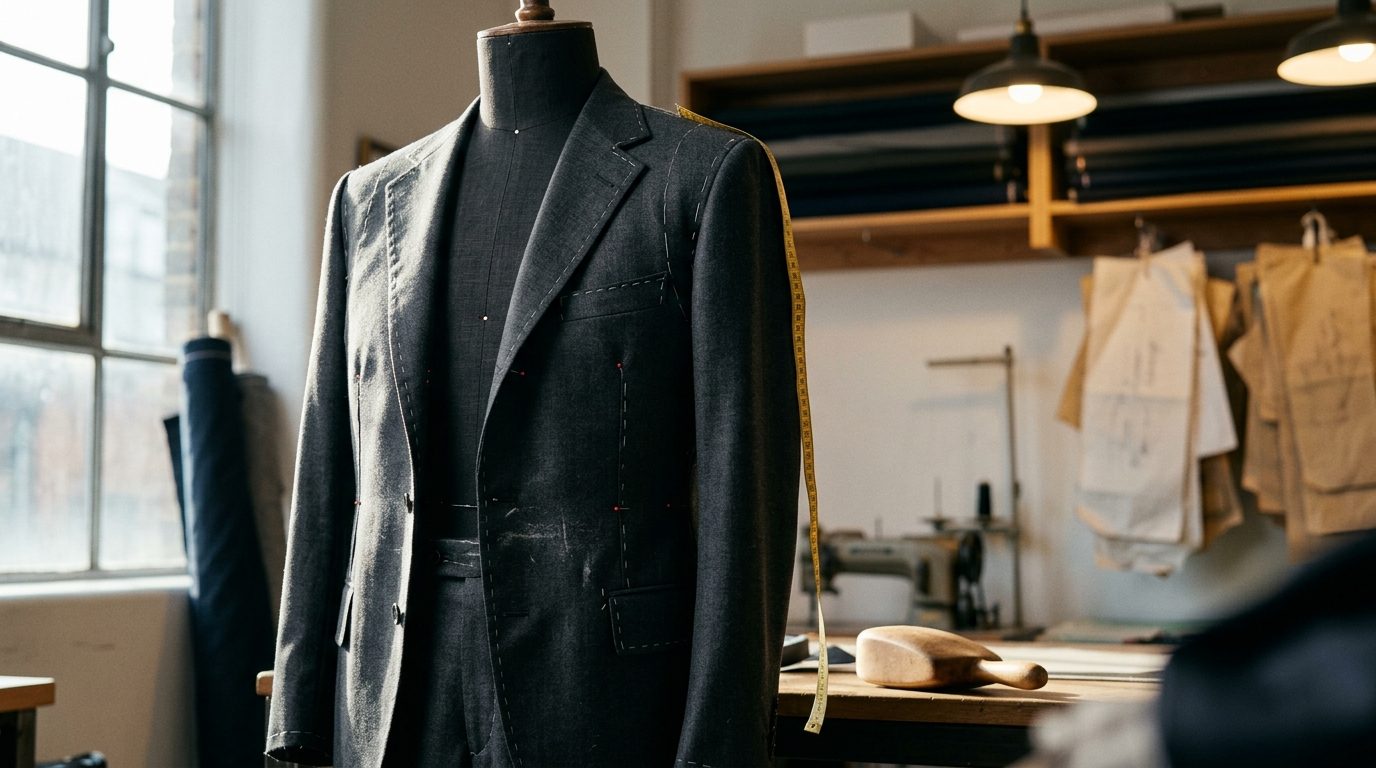
The closure point sets the geometric center of gravity for the entire silhouette. If the top button is sewn too high, the legs appear longer, but the torso is visually shortened, and the ribcage loses its masculine wedge shape. A low closure creates a long V-neck, elongating the torso vertically. The jacket flaps below the button flare out at an acute angle — this tailored angle elegantly conceals fullness at the waist without resorting to any structural tricks.
The lapel’s proportions to the shoulder are perceived by the eye before the quality of the fabric. That’s why choosing the right lapel width is the starting point when choosing any jacket.
The shoulder seam creates a rigid frame for the entire silhouette. A rigid English shoulder with a dense padded shoulder pack and shoulder roll creates a graphic, rectangular outline that camouflages sloping or asymmetrical shoulder lines. A soft Neapolitan shoulder, sewn without internal padding, follows the body’s anatomical contours and allows maximum freedom of movement. The second design requires an upright posture: without a muscular frame, the soft fabric simply droops along the sleeve.
Trouser fit geometry
The common low-rise waist consistently and predictably disrupts the proportions of the male figure. Hip-hugging trousers shorten the legs, accentuating the lower abdomen, and a shirt worn over such a waistband inevitably billows, creating loose volume in the midsection. A classic mid-rise or high-rise sits at the natural waistline, creating a smooth transition from the hips to the thighs, and adding visual height. A belt holds the shirt in place, and an extended fly conceals the belly — two simple design decisions that transform the overall silhouette.
The choice between pleated and smooth front trousers is determined less by fashion and more by anatomy. Double-pleated trousers allow the fabric to move freely and conceal the massive thigh muscles behind vertically falling folds. A flat, smooth style hugs the body closely, requires a precise fit, and looks best on a slender figure with straight legs.
Systematization of proportions
| Figure | Jacket fastening | Shoulder type | Construction of trousers |
|---|---|---|---|
| Short and stocky | Low, two buttons | Hard roller | Mid rise, no cuffs |
| Tall, thin | Double-breasted | Dense structured | Double tucks, 5 cm cuffs |
| Large, broad-shouldered | Moderately low | Soft Neapolitan | High rise, sleek front |
Short, stocky men need to visually elongate their silhouette. A single-breasted jacket with a deep buttoning and peak lapels draws the eye vertically. It’s best to avoid horizontal lines entirely: lower leg cuffs cut across the figure, and side pocket flaps disrupt the clean sideline.
Tall and slender men require the opposite strategy. A double-breasted jacket with two parallel rows of buttons draws the eye horizontally, widening a narrow torso. Dense, textured fabrics — wool flannel weighing 300 to 400 grams per square meter — hold the desired shape and create physical thickness. Trousers with deep tucks and wide cuffs add width to the legs, while the horizontal cuff line minimizes excess height.
Large men should avoid hard structural elements: a stiff shoulder and a dense side bag will make a massive figure look angular and bulky.
For a larger figure with a broad chest, the soft Neapolitan shoulder seam eliminates angularity. The fabric hugs the body’s contours without creating an artificial frame. The moderately wide lapels, measuring 9 centimeters, balance the width of the torso. The trousers are cut with a strictly high waist: the waistband should rest above the midriff and maintain its shape as you move, while maintaining a loose fit at the knees.
- The silent signs of a quality men’s suit
- Russian clothing and its connection with handicraft art
- Who is Garik Garik?
- The Role of the Choir in Liturgical Music of Medieval Europe
- Salon "Provocateur" - business suits for men for all occasions
- How Kinesitherapy Helps Recover: Effective Movement Rehabilitation