Eco-architecture:
the history of sustainable architectural solutions
 Automatic translate
The term "Ecoarchitecture" refers to an approach to design and construction aimed at creating buildings that interact harmoniously with the environment. This approach combines innovative technologies, traditional knowledge and a deep understanding of natural processes to create buildings that minimize negative impacts on ecosystems.
The basic principles of ecological architecture include the efficient use of natural resources, the use of renewable energy sources, the maximum reduction of waste and the creation of a healthy environment for people. Modern ecological buildings strive to achieve a zero or even positive energy balance, using solar energy, geothermal systems and other natural sources.
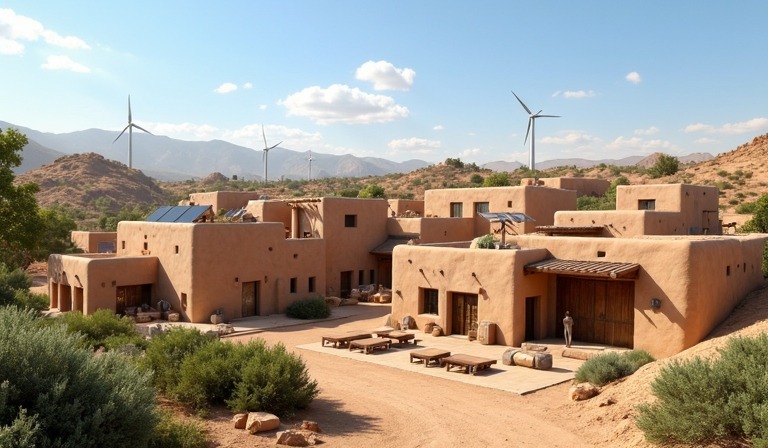
The relevance of eco-architecture is determined by global environmental challenges. The construction industry consumes more than 30% of all energy produced and generates about 40% of carbon dioxide emissions into the atmosphere. Climate change, depletion of natural resources and urban population growth require a radical revision of approaches to architecture and urban planning.
Ecological architecture offers solutions that go beyond simple energy conservation. It aims to create buildings that actively participate in the restoration of natural ecosystems, improve air and water quality, support biodiversity, and promote sustainable communities. This holistic approach views the building not as an isolated object, but as an integral part of a larger ecological and social system.
2 Vernacular architecture and climatic adaptation
3 Industrial Revolution: A Departure from Ecological Principles
4 The ecological awakening of the 1960s and 70s
5 Pioneers of Sustainable Architecture
6 Institutionalization of green building (1980-90s)
7 Global expansion of certification systems
8 Biomimicry as a source of architectural innovation
9 The Passive House Movement: A Revolution in Energy Efficiency
10 Contemporary Innovations: Carbon Neutral Buildings and Living Architecture
11 Smart Buildings and the Internet of Things Revolution
12 Regenerative Architecture as a New Paradigm
13 Russian practice of ecological construction
14 The Future of Ecological Architecture: Challenges and Prospects
Ancient Civilizations as Pioneers of Sustainable Construction
The principles of ecological architecture have their roots in ancient times, when builders intuitively created structures adapted to the local climate and using available natural materials. Ancient civilizations demonstrated remarkable examples of sustainable construction, many of which still serve as a source of inspiration for modern architects.
The Egyptian civilization presents outstanding examples of climate-adapted architecture. The ancient Egyptians used clay bricks and stone, materials with high thermal mass that accumulated coolness at night and released it during the day. The orientation of buildings took into account the direction of the sun and winds, and small windows minimized heating of the premises. Natural ventilation systems and courtyards created a comfortable microclimate without the use of mechanical cooling systems.
The Indus Valley Civilization, which existed around 3300 BCE, demonstrated exceptionally advanced principles of urban planning and ecological construction. The cities of Harappa and Mohenjo-Daro had sophisticated water supply and sewerage systems, buildings were oriented north-south for optimal lighting, and the use of baked brick ensured the durability of the structures.
Traditional Chinese architecture developed the concepts of passive solar heating and natural ventilation. The Great Wall of China, built using rammed earth technology, demonstrates the durability of environmentally friendly building methods. Local materials such as clay, straw, and wood provided excellent thermal insulation and minimal environmental impact.
The architecture of ancient Mesopotamia used innovative cooling systems, including wind towers (badgirs) that directed cool air into living spaces. These natural air conditioning systems operated without consuming any energy, relying solely on the laws of physics and an understanding of local climate conditions.
These ancient solutions show that ecological architecture is not a modern invention, but a return to traditional wisdom, enriched by modern technology and scientific understanding.
Vernacular architecture and climatic adaptation
Traditional vernacular architecture is a priceless treasure trove of knowledge about creating buildings that are perfectly adapted to local climate conditions and natural resources. Vernacular building traditions have evolved over centuries, passing down time-tested solutions for creating comfortable and sustainable living environments from generation to generation.
Architecture across climate zones displays a remarkable diversity of adaptive strategies. In hot, arid regions, builders used thick adobe or stone walls to trap cool air at night and provide protection from the heat of the day. Courtyards created natural cooling zones, and flat roofs provided additional living spaces in the evening hours.
In tropical, humid climates, architecture developed opposite principles: raised houses on pillars provided flood protection and improved air circulation, wide eaves provided protection from rain and sun, and large windows and open plans maximized natural ventilation.
Cold climates produced compact building forms with minimal surface-to-volume ratios, thick walls made from local materials, and steep roofs to shed snow. Scandinavian architecture used turf as an insulating material, creating roofs that not only retained heat but also supported the local ecosystem.
Water systems in traditional architecture deserve special attention. Persian karezes, Roman aqueducts, Indian baolis (stepwells) – all these engineering solutions demonstrated a deep understanding of hydrological cycles and the rational use of water resources.
The material base of vernacular architecture was entirely based on local resources: clay, straw, wood, stone were mined within a radius of several kilometers from the construction site. This minimized transportation costs and carbon footprint, and also ensured the full integration of buildings into the local ecosystem.
Modern research shows that many traditional solutions outperform modern technologies. The malkafs (wind catchers) of Middle Eastern architecture provide more efficient cooling than mechanical air conditioning systems. Traditional rammed earth construction methods demonstrate superior thermal mass and durability.
Industrial Revolution: A Departure from Ecological Principles
The Industrial Revolution of the 18th and 19th centuries radically changed approaches to architecture and construction, largely breaking the connection between buildings and their natural environment. Mass production of building materials, the development of transport networks and urbanization led to the standardization of architectural solutions, often ignoring local climatic features and environmental principles.
The invention of Portland cement in 1824 and the subsequent development of reinforced concrete structures revolutionized the construction industry. Concrete and steel made it possible to create buildings of unprecedented sizes and shapes, but their production required enormous amounts of energy and generated significant carbon dioxide emissions. The cement industry was responsible for 8% of global CO₂ emissions.
The development of mechanical heating, ventilation, and air conditioning systems freed architects from the need to consider climate factors in their design. Buildings became hermetically sealed boxes, completely dependent on artificial systems to maintain the microclimate. This led to a sharp increase in energy consumption and the loss of traditional knowledge about passive climate strategies.
Urbanization and mass housing construction required standardized solutions that could be quickly reproduced in different climate zones. The International Style in architecture promoted universal solutions, ignoring local traditions and climate features. Glass skyscrapers were equally built in hot deserts and cold northern cities.
However, the Industrial Revolution also created the preconditions for the future development of ecological architecture. The mass production of glass improved the possibilities of using natural light, the development of insulation materials increased the energy efficiency of buildings, and scientific research laid the foundations for understanding thermal processes in buildings.
The ecological awakening of the 1960s and 70s
The environmental movement of the 1960s and 70s was a turning point in the development of sustainable architecture. The publication of Rachel Carson’s book Silent Spring in 1962, the energy crisis of 1973, and growing awareness of environmental issues forced architects and urban planners to rethink their design approaches.
The energy crisis has made the energy efficiency of buildings particularly acute. The sharp rise in oil prices has forced the search for alternative energy sources and ways to reduce energy consumption. It was during this period that serious study of passive solar systems, improved thermal insulation and energy-saving technologies began.
California became one of the centers of the ecological movement in architecture. Innovative architects began experimenting with solar collectors, earthen houses, and other alternative technologies. The movement for appropriate technology called for the use of simple, environmentally friendly, and socially just solutions.
The academic environment also responded to environmental challenges. Universities began offering courses in environmental design, climate studies, and energy efficiency in buildings. Research in building physics received new impetus, and computer modeling began to be used to analyze the energy performance of buildings.
The social movements of this period also influenced architecture. Communes and ecovillages experimented with alternative forms of living and building, often returning to traditional materials and methods. These experiments, although not always successful, accumulated valuable experience in sustainable construction.
Pioneers of Sustainable Architecture
The development of ecological architecture is inextricably linked with the names of outstanding innovative architects who, long before the general recognition of environmental problems, developed the principles of harmonious interaction between architecture and nature.
Hassan Fathy (1900-1989), an Egyptian architect often referred to as the “architect of the poor,” became one of the most influential pioneers of sustainable architecture. Fathy rejected Western building techniques and materials, instead reviving traditional adobe construction methods. His approach included training local people in building skills, using local materials, and creating architecture that reflected the community’s cultural identity.
The New Gourna project (1945-1948) was Fathy’s most famous experiment. The village was designed to relocate residents living near archaeological sites in Luxor. Fathy used traditional Nubian construction methods of vaulted roofs without formwork, natural ventilation systems, and passive cooling. Although the project faced social difficulties, it demonstrated the viability of environmentally friendly building techniques.
Frank Lloyd Wright (1867-1959) developed the concept of “organic architecture,” which anticipated many of the principles of modern ecological architecture. Wright believed that buildings should grow from their location and be part of the natural environment. His Fallingwater House (1935) became an icon of organic architecture, demonstrating the harmonious integration of the building with natural elements such as a waterfall and a forest.
Wright’s principles of organic architecture included the use of local materials, maximum use of natural light, open plans that integrate indoor and outdoor spaces, and design that meets functional needs without excess. These principles have become the basis for many modern approaches to ecological design.
Ken Young, a Malaysian architect, pioneered bioclimatic architecture in tropical regions. Since the early 1970s, he has been developing principles for the design of high-rise buildings adapted to tropical climates. His approach included natural ventilation, sun protection, green facades, and the integration of natural elements into the architecture.
Often referred to as the “father of green architecture,” Sim van der Ryn developed a concept of ecological design based on an understanding of natural processes. He founded the Farallones Center for research and demonstration of sustainable technologies and made significant contributions to the theoretical foundations of ecological architecture.
Institutionalization of green building (1980-90s)
The 1980s and 1990s saw the institutionalization of the ecological architecture movement. Ecological principles evolved from experimental projects by individual innovators into systematic approaches supported by government programs, professional organizations, and research institutes.
The UK was a pioneer in the creation of a system for assessing the environmental performance of buildings. In 1990, the Building Research Establishment launched BREEAM, the world’s first environmental certification system for buildings. BREEAM assessed buildings on a wide range of criteria: energy efficiency, water use, materials, pollution, transport, ecology and management.
The creation of BREEAM was revolutionary because for the first time a systematic methodology was created to quantify the environmental performance of buildings. This allowed architects, clients and regulators to objectively compare different projects and encourage the adoption of best practice.
In parallel, government programs to support energy efficiency developed. Many countries introduced energy standards for new buildings, provided subsidies for the installation of solar collectors and thermal insulation, and supported research into renewable energy.
The scientific community has intensified research in the areas of building physics, energy modeling, and environmental impact of building materials. Specialized journals, conferences, and research centers have emerged that focus on sustainable construction issues.
Architectural education also responded to the growing interest in environmental issues. Leading architecture schools introduced courses in environmental design, energy efficiency, and sustainable development. A new generation of architects was trained to include an understanding of environmental principles as an integral part of their professional competencies.
Global expansion of certification systems
The success of the British BREEAM system inspired the creation of national environmental certification systems around the world. In 1993, the US Green Building Council (USGBC) was founded in the USA, which in 1998 launched the LEED (Leadership in Energy and Environmental Design) system, the American equivalent of BREEAM.
LEED adapted the British experience to American conditions, incorporating the specific requirements of the US climate, building codes and market conditions. The system assessed projects in the following categories: sustainable sites, water efficiency, energy and atmosphere, materials and resources, indoor environmental quality, and design innovation.
LEED has evolved in stages: version 1.0 (1998), version 2.0 (2000), version 3.0 (2009), version 4.0 (2014). Each new version expanded its coverage, improved the assessment methodology, and adapted to new technological capabilities. To date, buildings in more than 180 countries around the world have been certified under the LEED system.
Germany developed its own DGNB (Deutsche Gesellschaft für Nachhaltiges Bauen) system, which focused on the life cycle of buildings and the socio-economic aspects of sustainability. Other countries created national systems: Green Star in Australia, CASBEE in Japan, Green Mark in Singapore.
The emergence of multiple certification systems has created a need for their harmonization and mutual recognition. The World Green Building Council, founded in 1999, has become a coordinating organization uniting national green building councils and facilitating the exchange of experience.
Certification systems have had a profound impact on the development of the green building market by creating economic incentives for the adoption of sustainable technologies and raising awareness of the environmental aspects of architecture.
Biomimicry as a source of architectural innovation
In 1997, biologist Janine Benyus published Biomimicry: Innovations Inspired by Nature, which gave its name and theoretical basis to a new direction in design and architecture. Biomimicry proposes to study natural forms, processes, and ecosystems as a source of solutions to human problems.
Nature, having evolved over billions of years, has created amazingly effective solutions for energy conservation, thermal regulation, structural optimization, and adaptation to the environment. Studying these solutions opens up new possibilities for creating more efficient and sustainable buildings.
Benyus identified three levels of biomimicry: imitation of the forms and structures of organisms, copying natural processes, and studying ecosystem principles. In architecture, all three levels have found practical application.
Examples of formal biomimicry include buildings inspired by the structure of shells, honeycombs, bones, or plant forms. The Estplenad in Singapore mimics the shape of a durian, the Lotus Temple in Delhi replicates the structure of a lotus flower, and the Gurkin Tower in London is based on the structure of a sea sponge.
Process biomimicry studies the mechanisms of thermoregulation in animals, photosynthesis in plants, and self-cleaning of surfaces. The Eastgate Centre in Zimbabwe uses the principles of termite mound ventilation to maintain a comfortable temperature without mechanical air conditioning. Facades imitating the structure of lotus leaves have self-cleaning properties.
Ecosystem biomimicry studies the principles of how natural communities function: closed cycles, mutually beneficial relationships, efficient use of resources. These principles inspire the creation of buildings and neighborhoods that function as living ecosystems.
Biomimicry has stimulated the development of new materials and technologies: self-healing concrete, adaptive façade systems, bio-inspired ventilation and lighting systems. Interdisciplinary collaboration between architects, biologists and engineers opens new horizons for innovation in ecological architecture.
The Passive House Movement: A Revolution in Energy Efficiency
The Passive House concept, developed in the late 1980s by German physicist Wolfgang Feist and Swiss professor Bo Adamson, has become one of the most influential movements in modern ecological architecture. Passive House is an energy efficiency standard that reduces heating requirements by 90% compared to conventional buildings.
The first passive house was built in Darmstadt in 1991. This four-apartment building demonstrated the possibility of creating comfortable housing with minimal energy consumption using only high-quality thermal insulation, air tightness, heat recovery and passive solar heating.
The five main principles of a passive house include: excellent thermal insulation of all enclosing structures, high-quality windows and doors, tightness of the building envelope, absence of thermal bridges, controlled mechanical ventilation with heat recovery.
The Passive House standard requires that the heating demand does not exceed 15 kWh/m² per year, the total primary energy consumption does not exceed 120 kWh/m² per year, and the air tightness does not exceed 0.6 volume per hour at a pressure of 50 Pa.
Monitoring of more than 1,800 apartments in passive houses confirmed the effectiveness of the concept. Actual energy consumption corresponded to the calculated values, and residents noted a high level of comfort: stable temperature, no drafts, fresh air and low operating costs.
The passive house movement has spread around the world, adapting to different climates. In hot regions, the focus is on protection against overheating and efficient cooling, while in cold regions, the focus is on maximizing solar heat and minimizing heat loss.
The Passive House Institute has developed specialized software PHPP (Passive House Planning Package) for precise calculation of energy performance of buildings. This has enabled architects and engineers to optimize solutions at the design stage to achieve the passive house standard.
Economic studies have shown that although the initial costs of building a passive house are 5-15% higher, this investment pays for itself through reduced operating costs within 10-15 years.
Contemporary Innovations: Carbon Neutral Buildings and Living Architecture
The 21st century has seen the emergence of new concepts in green architecture that go beyond energy efficiency and aim to create buildings with a zero or negative carbon footprint. Carbon-neutral buildings not only minimize energy consumption, but also completely offset their emissions through renewable energy and carbon credits.
The concept of "living buildings" represents the most ambitious approach to ecological architecture. A living building should produce more energy than it consumes, collect and purify all the water it needs on site, use no toxic materials, and function as a healthy ecosystem.
The Living Building Challenge, launched in 2006, sets seven performance criteria: place, water, energy, health and happiness, materials, fairness and beauty. These criteria require buildings to function in harmony with natural systems and promote the well-being of all life forms.
The Bullitt Center in Seattle, opened in 2013, was one of the first commercial buildings to meet the Living Building standard. The building produces all of its energy through solar panels, collects rainwater for all of its needs, uses only non-toxic materials, and includes innovative composting systems.
Regenerative architecture goes further, aiming to create buildings that actively restore the environment. Regenerative buildings do not simply minimize harm, but actively improve the ecological state of the site, support biodiversity, and restore natural processes.
The principles of regenerative architecture include using buildings as carbon sinks, creating habitats for local flora and fauna, restoring water cycles, and improving soil and air quality. Buildings are designed as an integral part of the local ecosystem.
Technological innovations support these ambitious goals. New materials such as bio-concrete that can absorb CO₂, cross-linked timber (CLT) that stores carbon, and biomaterials grown from fungal mycelium are expanding the possibilities of green construction.
3D printing in construction opens up new perspectives for creating sustainable buildings with minimal waste and optimized use of materials.
Smart Buildings and the Internet of Things Revolution
The integration of digital technologies into architecture has created a new class of “smart buildings” that can autonomously optimize energy consumption, ensure user comfort, and minimize environmental impact. Internet of Things (IoT) technologies allow buildings to collect and analyze vast amounts of data to make intelligent decisions in real time.
Modern smart buildings are equipped with thousands of sensors that monitor temperature, humidity, air quality, lighting levels, human presence, and energy consumption of individual systems and equipment. This data is processed by artificial intelligence systems that optimize the operation of all engineering systems.
Lighting control systems automatically adjust brightness based on natural light and occupancy, providing energy savings of up to 30-50%. Intelligent heating, ventilation and air conditioning (HVAC) systems adapt to weather conditions, room usage schedules and user preferences.
Predictive analytics helps prevent equipment failures, plan maintenance, and optimize the lifecycle of systems. Machine learning detects energy consumption patterns and suggests strategies for further optimization.
Integrating renewable energy with storage and smart management systems turns buildings into active participants in energy networks. Buildings can sell excess energy back to the grid, participate in demand response programs, and help stabilize the energy system.
Digital twins of buildings — virtual models synchronized with real assets via IoT sensors — allow architects and building managers to simulate different scenarios, test new strategies, and optimize performance without compromising real-world operations.
However, smart buildings also pose new challenges: cybersecurity, data privacy, system complexity and dependency on technology. Successful implementation requires a careful balance between technological capabilities and the practical needs of users.
Regenerative Architecture as a New Paradigm
Regenerative architecture is the evolution of green building from the concept of “less harm” to the principle of “more benefit”. This approach views buildings as living systems that can actively restore and improve the environment, support biodiversity and strengthen social connections in communities.
The philosophy of regenerative architecture is based on the understanding of buildings as integral parts of broader ecological and social systems. Rather than being isolated from the environment, regenerative buildings seek to deeply integrate with local ecosystems, climate processes, and cultural traditions.
Key principles of regenerative design include making buildings carbon sinks, restoring degraded landscapes, supporting local biodiversity, restoring natural water cycles, and creating healthy social spaces. Each element of a building should perform multiple functions, supporting both human needs and ecological processes.
The material strategy of regenerative architecture prioritizes biomaterials that can sequester carbon: wood, bamboo, straw, hemp, mushroom mycelium. These materials not only have a minimal carbon footprint, but also actively absorb CO₂ from the atmosphere during the growth process.
The water systems of regenerative buildings mimic natural hydrological cycles. Rainwater is collected, purified by biological systems and reused. Wastewater flows through created wetlands, which not only purify the water but also create habitat for local flora and fauna.
Energy systems integrate multiple renewable sources: solar panels, wind turbines, geothermal pumps, biogas plants. Buildings are designed to produce excess energy that supports local communities and ecosystems.
The social aspect of regenerative architecture includes the participation of local communities in the design and construction process, supporting the local economy through the use of regional materials and labor, and creating spaces for social interaction and cultural exchange.
Russian practice of ecological construction
Russian architecture is gradually integrating the principles of green construction, adapting international experience to local climate conditions, construction traditions and regulatory framework. The harsh climate of most of Russia creates special requirements for energy efficiency and durability of buildings.
The development of green construction in Russia began in the early 2000s with the emergence of the first commercial projects certified according to international LEED and BREEAM standards. The Zemelny office building in Moscow became one of the early examples of integrating ecological principles: energy-efficient facades, rainwater collection systems, vertical gardening and centralized management of engineering systems.
State policy in the field of energy efficiency was developed after the adoption of the Federal Law "On Energy Saving and Improving Energy Efficiency" in 2009. Requirements were established to reduce energy consumption of buildings by 40% by 2020, mandatory energy audits and incentives for the implementation of energy-saving technologies were introduced.
The Russian Green Building Council (Green Building Council Russia) was established in 2009 to coordinate the development of sustainable construction, adapt international standards to Russian conditions, and promote best practices. The Council has developed a national voluntary certification system, Green Standards.
The residential complex "Very na Botanicheskaya" in Moscow represents a new generation of ecological projects in Russia. The complex is integrated into the natural environment of the Botanical Garden, 77% of the territory is occupied by green areas, energy-efficient technologies and resource management systems are used.
Russian universities are developing research and education in the field of ecological architecture. The Moscow Architectural Institute, the Saint Petersburg State University of Architecture and Civil Engineering and other leading universities are introducing specialized programs in sustainable design.
The prospects for the development of ecological architecture in Russia are associated with the tightening of energy standards, the development of renewable energy technologies, the introduction of circular economy principles and the integration of digital building management technologies.
The Future of Ecological Architecture: Challenges and Prospects
Sustainable architecture is on the threshold of radical transformations caused by accelerating climate change, the development of new technologies and increasing demands on quality of life. The future of the industry is determined by the convergence of biological, digital and material innovations.
Climate adaptation is becoming a critical aspect of architectural design. Buildings must be prepared for extreme weather events, sea level rise, changing temperature regimes, and rainfall patterns. Climate-resilient architecture integrates flood prevention strategies, passive cooling, off-grid energy systems, and adaptive designs.
The development of biotechnology opens up prospects for the creation of living building materials. Researchers are working on concrete that can self-heal with the help of bacteria, biomaterials grown from fungal mycelium, and building systems based on the growth of living organisms.
Artificial intelligence and machine learning are transforming the design and operation of buildings. AI optimizes building shapes to minimize energy consumption, predicts user behavior, manages complex engineering systems, and provides predictive maintenance.
Urbanization requires new approaches to ecological design at the district and city level. The concept of “smart cities” integrates buildings into the wider urban systems of energy supply, waste management, transport and water supply.
Social justice is becoming an integral part of ecological architecture. Sustainable buildings should be accessible to all social groups, support local communities and contribute to reducing inequality.
Global challenges – climate change, resource depletion, population growth – require a fundamental rethinking of the role of architecture in human civilization. The ecological architecture of the future must not simply minimize harm, but actively contribute to the restoration of planetary ecosystems and the creation of a just, prosperous and sustainable world for all forms of life.