A summary of Ivan Turgenev’s "The Bachelor"
 Automatic translate
 This comedy of manners was written in 1849. The writer reimagines the typical romantic conflict of the era, making the true hero of the love story an aging, comical, and deeply noble official, contrasted with a young, superficial, and easily influenced groom.
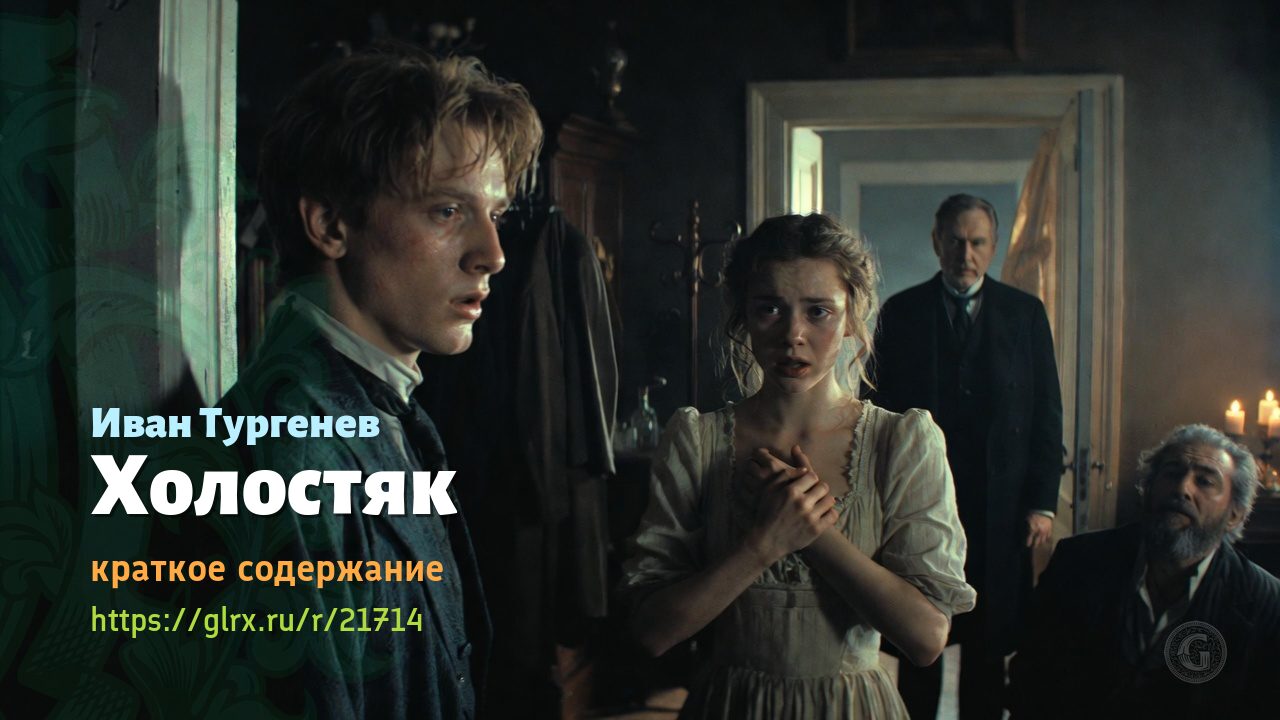
The action unfolds in St. Petersburg, in the modest apartment of collegiate assessor Mikhail Ivanovich Moshkin. The host is busily preparing for an important dinner, handing out errands to his dim-witted servant, Stratilat, and the Finnish cook, Malanya. He has brought groceries: a sugar loaf, cologne, and a bottle of Madeira. The bell rings, and an unexpected guest appears: Philipp Yegorovich Shpundik. This Tambov landowner, an old friend of Moshkin’s, has come to the capital on business. The old men joyfully embrace. Moshkin shares his innermost joy with his friend.
Mikhail Ivanovich tells the story of his 19-year-old ward, Marya Vasilyevna Belova. Several years ago, the girl’s mother, a poor widow, slipped on icy stairs and broke her leg. Moshkin cared for her and fell in love with the family. Later, the widow caught a cold after a bath and died. Moshkin took the orphan in, raised her, and loved her as his own daughter. Now he is marrying her off to 23-year-old collegiate secretary Pyotr Ilyich Vilitsky. Moshkin is confident of the young man’s bright future and sincerely admires his modesty.
Soon the guests arrive. Vilitsky brings his patron, Rodion Karlovich von Fonck. He is a cold, calculating, and meticulous man. The dinner is extremely awkward. Marya Vasilyevna is shy, barely speaking, and responding in monosyllables. Marya’s aunt, the chatty Ekaterina Savishna Pryazhkina, is frightened by Fonck’s every glance. Moshkin behaves too fussily, trying to please the important guest. Shpundik tells inappropriate provincial stories about cattle plagues. Fonck tells society anecdotes about casual embraces on Nevsky Prospect, discussing music and balls. Vilitsky feels excruciating shame for his fiancée and her awkward company. He is painfully aware of Fonck’s condescending smiles. The conversation at the table completely falls apart.
The groom’s doubts
Five days pass. The scene shifts to Vilitsky’s bachelor apartment. The young man avoids meeting Moshkin, forcing his servant Mitka to lie about his departure for the countryside. Vilitsky is tormented by doubts, receives letters from his fiancée, feels guilty, and dreads the upcoming visit to the old man.
His solitude is interrupted by Fonck and Alkibiades Martynovich Sozomenos. The latter is a strange Greek, a graphomaniac, and the author of the mediocre story "The Nobility of a Judge on the Banks of the Volga." Sozomenos quickly falls asleep, smoking his pipe. Fonck seizes the moment for a frank conversation. The experienced bureaucrat subtly plays on Vilitsky’s ambitions. He convinces the young man that marrying an uneducated, poor girl will ruin his career, deprive him of his connections, and close the doors of high society. Fonck advises him to take a cool look at the relationship, arguing for the equality of spouses.
Suddenly, a servant announces the lady’s arrival. Fonck and Sozomenos tactfully retreat to the bedroom. A pale and agitated Marya Vasilyevna enters. She has realized her fiancé’s deception, read his coldness, and has come to demand an honest explanation. Vilitsky fumbles his excuses, kneels, and begs forgiveness. The girl weeps bitterly. Hearing voices in the bedroom, she realizes the presence of strangers, is deeply offended, and quickly runs away.
Fonk and Sozomenos emerge from their hiding place. Sozomenos chokes with laughter. Vilitsky is humiliated by the scene that has just unfolded. At that moment, Moshkin’s voice is heard from behind the door. The old man breaks through Mitka’s resistance. Moshkin chides the young man for his long absence and tells him about Marya Vasilyevna’s tears as she ran down the street. Vilitsky promises to come that evening to explain everything. The old man leaves, reassured.
Breakup and new proposal
Another week passes. The action returns to Moshkin’s apartment. The old man is dejected, grief-stricken. Vilitsky hasn’t shown up. Marya Vasilyevna has fallen ill from worry, and her aunt won’t leave her bedside. Shpundik arrives, trying to console his friend. The postman brings a letter.
Moshkin opens the letter. Vilitsky officially renounces the marriage. The young man writes of his broken heart, asks for forgiveness, promises to repay his debts, and breaks off the engagement once and for all. Moshkin flies into an indescribable rage. He demands his hat and fur coat, prepares to go to his offender, and threatens to challenge him to a duel. Shpundik and Pryazhkina try in vain to restrain the enraged old man. Moshkin flees.
Mikhail Ivanovich soon returns. Vilitsky has moved out of the apartment without leaving an address. Searching is futile. Pryazhkina laments, complaining about the stubbornness of young people, recalling General Bondoidina’s wife. Shpundik advises her to reconcile herself, forget the insult, and find another husband. Moshkin sends his friends out for a walk, intending to speak with his ward alone. He needs to prepare the girl for the terrible news.
Marya Vasilyevna emerges from her room. She remains calm and declares her readiness to accept the attack. The girl demands the letter. After reading the cruel lines, she covers her face with her hands, sobs silently, and then pulls herself together. Marya Vasilyevna declares that she must leave Moshkin’s house.
She understands her ambiguous position. Being an abandoned sponger will provoke gossip and ridicule. She plans to move in with her poor aunt, who lives in a midwife’s closet, to look for work, and earn her living through her own labor. Moshkin is horrified by this prospect. Life without his beloved ward seems unthinkable to him. He protests vehemently, begging her to stay.
The old man seeks a way out of the impasse. Wishing to protect the orphan’s honor, shield her from society’s contempt, and grant her the rightful status of mistress of the house, Moshkin proposes to Marya Vasilyevna. He promises to respect her, protect her peace, and cherish her like a daughter, calling himself simply a reliable screen for her protection. Stunned, Marya Vasilyevna considers the proposal. Overwhelmed by the old man’s absolute devotion and sincere love, she accepts. The girl tells him she can hope for something and goes off to her room.
Moshkin is left alone. He can’t believe the happiness that has befallen him. Despair gives way to wild rapture, and the old man jumps around the room. Shpundik and Pryazhkina return. Seeing her friend’s face contorted with emotion, Pryazhkina mistakes his joy for a stroke. Moshkin, laughing, dissuades them. The old man solemnly announces that the wedding will take place. The groom has changed, and Marya Vasilyevna will be happy.
You cannot comment Why?