"The Web" by Nikolai Svechin, summary
 Automatic translate
This book is a historical detective story, the twenty-eighth installment in the Alexey Lykov series. It was published in 2021. The text’s central theme conveys the grim atmosphere of the lead-up to World War I, demonstrating the confluence of political investigation, corrupt government apparatus, and ordinary crime. The author describes real events that took place in Russia and Persia. Historical facts are seamlessly intertwined with police investigations.
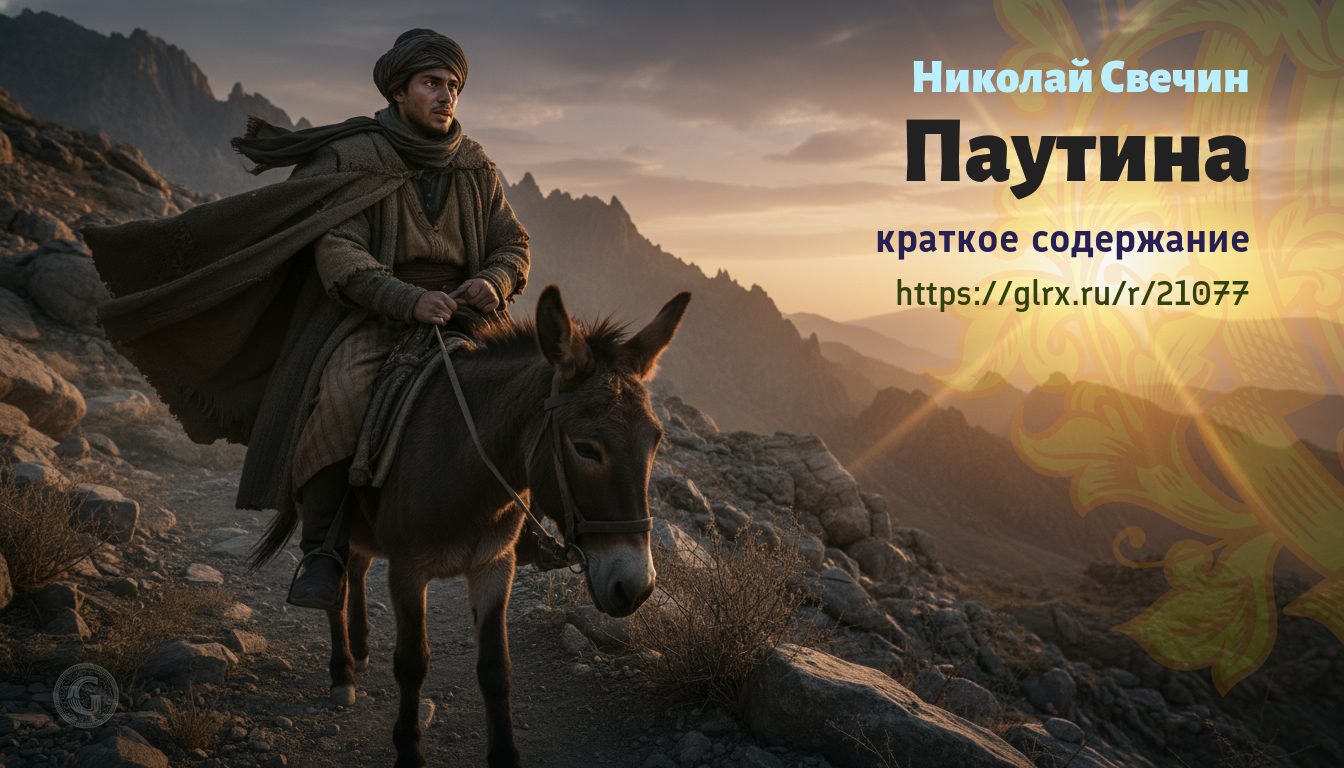
Conspirators and crime
After his release from prison, Alexei Lykov returns to the Police Department. The disgraced detective is disliked by Interior Minister Makarov. His superior gives his subordinate a humiliating assignment: help the St. Petersburg police catch robbers of state-owned liquor stores. An investigation reveals the obvious: common criminals have begun teaming up with political terrorists. The police track down a gang of anarchists on the outskirts of the city. A shootout ensues. The leader of the robbers, Zhukevich-Stosha, manages to escape. Before fleeing, he throws a bomb at Lykov and his assistant, Azvestopulo. The device turns out to be a shell-less device. The detectives suffer minor concussions.
Makarov then sends Lykov on a pointless mission beyond Lake Baikal, to the town of Verkhneudinsk. The policeman quickly handles bureaucratic assignments. A local supervisor asks him for help: his father-in-law has disappeared in Irkutsk while buying horses. Lykov takes up the investigation. Together with his Irkutsk colleagues, he finds the dismembered bodies of the missing traders. The criminals, from a Caucasian gang, are quickly arrested.
During another ambush, Lykov accidentally captures the escaped convict Timofeev. A note is found sewn into the bandit’s clothing. The text reveals the secret plans of the criminal underworld. The bandits are electing their supreme leader, "Ivan Ivanovich." Such an election hasn’t been held for twenty-five years. Siberian recidivists cast their votes for Ataman Mezgir. The note indicates a meeting place in St. Petersburg. Lykov finds only a fragment of a telegram with the word "zbenn."
On the train ride home, a random fellow traveler gives Lykov a clue. The mysterious word means "carving and iconostasis workshop." The detective is searching for such a workshop in the capital. The establishment is owned by a man named Chukhontsev. Lykov recognizes him as an old acquaintance, a respected criminal nicknamed Verlioka. He works as one of the organizers of the secret elections. Mezgir’s main rival is a mysterious man nicknamed Sorokoum. This bandit has amassed a huge fortune, conducts business legally, and leaves no evidence.
Police Department Director Beletsky orders Lykov to stop the gathering. The detective travels to Moscow and meets with local police chief Koshko and politician Alexander Guchkov. They are searching for a high-profile businessman similar to Sorokoum. Meanwhile, Lykov unsuccessfully attempts to intercept thieves’ mail at Butyrka Prison. Guards break through thousands of cardboard boxes but find no letters. The elections are being held secretly.
Secret mission in Persia
Meanwhile, Lykov’s son, Lieutenant Nikolai Lykov-Nefedyev, is on a secret mission in Persia. The Caucasus Military District transfers him to General Fidarov’s Ardabil detachment. Nikolai disguises himself as an Armenian merchant, Ashot Ter-Yeghizar-oglu. He travels through mountain passes, surveying the nomads’ positions. His scout discovers a Turkish invasion of Persian territory. The Ottomans have occupied a strip more than fifty kilometers wide. General Fidarov exploits this information, bluffs, and bloodlessly forces the Turks to retreat across the border.
During his travels, Nikolai uncovers some curious facts. The region’s textile trade has been monopolized by bandits from the "Prodatkan" company. They are led by the escaped convict Makhotin. The criminals smuggle the fabrics. Their competitors’ caravans are being robbed by mercenary troops led by another criminal, Ismail-Hadji. He is working in cahoots with the commander of the Russian consular convoy, Captain Samoyad. Nikolai and the head of local Russian intelligence, Rotozeev, arrest Ismail-Hadji, exposing the traitorous captain.
Soon, Nikolai single-handedly executes six bandits led by Kurbashi Heydar. They had previously brutally murdered a family of Baha’i sectarians before the scout’s eyes. The elimination of the gang helps General Fidarov trap the nomadic Shahsevens in the winter steppe. Fidarov lures the Shahseven leader, Mamed-kuli Khan, into a trap, demanding a huge bribe. When he arrives for negotiations, he is arrested. The nomadic leader is subsequently executed in Tehran. The tribal chieftains are taken hostage, and the tribe surrenders its modern weapons. Peace comes to the mountains. Nikolai defeats the Prodatkani smugglers and apprehends Makhotin.
The kidnapping and the finale
In St. Petersburg, Lykov receives a message from his son. Nikolai writes that the man behind "Prodatkanya" is a factory shareholder named Vyrapaev. Through his informant Surovikov (a former robber nicknamed "Adam’s Head"), Lykov learns details of the criminals’ plans. The agent opens a shop on Ligovsky Prospekt and sells stolen fabrics. Sorokoum intends to overthrow the old ataman of Ligovsky, Netochai. The bandits lure Netochai into a trap and execute him. The murder is carried out by their regular hitman, Zapryagaev. Thanks to Surovikov, Lykov uncovers the true identity of the supreme leader.
It turns out that "Ivan Ivanovich" was Illarion Rudaitis, nicknamed Larka Shishok. Many years ago, he faked his death in a penal servitude camp and escaped. Now Shishok lives under the name Vyrapaev. He steals textiles from factories and sells them abroad.
The police shut down the distribution channels for the stolen fabrics. In response, Rudaitis sends assassins to the theater where Lykov had arrived with his wife. A detective spots the ambush and calls the police through the fire department. The bandits retreat. Later, Lykov and Azvestopulo track down the killer, Zapryagaev, on the street. A shootout ensues. The detectives kill the killer’s companion — he turns out to be the anarchist Zhukevich-Stosha. Zapryagaev himself is arrested.
At the same time, the political leadership is changing. The frivolous Maklakov becomes the new minister, and General Dzhunkovsky becomes his deputy for police. This chief, ignorant of the specifics of detective work, destroys secret agents in the army, citing the concept of officer honor.
Alexander Guchkov summons Lykov again to a secret meeting. The politician claims that autocracy is destroying the state. High-ranking military officials are plotting a dynastic coup to save the nation before the looming war with Germany. Guchkov asks Lykov to put him in touch with the supreme leader of the criminals. The conspirators need the bandits to cause mass unrest in the capital and distract the police. The army will refuse to suppress the rebellion, and the tsar will be forced to abdicate. Lykov is outraged by this plan, but does not promise to interfere with the plot.
On Rudaitis’s orders, tough guys kidnap Lykov right on Nevsky Prospect. The detective is brought to Vyrapaev’s mansion. The bandit leader offers a truce. Rudaitis promises not to touch Lykov and not to use his connections with Rasputin to fire the official. In exchange, he asks for Lykov’s past to be forgotten and for his negotiations with politicians to be allowed to proceed. The detective reluctantly agrees.
Alexei Nikolaevich returns home with a heavy heart. He and Azvestopulo drink cognac and discuss the grim prospects. Lykov understands: the country is inexorably sliding into the abyss. A major revolution is looming, and state power is weakening. The upper class is willing to collaborate with criminals to achieve its goals. The criminals sense the benefits and rally together. The fuse of a huge bomb has already been lit. Honest servants can only do their duty, recognizing the general hopelessness of the situation.
You cannot comment Why?