"My Children" by Guzel Yakhina, summary
 Automatic translate
This book is a sweeping historical drama, published in 2018. It immerses the reader in the isolated lives of the Volga Germans of the early Soviet period. The fate of an entire people is revealed through the lens of the tragedy of a lonely schoolteacher, whose invented fairy tales mystically come to life against the backdrop of devastating historical events. The work won the prestigious Big Book Award in 2019. The author was later awarded the Georg Dehio International Book Prize for her authentic portrayal of the fate of the German minority.
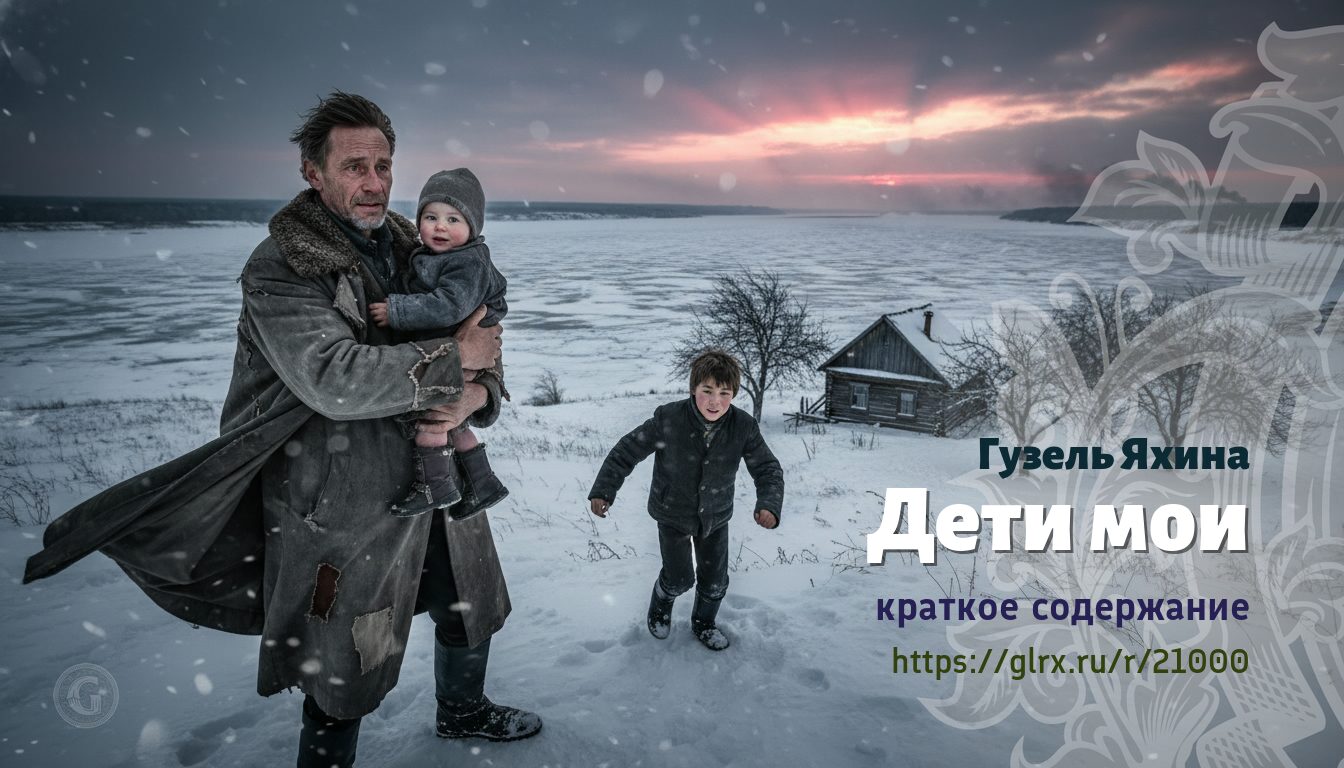
Life in Gnadenthal
Jacob Ivanovich Bach works as a schoolmaster in the prosperous German colony of Gnadenthal. He teaches peasant children to read and write, rings the school bell, and avoids noisy gatherings. The teacher’s meager daily routine is enlivened by a strange passion for thunderstorms. Bach ventures out into the steppe to face the storm, exposing his frail body to pouring rain and peals of thunder.
One day, the usual rhythm is disrupted. Bach receives a letter from a wealthy farmer, Udo Grimm, who lives on the inaccessible right bank of the Volga. A taciturn Kirghiz named Kaisar is ferrying the teacher across the river. Grimm hires his guest to teach literary German to his seventeen-year-old daughter, Clara. Her father plans to move to Germany and marry his daughter off profitably. The education takes place under strange circumstances. Clara sits behind a thick screen, protecting her virginity.
Teacher and student communicate through a curtain. Bach reads poems by Johann Wolfgang von Goethe and Friedrich Schiller, and Clara leaves timid notes in the margins of books. Bach falls in love with the girl’s pure voice. In the autumn, Grimm packs his things and leaves the farmstead, heading for his ancestral homeland. Clara escapes from the train. On a frosty night, she returns to Gnadenthal to Bach. Pastor Handel and the superstitious colonists condemn the illicit union.
Hermits of the Right Bank
Rejected by society, the lovers flee across the frozen Volga to the deserted Grimm farmstead to hide from humanity. Bach learns farm labor: chopping wood, fishing, and tending a vast apple orchard. Amid this isolation, the outside world is rocked by catastrophes. Beyond the Volga, the Civil War rages, with bloody food detachments and mass slaughters. A terrible famine ensues. Bach merely watches these tragedies from a high cliff.
Soon, disaster strikes at the hermits’ home. Three brutal bandits break into the dwelling, plunder their supplies, and rape Clara. After this terrible April morning, Bach loses the ability to speak. He is rendered speechless by the horror he experienced and the guilt he felt. Clara accepts what has happened with stoic calm. She carries the child and gives birth to a girl, Anche, in the winter. Clara herself dies in childbirth. Numb with grief, Bach hides his beloved’s body in a cold glacier.
Lonely Bach raises Anche. The girl becomes the meaning of his fading life.
One day, Vaska, a homeless Kyrgyz boy with a long criminal past, wanders onto the farm. The young vagabond curses and steals food, but possesses a quick and tenacious mind. Vaska stays with them. The stray teaches Ancha, who has been mute since birth, Russian. Bakh is forced to accept the stranger’s presence for the sake of his daughter.
Fairy tales and reality
The farm’s cow’s milk supply is running low. Bach sneaks into Gnadental and milks someone else’s goats. Locals catch the thief and bring him to the colony’s new party leader, Hoffmann. He is a deformed hunchback with the face of an angel, fanatically devoted to the ideas of communism. Hoffmann recognizes the former teacher. The party organizer offers a deal: he will provide milk for the child in exchange for the texts of Gnadental proverbs and sayings. Bach agrees.
Soon the proverbs run out. Hoffmann asks Bach to compose magical stories based on old legends to educate the masses. Bach writes fairy tales, recalling the stories of the late Clara. The fictional events described begin to mystically come true. Gnadenthal blossoms. Refugees return, bumper wheat harvests bloom, and herds multiply. Bach understands his power over reality. He writes day and night, wishing to create a safe and well-fed country for Anche.
Parallel to life in the colony, the course of the country’s highest political leadership unfolds. The leader travels on a special train and ponders the future structure of the state. Later, he plays an imaginary game of billiards with the German Führer. These episodes reveal the ruthless mechanisms of great history. The authorities’ political decisions directly destroy the autonomous way of life of the Volga Germans, wiping their traditional way of life from the face of the earth.
The idyll doesn’t last long. The state machine unleashes collectivization and dispossession. Bach’s tragic stories about the petrification of peasants, children fleeing into the forests, and the death of animals also come to fruition. Harvests rot, livestock perish from epidemics, and people flee. Recognizing the destructive power of his texts, Bach attempts to rectify the situation. He writes cloyingly kind fairy tales, but Hoffmann furiously rejects them.
Driven mad by extortion and poverty, a crowd of colonists riots. The rebels burn propaganda materials in the square, kill pioneers, and demand the extradition of the party organizer. Hoffmann comes out to the enraged crowd. He sheds his clothes, revealing his deformed body, and slowly walks toward the river. The crowd silently follows the victim. Hoffmann enters the water and drowns. Bach watches the party organizer perish, powerless to help.
Farewell to the past
Anche and Vaska are growing up. They are burdened by the isolation on the farm. Bach understands the inevitability of separation. One day, a boat carrying a Soviet agitator lands on the shore. The young man persuades the children to go to Pokrovsk, to the Clara Zetkin boarding school. Anche and Vaska happily agree. The mute old man sees them off with a smile and nods. The children sail off toward a more communal life, leaving Bach all alone on the deserted shore.
Every Sunday, Bach visits the children in the city. He brings them apples from his orchard. The children are genuinely happy to see him, but they are completely absorbed in the hectic life of the pioneers. Vaska takes the surname Volgin, and Anche learns German as part of the school curriculum. Bach realizes his ultimate uselessness. He renovates the old house, reinforces the foundation, re-roofs it, and builds triple-decker beds. Bach prepares the farmstead for the reception of future orphans.
Having finished his work, Bach shakes out the old duck feather bed, covering the yard with white down. He descends to the Volga and steps into the cold waves. The water accepts the old man. At the bottom, Bach sees the remains of the past: dead soldiers, perished calves, ruined statues, and drowned people. The current carries his body peacefully along the banks. Suddenly, Bach is pulled to the surface. The old boatman Kaisar and a young NKVD officer arrest the hermit.
In 1938, Jakob Bach was sentenced to fifteen years in a labor camp. He died eight years later under the collapse of a mine in Karlag. Vaska went to the front, returned alive, and went to Kazakhstan to search for his teacher. In the fall of 1941, the entire German population of the Volga region was deported. Gnadental was renamed Gennadyevo. Anche lost his leg while working in a labor camp. Vaska found a girl in a Kazakh village, and they remained together forever.
- The film "Vaska" - an attempt to reach out and a chance for a normal life
- "At the bottom", summary
- A summary of Arkady Gaidar’s "Distant Lands"
- Screenplay "True Friends" by Alexander Galich, summary
- The specifics of the landscape image
- On December 19, a new edition of the collection of short stories “Evenings on a Farm near Dikanka” will be published.
You cannot comment Why?