"The Game of Opinions" by Polina Dashkova, summary
 Automatic translate
A collection of short stories, essays, and stories, "The Game of Opinions," was published in 2006. This book is an honest chronicle of Russian reality at the end of the twentieth century, intertwining the fates of intelligence officers, criminal leaders, provincial teachers, and random witnesses to an era of change. Most of the dramatic stories are based on authentic criminal case materials and police reports.
On literary morals
In the title essay, the author discusses the split in Russian literature. Critics divide writers into two unequal groups: the closed, nomenklatura caste of "our own" and the popular, lone authors. The former hold official positions in unions and regularly receive awards, but lack recognition from the general reader. The latter are branded with contemptuous labels for their high circulation figures and popular success.
A personal recollection of a meeting with a former classmate at the Literary Institute reveals this conflict through a telling scene. The unfortunate colleague accuses the popular writer of indulging her undiscerning tastes, sincerely demanding that she acknowledge her own mediocrity for his own peace of mind. The conversation ends with the author’s ironic acceptance of the imposed role.
Saluki
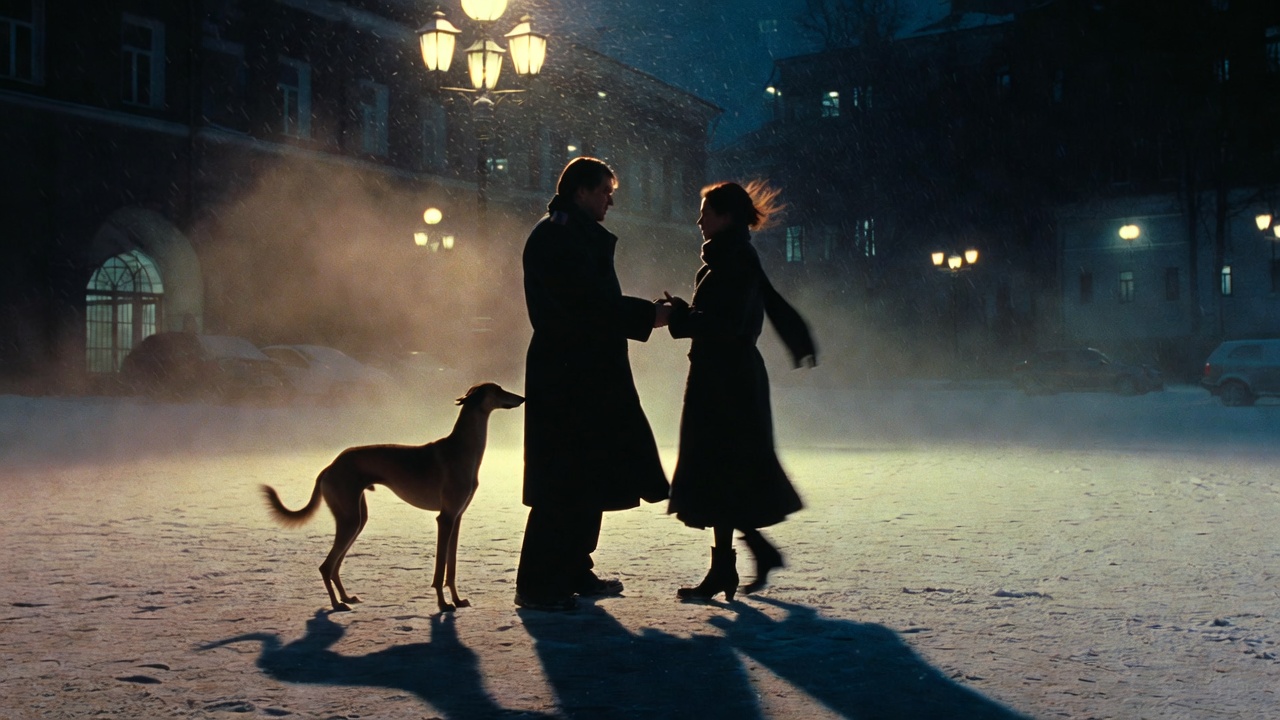
The story spans two decades in the life of intelligence officer Kirill Petrov. In the winter of 1978, a cadet at the KGB Higher School sees a girl named Vika waltzing with a rare Saluki in a snowy Moscow courtyard. His youthful shyness and a broken front tooth during training prevent him from approaching her. The image of the stranger in the snowstorm becomes a constant presence for him.
During the assault on the Taj Beg Palace in Kabul in 1979, Kirill miraculously survives thanks to his commander, Colonel Boyarinov, who shields him from automatic fire. In the hospital, amidst concussion and delirium, the cadet again sees the image of the Christmas girl. He later encounters her in an Orthodox church in 1983, but Vika, frightened by her family’s misfortunes, hides from him in the crowd.
Vika’s life falls apart after the arrest and death of her father, a crime boss nicknamed "Circus Man," and the death of her drug-addicted brother. Friends and teachers from the acting department at VGIK demonstratively turn their backs on the orphan. Mikho, a Far Eastern crime boss, provides support to her and her mother. He falls deeply in love with Vika, secures her consent to marry him, and takes her to Vladivostok, providing her with a life of luxury.
Meanwhile, Kirill experiences service in Central Asia, an investigation into large-scale corruption schemes, and deep disillusionment with the system. The events of 1993 in Moscow force him to resign from the special forces. He is sent to Chechnya as an instructor officer, teaching young soldiers how to survive, and then returns to the capital.
By 1998, a turf war is raging in Vladivostok. After the assassination of Koval, the overseer, Mikho faces mortal danger. The crime boss, now losing his sight, flies to Moscow for a complex operation. Intermediary Artur Shpon receives a contract from a Chechen group to assassinate Mikho and is looking for a reliable hitman. Captain Petrov, acting undercover and posing as a mercenary, attends the meeting.
Kirill flawlessly executes a covert operation and catches Shpon red-handed while handing over the advance payment. Vika, having learned of her husband’s rescue, decides to break off their hateful relationship and stay in Moscow. On New Year’s Eve, she goes out into the yard with a new Saluki puppy named Greta. Kirill meets her there, and the couple waltzes in the snow.
Probability theory
The essay chronicles the rise and collapse of a criminal organization engaged in gambling fraud in the 1990s. Vadik Sultanov, a former convict with a keen culinary flair, dreams of opening a first-class restaurant, "Vadim." On a train, he meets Afghanistan veteran Valera Osipov, and in the capital, they are joined by Mikhail Lastochkin, a theater school graduate nicknamed "Mikhlya."
Having seized the apartment of a deceased, lonely alcoholic, the accomplices set up a network of computer booths in Luzhniki. These booths offer passersby free entry into a supposedly win-win lottery featuring virtual cockroach races. The lure is Vadik’s cozy kebab shops with excellent meat. The fake players lure the sated, overfed citizens into high-stakes bets, where the mathematical algorithm always leaves the organizers with a profit.
Natalya Sergeevna, a modest teacher from Kamchatka who is raising her daughter Katya, who has cerebral palsy, alone, falls victim to a scam. Having received a $500 state prize, she travels to Moscow to buy a specialized wheelchair with automatic steering. Succumbing to the scammers’ persuasion, she squanders all her savings in a tent.
The distraught mother accidentally stumbles into an alley where Vadik is renovating a building for a restaurant. Losing her balance on the pavement, she causes a speeding jeep carrying the syndicate’s main organizers to crash. As a result of the collision, Valera seriously injures himself with a concealed weapon, Vadik severely injures his tongue and loses his sense of taste, and Mikhlya suffers a concussion.
Police Colonel Anatoly Popov, who had been investigating the gang for a long time, takes advantage of the chaos at the scene of the accident. The officer forces the fraudsters’ lawyer to immediately hand over eight hundred dollars in cash to the victim. Natalya Sergeyevna safely takes a modern stroller for her daughter to Kamchatka, while the trio of con men ends up in a penal colony, charged with creating a criminal organization.
Image of the future
The story is structured as a grotesque satirical dystopia set in the fictional year 2010. The United States of America is portrayed as a totalitarian barracks, cloaked in slogans of absolute security and a healthy lifestyle. Special commissions inspect citizens’ auras with titanium frames for ideological fidelity, issuing mandatory certificates with barcodes.
Smoking has been declared a serious crime, punishable by ten years in a maximum-security prison. Special patrols brutally pursue violators and arrest anyone who tries to light an outdoor fire. To promote cold and conserve resources, authorities are completely shutting off heating in residential buildings during the winter. Frozen Americans are fleeing illegally across the border to warm up in Russia.
Aunt syndrome
The essay explores the nature of the internal degradation of the human personality. A family legend about Leonida, a great-aunt who lost ten years on her birth certificate for the sake of a happy marriage to a wealthy Belgian, leads the author to a discussion of true femininity. True youth doesn’t depend on one’s passport status if one manages to avoid spiritual coarsening.
The author interprets "auntie" as a severe psychological state of perpetual envy, everyday malice, greed, and grumpiness. Such a person feeds on the misfortunes of others, sincerely hates their happiness, and destroys the peace of those around them. Maintaining dignity and noble growth require constant mental discipline to eradicate even the slightest manifestations of this destructive trait.
A sign of fate
The story centers on the fate of an inconspicuous supplier, Pyotr Ivanovich. In his early youth, a gypsy woman at the Pskov train station spotted a strange mark on his hand and predicted national fame. For decades, the hero leads a boring life with his tired doctor wife, regularly dreaming of a glowing screen in the middle of a frightening void.
During a period of market reforms, a longtime acquaintance recruited Pyotr Ivanovich to film a television commercial for the financial pyramid scheme "AO IPCHI." His ordinary appearance perfectly suited the image of a simple-minded man who had become fabulously rich by buying shares. With the airing of the commercials, the hero achieved long-awaited fame.
After the inevitable collapse of the pyramid and the flight of its founders, the hero joins a noisy populist party. He becomes a frequent guest on controversial television programs, readily offering clichéd opinions on any topic. The on-screen illusion completely replaces reality, giving the elderly man a feeling of absolute happiness.
- "Cherub" by Polina Dashkova, summary
- "Corrupt Beasts" by Polina Dashkova, summary
- "Saluki" by Polina Dashkova, summary
- "The Balance of Power" by Polina Dashkova, summary
- "Swing" by Polina Dashkova, summary
- At the Puppet Theater of Vladimir, they showed the premiere of a performance dedicated to the feat of a Russian soldier
You cannot comment Why?