"Icarus’ Iron" by Anna Starobinets, summary
 Automatic translate
"Icarus’ Iron" is a collection of seven science fiction stories written in 2013. This book is a collection of stories about reality shifts, where physical and social mutations become terrifyingly commonplace. The text contains seven separate stories describing the surgical removal of emotions, the transfer of consciousness into biological hosts, and terrifying technological experiments.
In 2014, the book won the National Bestseller. Beginning award.
Icarus iron
The first story describes a society where men undergo mass elective surgery to remove the so-called Icarus gland. This vestigial, atavistic endocrine organ is believed to be responsible for aggression, adultery, risk-taking, and wanderlust. Igor’s wife consults a psychologist and persuades her husband to undergo this medical procedure. The surgery takes just a few minutes and is performed non-invasively by irradiating the solar plexus with a special beam.
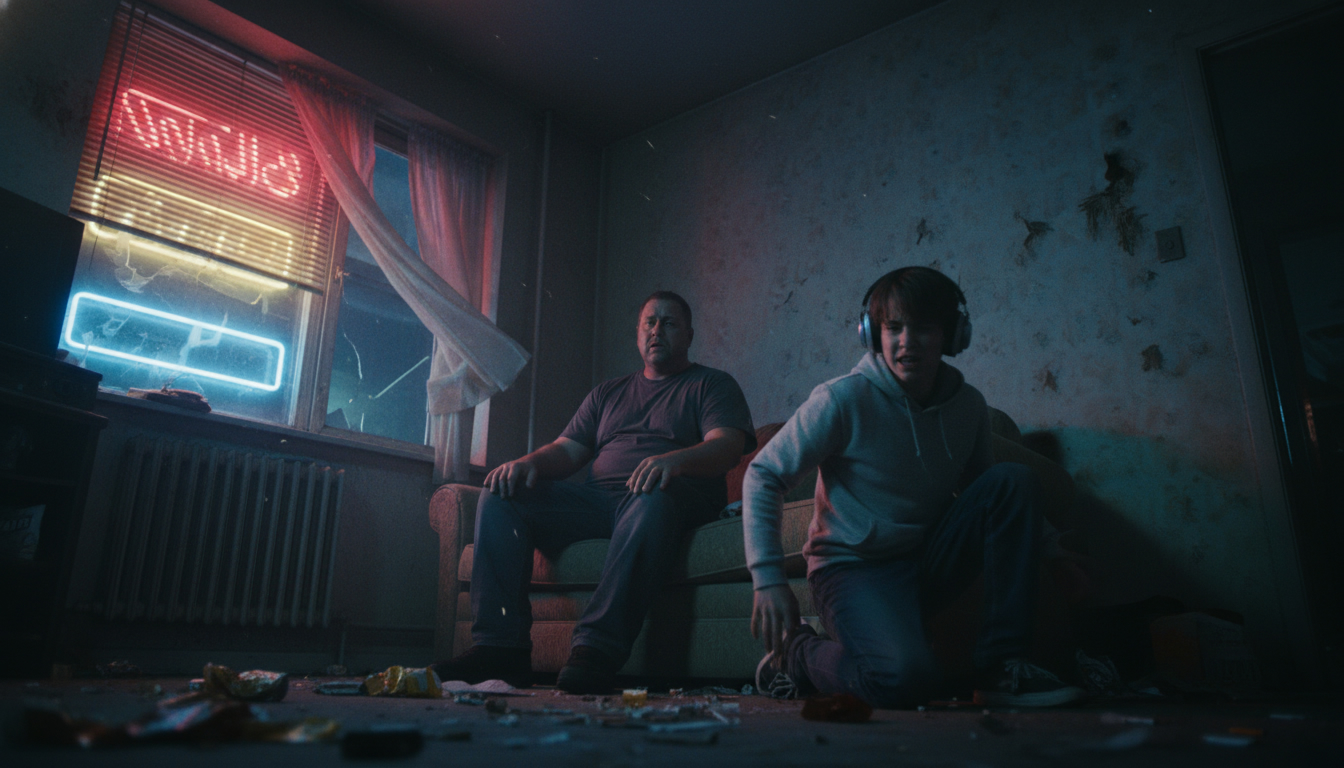
After medical intervention and a three-day recovery, Igor’s personality completely changes, becoming profoundly apathetic. He becomes overly domesticated, docile, and loses all active interest in the outside world. His thirteen-year-old son, wearing fuzzy headphones, tries to get his father’s attention with loud screams. The boy locks himself in his room, threatens to jump out the open window, and then silently disappears. Igor reacts to the extreme situation with complete indifference. He’s simply too lazy to go out into the cold street to check on his son, so he prefers to assume the boy is simply fast asleep.
City
A hero named Brother Writer finds himself in a megalopolis called the Great City, a destination many newcomers desperately seek. He rents a stuffy room with dirty glass and broken plastic blinds. Neon advertising signs shine directly into the window, literally burning slogans about success in life onto the retina in red against a black background. The hero constantly suffers from city noise and the painful bites of translucent midges. The crushed insects leave brown, bloody stains on the walls of the room.
The locals, including the elderly Chinese woman who runs a cheap eatery, treat the migrants with open contempt. The writer recalls winning a literary competition and losing his beautiful woman. He deliberately refuses to look for her, preferring to rely on the free services of a lame girl from the Red Quarter. Ultimately, he sinks to the bottom of society and begs at the entrance to the subway. He collects small coins and greasy bags of scraps. He convinces passersby and himself that he is perfectly happy to remain in the City forever.
Guide dog
A creative producer calls the protagonist from a noisy subway station, urgently asking to discuss a new proposal. Soon, the protagonist finds himself in a locked basement with other disenfranchised participants in a psychological experiment. The subjects are fed stale meat, shrimp, insects, maggots, and cheap alcoholic tinctures. The windows in the room are always tightly drawn with heavy curtains. The focus group determines the time of day solely by the sound of machine beeps.
The producer regularly shows the group strange scenes, carefully testing the reaction of each individual viewer on screen. During one of the drinking sessions, his colleague Zhora hits the producer on the back, knocking out his upper front tooth. The hero genuinely believes himself to be special. He arrogantly calls the other participants in the experiment blind idiots and phonies. He regularly asks management to transfer him to the high-ranking position of Guide. The producer methodically refuses, ordering the hero to sit quietly in the second row. The hero is fanatically convinced that he is born within the darkness and truly sees what is happening.
Parasite
A strange religious community, under the strict leadership of the Father, is preparing for a mass public presentation in central Moscow. The protagonist travels from the Kolomna center in an old ritual minibus draped in black mourning curtains. The vehicle moves slowly through dense overnight traffic. The community’s focus is on a little boy, Pavlusha. The child has undergone a horrific physiological mutation and has long refused to eat regular food.
Pavlusha has sprouted real wings with thick white feathers. His mouth has transformed, becoming a dark organic tube with thin black needles inside. A woman named Lenochka, dressed in a dress of golden scales, administers painful medical injections to the boy. The boy’s singing resembles the buzzing of a thousand insects. At the presentation, the hero suddenly rips the golden cross from Father and demands that the electronic collar be removed from the child’s neck. A crowd of stupefied people obediently kneel before Pavlusha. The boy spreads his wings and begins greedily feeding on the parishioners’ blood through his sharp proboscis.
Border
A married couple, Olga and Okhotin, are traveling on a long-awaited vacation on a passenger train. Olga constantly makes harsh remarks to her husband in a metallic, raspy voice. She categorically refused to travel in a cheap compartment car, but due to the high prices of sleeping cars, they were forced to take a regular compartment. A strange, crimson-haired old woman is traveling with them. The elderly woman explains to her neighbors that she is heading to the funeral of her husband, who is still alive, because she is very afraid of living people.
At night, the train makes a long stop and is pulled into a remote siding. Okhotin emerges from the warm carriage and vanishes without a trace into the endless night field. His fellow passenger, Dimon, feeling the pulse of his remaining body, pronounces him dead. The train conductors and other sleeping passengers dismiss their fellow passenger’s disappearance as a common fatal heart attack. One of the drunken railway crew members mentions a mysterious Border. He confidently asserts that passengers are removed from the train when they cross this anomalous line without any explanation.
Green pastures
People have developed commercial technology for transferring digital consciousness into other physical bodies after biological death. This digitalization procedure allows wealthy clients or death row inmates to transfer their minds into the bodies of birds, animals, or other people. A heroine named Alice is busily discussing the purchase of new bodies with a frog-like medical agent. The agent persistently offers budget options — pigeons for 970,000 conventional units or expensive flamingos — with a long-term payment plan of forty-five years.
Another wealthy character describes in detail the dire consequences of having his mind implanted into someone else’s body. He undergoes regular medical checkups with the city’s best specialist. He constantly complains of phantom pains and an eerie sensation of someone watching him right behind his back. Doctors calmly explain these symptoms as a temporary conflict between the old body and the new, transplanted consciousness. The doctors assure that the body’s memory lasts up to a year. The character constantly recalls a haunting poetic line about "green pastures."
Spock
Zhenya works as a women’s editor and creates stories about exalted female psychologists. She is raising a young daughter, Tasya. The family acquires an interactive electronic toy, "Spoky," from the Fairy Corporation. Zhenya’s husband, Danya, brings the innovative device home, hoping to bring some joy to the tense family atmosphere. The toy begins to interact excessively with the child, developing a strong psychological dependence.
Zhenya notices that her husband’s everyday behavior is becoming mechanical and unnatural. His hands feel like the smooth plastic case of an overheated tablet. Danya begins communicating in short, meaningless, commercial-like phrases in a crystal-clear female voice. Zhenya silently wishes for her husband to leave the apartment immediately and die. Soon, the front door slams loudly in the hallway. Zhenya is left alone with her daughter, who continues to play, mesmerized, with the glowing silver screen of the Spocky. A kitten with large, clear, green, bewitching eyes jumps onto their blanket.
You cannot comment Why?