Changing consumer habits in shoe culture
 Automatic translate
For a long time, the mass culture of athletic shoe consumption rested on two pillars: rarity and high prices. Buyers lined up for limited editions, paid resellers triple the retail price, and stored pairs in the closet, afraid of scratching the soles. Today, this ritual is gradually fading: the focus has shifted to affordable, basic silhouettes, and the desire to stand out is realized through hand-finishing factory-made shoes.
The simple design of mass-produced models has proven unexpectedly convenient: the neutral background lends itself easily to any visual alteration. The cost of customization rarely exceeds the price of the pair itself, and ruining an inexpensive sneaker is no big deal — a mistake in paint or hardware is easily corrected. Shoes have ceased to be sacred objects and have become a working material.
Accessories and metal parts
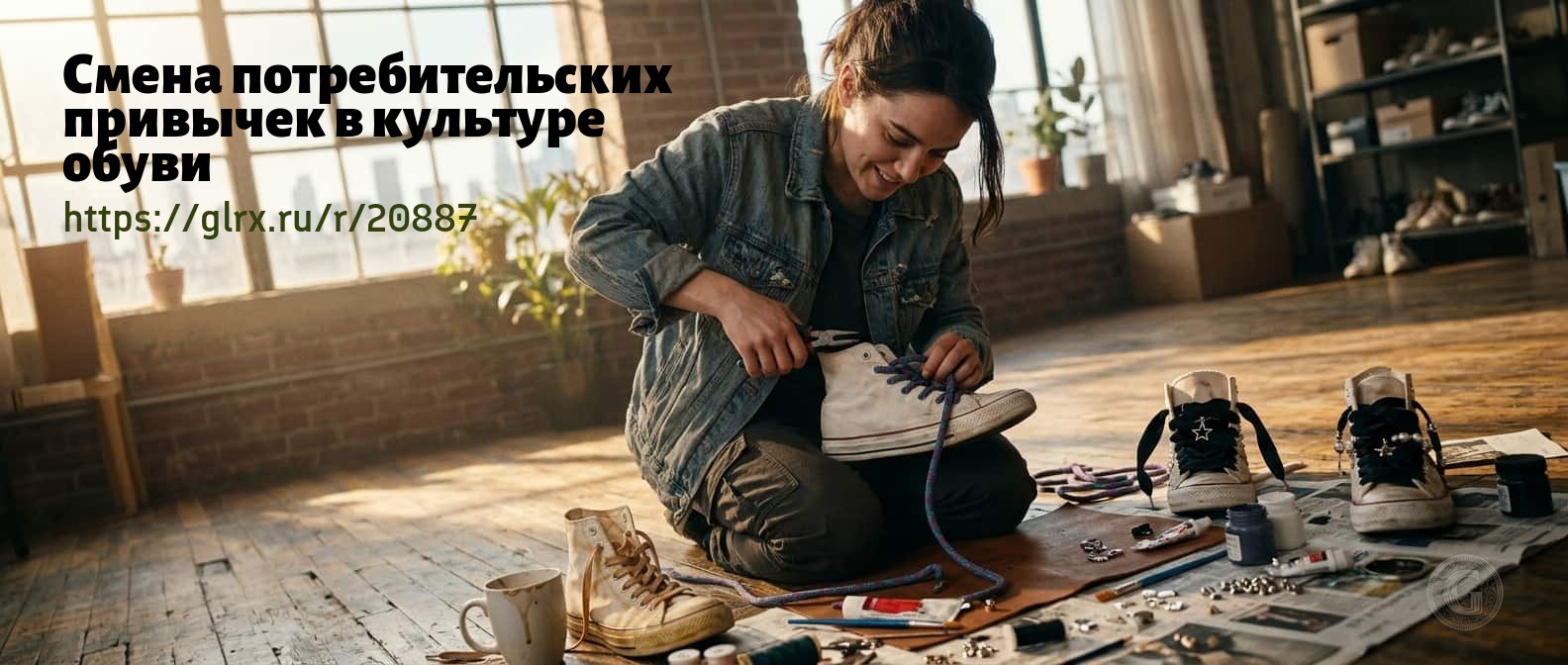
The first thing they change when modifying is the lacing. Standard thin laces are replaced with wide satin ribbons or thick climbing ropes up to one centimeter thick: the former make the shoe visually softer, while the latter add bulk and rigidity to the silhouette. Even a basic pair like the Street Beat or any similar fabric sneakers looks fundamentally different with non-standard lacing — the proportions change noticeably.
The visual weight of a shoe is determined not by the brand, but by its details. One wide lace can outweigh the entire brand story.
Metal charms called dubrés are attached to the laces. These small embellishments are placed at the toe, at the bottom of the lacing. Manufacturers today offer hundreds of options: smooth, textured, glass-encrusted, and made from various metals. Strands of faux pearls are often added to metal details — they are sewn to the tongue with nylon thread, creating a deliberate contrast with the rough, sporty texture of the shoe. Metal chains work differently: thin ones wrap around the ankle, while thicker links are attached along the side seams.
Artificial aging techniques
The perfectly white soles of new shoes seem too sterile to many. To create the effect of long-lasting wear, dyes are used — the most well-known method involves coffee. The laces are soaked in a strong coffee solution for several hours: the caffeine and natural pigments penetrate the structure of the cotton fibers, producing an uneven yellowish-brown hue that mimics natural fading from the sun. The depth of the color is controlled by the soaking time.
Rubber soles are treated differently — they don’t absorb liquids well. Alcohol-based markers are used: yellow or beige pigment is applied to the sidewalls of the sole, then quickly rubbed off with a dry sponge. In the recesses of the tread, the color remains rich, while on the protruding areas, it forms a translucent layer — this unevenness accurately mimics dust marks and rubber oxidation. Oxidation, a natural chemical process that causes materials to yellow upon exposure to oxygen, is reproduced artificially and intentionally in this case.
Tools and materials for modification
Conventional acrylic paints crack when used on shoes: sneakers deform with every step, and the rigid film of standard acrylic can’t withstand the strain. Specialized, highly elastic leather paints containing plasticizers are used for painting, preventing the polymer mesh from becoming brittle at low temperatures.
| Material | Method of preparation | Application tool | Restrictions |
|---|---|---|---|
| Smooth skin | Degreasing with acetone | Thin brush | Heating no higher than 60 °C |
| Textile mesh | Without preparation | Sponge, airbrush | Risk of clogged pores |
| Rubber sole | Adhesion promoter | Hard brush | Poor absorbency |
| Plastic inserts | Adhesion promoter | Thin brush | Surface adhesion only |
| Synthetic suede | Light cleaning | Sponge | Does not tolerate excess moisture |
Before applying paint, the factory protective layer is removed with solvents: acetone removes the silicone impregnation from the leather, leaving the surface matte and receptive to the pigment. The design is applied in thin layers, drying in between with a heat gun — but be careful: temperatures above 60 degrees Celsius melt the factory adhesive, and the sole may peel off.
Hand presses with a punch are used to attach rivets. The hole is made a millimeter smaller than the rivet’s diameter — a tight fit prevents the fabric from tearing when walking. This technique has a side effect: the holes compromise the shoe’s waterproofing. Owners are aware of this and deliberately choose appearance over practicality.
Large marketplaces now offer ready-made modification kits: tweezers, an awl, textile glue, and metal hardware all in one package. The barrier to entry into the hobby has been lowered — buyers no longer need to search for individual components.
Working with textile elements
The appliqué method involves sewing new materials over the original. Pieces of denim, corduroy, or lace are attached to the side panels of the shoe by hand with thick needles. Lace is most often glued onto mesh with textile adhesive: the matte surface takes on a complex texture, and the lace alters the reflective properties of the entire side panel.
Embroidering sneakers requires endurance: the needle passes through several layers of leather and lining, making it physically demanding. But the result is unmatched by any appliqué.
The embroidery is done with synthetic threads, which are resistant to abrasion and street dirt, while cotton threads quickly fray when folded. The outline of the design is applied with disappearing markers: the ink evaporates when heated or exposed to water. The embroidery often obscures the manufacturer’s logos, making the shoes appear anonymous — and this is intentional: the viewer’s attention is focused on the design, not the brand.
Chemistry of polyurethane and acrylic dispersions
Factory-made sneakers are made of polyurethane, ethylene vinyl acetate, and rubber. Each material has a different porosity, and it is this porosity that determines how well the paint adheres to the surface. The pigment is mixed with an acrylic dispersion, which polymerizes into a flexible film when dried. This film must be able to withstand stretching up to 200% — standard artist acrylic can only withstand 30%, making highly specialized formulations necessary.
At room temperature, the water from the dispersion evaporates within thirty minutes, but full polymerization takes up to seventy-two hours. You can force the drying process with a hairdryer, but the temperature limit of sixty degrees Celsius should not be exceeded.
Anatomy of shoelaces
Creating custom laces from climbing rope poses a technical challenge: the thick rope doesn’t fit through standard eyelets — the metal rings that surround the lacing holes. The ends of this rope are flame-fired: the synthetic fibers melt and form a hard cone that easily passes through the eyelet.
Metal aglets are attached to fabric laces using pliers. A brass cylinder is placed over the end of the fabric and crimped around the material. Over time, the brass develops a dark patina — and this is perceived not as a defect, but as a desirable visual effect.
Lacing mechanics
The way the laces are threaded through the eyelets directly affects the fit of the shoe. Straight lacing reduces pressure on the instep, while crisscross lacing provides a secure fit. The loose ends are often left untied, allowing them to hang down the sides, which compromises the shoe’s snug fit. This is a deliberate choice: utility takes a backseat to aesthetics.
Satin ribbons used as laces require extra attention: the smooth surface doesn’t hold a knot well, and it comes undone on the first walk. A reliable solution is a double knot, tied before leaving the house. Wide feet benefit from a combination of loosely laced bottom loops and elastic threads that stretch with each step, relieving pressure on the wide part of the foot.