A summary of Maxim Gorky’s "The Philistines"
 Automatic translate
This book, Maxim Gorky’s debut play, written in 1901, directly and harshly depicts the looming conflict between generations and classes within a well-off bourgeois family. The play was successfully adapted into a film. A 1971 television production, directed by Georgy Tovstonogov and staged at the Bolshoi Drama Theater, has achieved classic status.
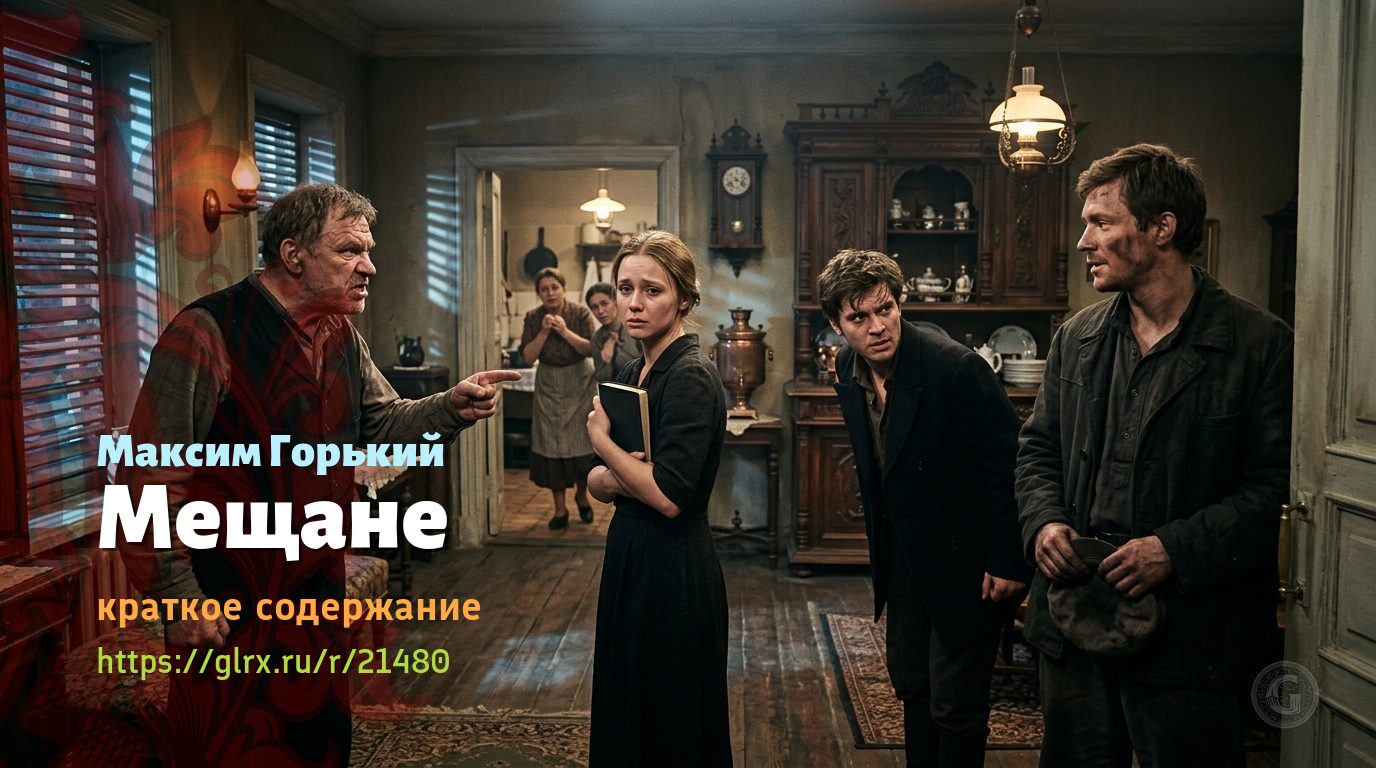
The oppressive atmosphere of bourgeois life
The action takes place in a small provincial town. A stuffy atmosphere reigns in the spacious home of wealthy tradesman Vasily Bessemenov. Massive old furniture, a heavy cupboard, and a loud grandfather clock crowd the space. Twenty-eight-year-old schoolteacher Tatyana Bessemenova reads a novel with undisguised melancholy. Her naive companion, twenty-one-year-old seamstress Polya, admires the book’s protagonist. Tatyana is extremely irritated by the fictional plots of books. She constantly feels that real life is meaningless and monotonous.
Tatyana’s brother, twenty-six-year-old former student Pyotr, also complains of the dreary existence. He was expelled from the university for participating in student unrest. Now he wanders gloomily from room to room, constantly dissatisfied with the old order. A heavy cupboard serves as a visual symbol of impenetrable stagnation for Pyotr. Old Bessemenov regularly reproaches his educated children. He sees absolutely no return on their efforts. Their mother, Akulina Ivanovna, fussily runs the household, skimping on sugar and trying to smooth over daily squabbles. The cook, Stepanida, complains about the heaviness of the copper samovar, which sparks yet another squabble.
The Bessemenovs’ house is constantly filled with tenants. Former singer Teterev drinks vodka and utters gloomy thoughts. A distant relative, Perchikhin, catches songbirds and talks about the beauty of winter nature. The cheerful engineer Nil, Bessemenov’s protégé, stands in stark contrast to the gloomy occupants of the rooms. He truly loves physical labor. Nil boldly argues with Pyotr and openly admires the cheerful young widow Elena Krivtsova. The widow often hosts raucous musical parties on her side of the house. Student Shishkin and teacher Tsvetaeva enthusiastically stage amateur performances for the soldiers. Pyotr openly disdains their hectic social activities.
Open clash
Tensions in the family are rapidly escalating. Bessemenov again harshly reprimands Pyotr and Tatyana. The old man directly demands to know their life goals. Pyotr heatedly discusses personal freedom. Tatyana, in utter despair, begs him to stop this pointless argument, citing two different truths. Nil returns from work dirty and tired. Bessemenov orders his ward to immediately remove his work cap. Nil responds to the master of the house with the utmost insolence.
A little later, Tatyana accuses Nil of being callous. The engineer replies curtly: bored people are to blame for their own imaginary troubles. He delights in forging red-hot iron and physically reshaping the shapeless mass. Nil announces his firm decision to old Bessemenov. He intends to marry Polya. The old man is outraged beyond measure. The tradesman had long planned a marriage for Nil with a wealthy merchant bride. The adopted son flatly refuses to submit to anyone else’s will. He firmly believes he has earned his keep. Nil proudly calls himself the true master of the house.
Enraged, Bessemenov threatens to throw his ward out into the street. Embarrassed, Polya hurriedly disappears into the kitchen. Teterev watches the loud scandal with an undisguised grin. The singer delivers lengthy monologues about fools and scoundrels, calling for kindness to be repaid with equal kindness and for evil to be avenged many times over. Crushed by the quarrels, Tatyana confesses to Teterev her frightening spiritual emptiness. She is unbearably afraid to live on. Later, the girl accidentally overhears a tender conversation between Neil and Polya. The lovers are absolutely certain of their imminent happiness. Tatyana is overcome with profound grief.
Suicide attempt
The next morning, a horrific incident rocked the Bessemenov household. Desperate, Tatyana drank a caustic solution of ammonia purchased at the pharmacy. She moaned loudly in searing pain. Akulina Ivanovna howled hysterically, while old Bessemenov thrashed about in panic, demanding a doctor be sent for. Onlookers from the street, vegetable vendors, and neighborhood boys gathered around. A sullen Teterev roughly dispersed the crowd of curious neighbors. The doctor arrived, examined the patient, and calmed the distraught family. The dose of poison was small, and Tatyana’s life was not in danger.
While his sick sister groans in the next room, Peter talks at length with Elena. The widow frankly admits that she inherently cannot stand the suffering of others. She prefers constant merriment. Elena fondly recalls her former life in the prison castle, where her late husband served as a warden. There, she entertained the prisoners, read them funny books, and bought them songbirds. Peter complains to Elena of his extreme weariness under his parents’ despotic oppression. He desperately seeks personal freedom and peace. The widow half-jokingly proposes marriage to the student. Peter enthusiastically accepts. His sister’s muffled cries are heard again through the wall.
Bessemenov takes out his pent-up anger on Perchikhin. The bird-catcher arrives in an old, tattered jacket and joyfully informs the old man of Polya and Nil’s upcoming wedding. Bessemenov perceives these words as a cruel mockery of his family’s misfortune. He rudely throws the harmless relative out of the house.
Family breakdown
A long autumn evening descends. The recovering Tatyana lies motionless on the couch in the semi-darkness. Her friend Tsvetaeva tries to cheer her up with bright hopes for future generations of schoolchildren. Tatyana responds dryly and cynically. Student Shishkin loudly rants about the class injustice of his employer, Prokhorov. Pyotr asks his noisy guest to be quiet. Neil again passionately discusses the absolute right of a healthy person to shape their own destiny. The engineer is ready to overcome any obstacle.
Vasily Bessemenov enters the room. He’s extremely gloomy. Suddenly, a drunken Perchikhin appears in the doorway. The bird-catcher insistently demands a clear answer: why did the old man kick him out the day before? Bessemenov instantly breaks into a piercing scream. He angrily calls Polya a penniless day laborer. Nil sternly defends his fiancée. The engineer bluntly forbids the old man from insulting the girl. Enraged, Bessemenov calls his ward an ungrateful little snake. Nil and Polya make the final decision to leave the bourgeois house forever.
The remaining young men also permanently sever ties with the conservative family. Pyotr accuses his father and mother of being the main culprits behind his life’s failures. He openly names Elena as his future wife. The elderly couple are profoundly shocked. Akulina Ivanovna sobs bitterly. Bessemenov flatly refuses his son his parental blessing. The widow Elena proudly hurls her harsh accusations in the old man’s face. She leads the dejected Pyotr upstairs to her rooms.
The old man, in desperation, threatens to call the city police. He angrily throws Teterev out of the apartment he occupies. The singer agrees to leave quietly. In parting, Teterev mockingly predicts the house’s inevitable future. The singer tells the old man: "He’ll rebuild this barn a little, rearrange the furniture, and live peacefully." The son will become just as cowardly, well-fed, and greedy a bourgeois as his despotic father. Bessemenov is left alone with his weeping wife. Alone and ill, Tatyana leans heavily on the keys of the open piano. The loud, discordant sound of trembling bass strings resounds in the empty room.
You cannot comment Why?