Vladimir Korolenko’s "Makar’s Dream," a summary
 Automatic translate
The work was created in 1883 during the author’s exile in Yakutia. The plot harmoniously blends the traditions of the classic Christmas tale with a profound social subtext, meticulously depicting the harsh life of an abandoned northern settlement. A realistic description of peasant poverty is combined with a fantastical vision of the afterlife.
Upon its publication, the story received high acclaim from leading literary figures of the era, including Leo Tolstoy and Anton Chekhov. It quickly became a milestone in the writer’s career, captivating a wide audience thanks to its sincerity and compassion for the common man.
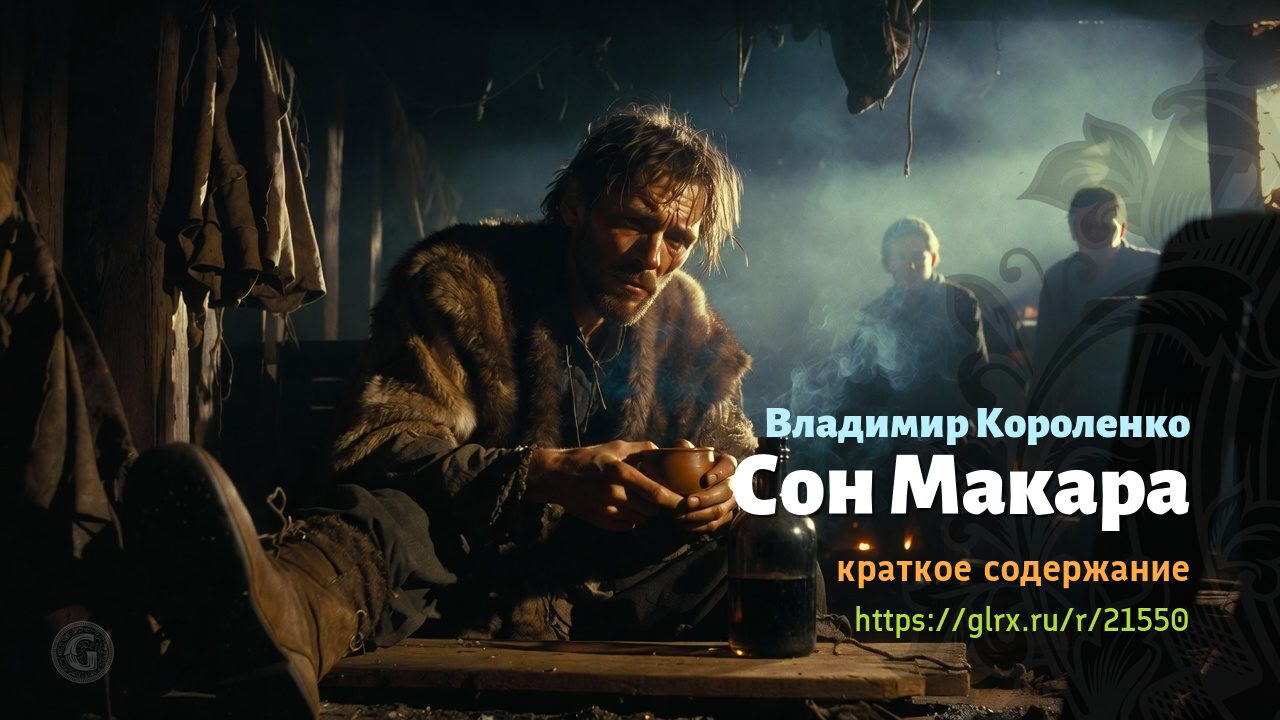
The life and aspirations of a Chalgan peasant
The protagonist is a poor peasant, Makar, who lives in the remote village of Chalgan, amidst the endless Yakut taiga. His ancestors once reclaimed this patch of land from the harsh wilderness. Over time, the Russian settlers became almost completely assimilated, adopting the local language, customs, and beliefs. Makar considers himself a native Chalgan peasant and is very proud of this status, although he is completely indistinguishable from his neighbors in appearance and lifestyle.
He speaks Russian poorly, wears animal skins, and skillfully manages bulls. When severely ill, the hero turns to a local shaman. Makar’s entire life is filled with grueling, relentless labor, constant hunger, and cold. His only sober thoughts center on finding food, flatbreads, and brick tea.
In rare moments of intoxication, he weeps bitterly, lamenting his fate. He has a cherished, deeply hidden dream: to abandon everything and go to some distant "mountain." In his naive imagination, this is a place where he doesn’t have to work, plow, haul heavy firewood, or pay taxes to the police chief. However, due to the low-quality alcohol infused with tobacco, these impulses always end in mere impotence.
Christmas Eve and the Search for Money
Just before Christmas, Makar feels an overwhelming urge to drink. However, he has no money for a festive bottle of vodka, and his old debts at the shops prevent him from getting credit. He decides to deceive his wife, promising to buy drinks for both of them for the following day’s celebration. His wife, a large and strong woman, sees through his deception perfectly well, but succumbs to the rare familial affection.
Makar harnesses his trusty old horse, Lysanka, and sets off for the very edge of the settlement. He heads for a secluded yurt inhabited by strangers. These political exiles greet their guest warmly. Makar enters the dwelling, reaches out to the fire, and asks for some tea. The hosts agree, and a leisurely conversation ensues.
During the conversation, the peasant offers them a lucrative offer of five cartloads of firewood for one ruble. Despite his sworn promises to deliver the goods on time and not spend the money today, Makar can’t resist. The anticipation of pleasure completely overwhelms his guilty conscience and the fear of inevitable punishment from his deceived wife. He steers his horse toward the gates of the local Tatar merchants.
Incident in the tavern
The cramped Tatar hut is incredibly stuffy, thick with smoke from cheap tobacco. The locals are drinking vodka and playing cards with reckless abandon, taking out coins. Makar hands over his ruble and receives the coveted bottle. He retreats to the darkest corner of the room, pouring cup after cup. The alcohol turns out to be heavily diluted with water, but the tobacco mixture quickly makes him dizzy.
The man becomes very drunk, sinks down onto the straw, and begins a creaky song about drunken firewood. Soon, the owner of the establishment decides to restore order due to the influx of new customers. He unceremoniously throws the drunken guests outside. Makar is roughly pushed out of the hut, and he falls face-first into a cold snowdrift. Coming to, he struggles out of the snow and trudges to the sleigh.
The clever Lysanka, perfectly aware of his master’s distress, takes him home by himself under the moonlight. Makar continues singing about how he’s caught a valuable fox in his trap. He hopes that selling the pelt will save him from a family scandal. However, at home, his enraged wife greets him with a severe beating. The man collapses on his bed and sinks into a heavy oblivion.
A fatal expedition into the winter taiga
Makar can’t sleep, delirious with fever, his body burning from the drug he’s consumed. In his mind’s eye, he sees a fox trapped in a heavy trap, its golden fur glittering in the moonlight. Unable to bear the overwhelming visions, he mentally rises and rushes out into the frosty night. He imagines himself riding in a sleigh past Yakut horsemen hurrying to a festive mass.
The silent, majestic taiga spreads out around him, illuminated by the brilliant flashes of the northern lights. Leaving his horse on the road, the peasant makes his way on foot to his traps. Along the way, he inspects the traps of his neighbor and longtime enemy, Alyoshka. Suddenly, Makar spots a live fox, flickering so close among the trees, luring him deeper into the forest.
A dull thud of a falling log is heard in the thicket. The hero runs into the clearing and sees Alyoshka, who is also rushing towards the prey. A heated argument erupts between the men over the crushed animal. When the rivals simultaneously lift the heavy block, the freed fox looks at them mockingly, licks the pinched spot, and runs away. Makar gives chase after Alyoshka, who cunningly knocks him into the snow, steals his hat, and disappears.
Left without his hat and mittens in the bitter cold, Makar realizes he’s completely lost. The forest animals and birds seem to come alive, mocking his helplessness. Trees lash his face with their branches, and hares openly laugh. Completely exhausted, the freezing peasant lies down in the deep snow. Soon the bell’s toll fades, and Makar dies.
Meeting with the guide
After his death, Makar lies motionless in the darkness for a long time, until Father Ivan nudges him with his foot. This kind priest died four years ago, accidentally burned to death in his own fireplace due to carelessness. In life, he never harassed the poor man for church services, willingly sharing his modest meal and alcohol with him. Now Father Ivan orders Makar to rise.
He informs them that they must appear before the supreme ruler for judgment. They move east, leaving no traces in the pristine snow. Makar is angered by the harsh afterlife rules prohibiting food and drink, but obediently follows his guide. They cover vast distances, rising ever higher toward the large, bright stars shining in the dark sky.
Numerous roads wind around, leading to a single point on the horizon. The souls of all sorts of dead people travel along them. On a moonlit plain, Makar suddenly catches up with a Tatar friend who once stole his piebald horse. The rider complains that he’s been galloping on the stolen animal for five years now, but he can’t make any progress, and pedestrians easily overtake him.
Meetings on the Celestial Plain
The Tatar tries to return the horse to its rightful owner, but Father Ivan stops Makar just in time. The priest explains that a journey on a stolen steed would take a millennium, depriving the soul of peace. As they continue their journey, the companions overtake many travelers. Among them are wealthy toyons on high saddles, laden with the thieves’ spoils, and light-footed, poor laborers running like hares.
Makar spots a grim murderer trying unsuccessfully to wash away traces of blood in the clean snow. Flocks of innocent children’s souls, having abandoned the settlement due to illness, hunger, and cold, fly past them. Along the way, he encounters an emaciated old man forced to carry a grumpy old woman on his shoulders. In life, this man had sought refuge on a secluded mountain peak, leaving his wife to suffer, and now he is paying for his own selfishness.
Gradually, the plain is illuminated by an unprecedented, dazzling sunlight. The mists rise solemnly, and Makar hears a wondrous, majestic song with which the earth greets the dawn. The man is transfixed with delight, wishing to remain in this place forever and listen to these wondrous sounds. However, Father Ivan reminds them of the purpose of their journey, and they approach the large doors of the judge’s monastery.
Waiting for the verdict
Inside the spacious hut, a silver fireplace with golden logs burns, radiating a soft, pleasant warmth. Servants with large white wings prepare special scales for the trial. A small golden bowl is intended for good deeds, and a huge wooden one for sins. Priest Ivan takes the scribe’s place, and a majestic old man with a long silver beard approaches the assembled group.
This is the Great Toyon, whose appearance perfectly matches the icon in the Chalgan church. The elder begins questioning the hero about his earthly life. Emboldened, Makar begins to exaggerate the amount of work he’s accomplished, claiming credit for thousands of chopped poles and cartloads of firewood. However, the chief judge orders the court register, where the peasant’s every move is recorded, to be opened.
It turns out that Makar has committed over twenty thousand deceptions and drunk hundreds of bottles of alcohol in his lifetime. The wooden cup containing his sins rapidly descends, dragging his soul into a dark abyss. The man tries to discreetly hold the scales with his foot, but his plot is discovered. Enraged, Toyon decides to turn the deceiver into a horse, so that he can forever carry the stern police officer.
Wrathful Protection and Divine Forgiveness
At this critical moment, the son of the Great Toyon appears. He calls for the unfortunate man to have a final say before his punishment is carried out. Makar’s astonishing gift of eloquence suddenly awakens, and he begins to speak on behalf of all the oppressed poor. He declares that he will not submit to this unjust decision, as his entire earthly life has been nothing but punishment.
The man passionately describes his hopeless lot. He was constantly haunted by poverty, hunger, the brutal taiga frosts, and harassment from officials and the clergy. His son was drafted into the army and died in foreign lands, leaving his father without help. Regarding accusations of drunkenness, Makar rightly notes that the alcohol he bought consisted of half water and tobacco.
He recounts the unbearable suffering of chopping firewood in the taiga, tears freezing in his eyes, while his first wife died of illness at home. He was forced to work for pittance for greedy merchants to pay for his wife’s funeral. The judge notes the peasant’s shabby appearance, reproaching him for his coarseness, overgrown with weeds.
Makar passionately counters that he was born with a pure heart and open eyes, but the unbearable conditions of earthly existence deprived him of all joy and turned him into a savage beast. The blame for this shameful state lies with those who created such conditions and forced him to suffer from birth to death.
The passionate speech leaves a deep impression on everyone present in the courtroom. Words of despair and pain fall onto the golden scale like heavy weights. The Great Toyon, Priest Ivan, and the winged servants shed tears of compassion as they gaze upon the unfortunate Chalgant. The wooden scale, laden with the burden of sin, rises smoothly. The judge tenderly consoles Makar, assuring him that here he will finally find true justice.
- In the Rostov Drama Theater began the memory days of the director Nikolai Sorokin
- In Voronezh, staged the play "Poor People" based on a play by a modern author
- The 17th international documentary film festival opened in Novosibirsk
- “God Sees the Truth, but Waits” by Leo Tolstoy
- Alex Hill’s "Worst Friends" Summary
- A summary of Mikhail Saltykov-Shchedrin’s "Well-Intentioned Speeches"
You cannot comment Why?