A summary of Alexander Kuprin’s "The Keen Eye"
 Automatic translate
This collection of short stories and novellas was published in 1990. This book is an anthology of works by Russian and Soviet writers about domestic intelligence, espionage, and border protection in various historical eras. The authors depict the heroism of soldiers, officers, and ordinary people. They describe the harsh everyday life at the front and the dangerous work behind enemy lines. The events take place in various periods: during the war with Japan, during the Revolution, and on the front lines of the Great Patriotic War. The characters face betrayal, risk their lives, and demonstrate incredible fortitude.
The book was published in the popular "World of Adventures" series by Pravda Publishing House. This series also includes the science fiction novels "On the Edge of the Oecumene" by Ivan Efremov, "The Inventions of Professor Wagner" by Alexander Belyaev, and historical novels by Thomas Mayne Reid. Books in this series were published without a volume number. The edition features illustrations by Yuri Rebrov and is intended for a general readership.
Events of the Russo-Japanese and First World Wars
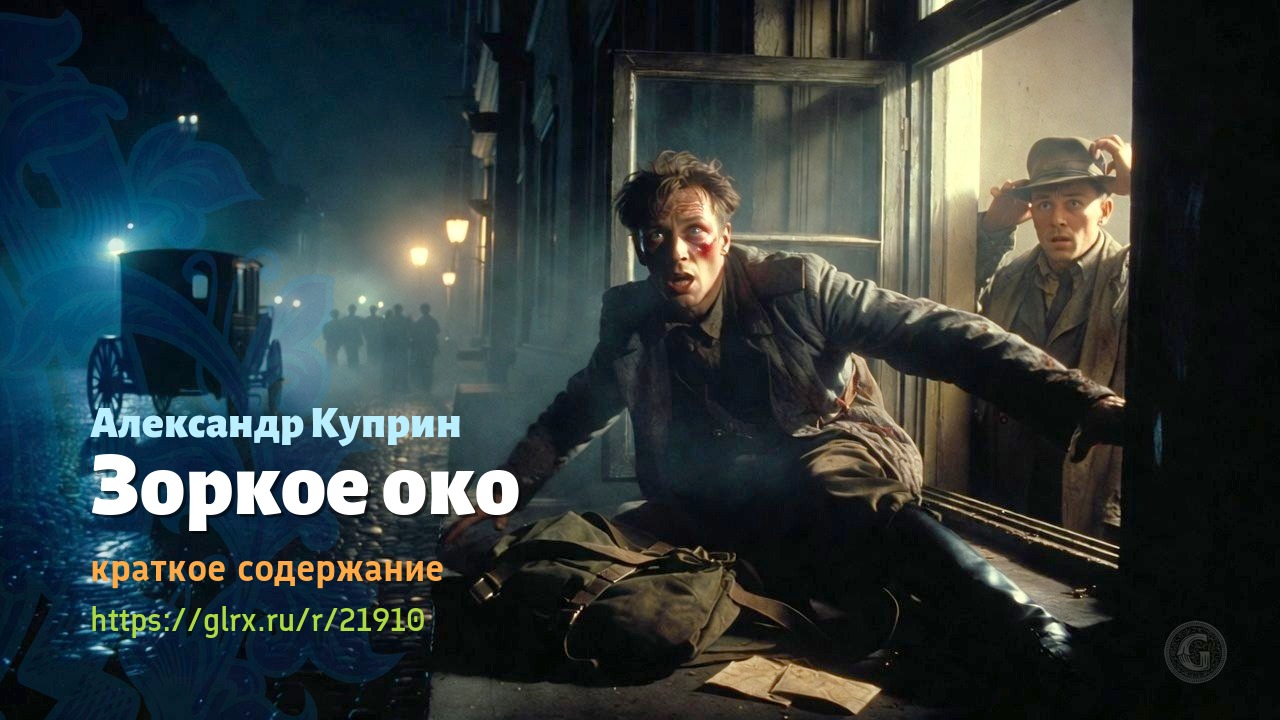
Alexander Kuprin’s story "Staff Captain Rybnikov" takes place in St. Petersburg. Army infantry officer Rybnikov fusses around government offices, drinks, and constantly complains about poverty and old wounds. Vladimir Shchavinsky, a journalist for a St. Petersburg newspaper, suspects him of being a Japanese spy. Rybnikov masterfully plays the role of a dim-witted army drunk, gathering the necessary information. That evening, the officer goes to a brothel to visit a woman named Clotilde. The tired spy falls asleep and, deliriously, utters the Japanese word "banzai." The prostitute’s frightened neighbor calls for an experienced thief, Lenka. He realizes the situation and calls the police. Rybnikov tries to escape, jumps out of a window onto the pavement, breaks his leg, and is captured.
Alexei Tolstoy’s short story "The Beautiful Lady" takes place in 1916. Nikita Obozov is carrying secret military documents abroad. He meets Lyudmila Pavzhinskaya on a train. She complains a lot about her boredom, curses her homeland, and tries to garner sympathy. That night, Obozov finds her in his compartment, near the jacket containing the documents. Pavzhinskaya confesses her love, but Obozov immediately suspects the deception. Her accomplice, a young man in a ski cap, attempts to strangle Obozov in the dark vestibule of the train. Obozov throws the assailant off a cliff into a deep lake. He leaves the exposed Pavzhinskaya on a steamship bound for New York and safely delivers the important package.
In Alexander Yakovlev’s story "The Peasant," a company commander sends soldier Nikifor Pil’shchikov on a night reconnaissance mission. The commander orders him to ascertain the enemy’s location. Pil’shchikov crawls through the wet grass, listening to the rumble of the earth, and suddenly finds a sleeping Austrian. The enemy is snoring loudly. Pil’shchikov takes his rifle, removes his leather knapsack, and quietly retreats. The officer is furious with the soldier for not killing the sleeping enemy. Pil’shchikov is surprised: the sleeping Austrian’s snoring reminds him of a simple peasant. The commander understands the soldier’s naive kindness and sends him away.
The Civil War years
Chekist Orlov from Boris Lavrenev’s novella "The Story of a Simple Thing" works in a White Guard-occupied city under the guise of French businessman Léon Couturier. On the street, he buys a fresh newspaper and reads about the arrest of a peasant, Yemelchuk, whom the Whites mistook for Orlov. Wanting to learn the fate of the arrested double, Orlov goes with White officers to the Olympus restaurant. A drunken counterintelligence officer, Lieutenant Sobolevsky, brings the Frenchman to his headquarters and exposes him. Orlov refuses a vial of poison offered by investigator Captain Tumanovich. The hero chooses a public execution to save the honor of his party cause.
In Vsevolod Ivanov’s novella "Armored Train 14-69," a White Guard train under the command of Captain Nezelasov fights partisans. Peasants retreat to the hills, hold rallies, and spontaneously form combat units. Chief of Staff Vershinin leads the men to the railway embankment. To stop the train, partisan Vaska Okorok and Chinese soldier Sin-Bin-U lie down on the tracks. The engineer is forced to brake for the living. The partisans attack the cars, kill the White Guard officers, and capture the train. The rebels send the armored train, flying a red flag, into the city to directly support the nascent workers’ uprising.
Mikhail Zoshchenko’s novella "Retribution" is written from the perspective of former domestic worker Anna Kasyanova. She works as a cook for Kyiv general Nina Dubasova, endures abuse, and then joins the revolution. The Party Committee sends her to Crimea with money for the Simferopol underground. A White patrol catches her near the barbed wire fences. Kasyanova poses as the abandoned lover of officer Yuri Bunakov. White Ensign Komarov falls in love with her and takes her to Yalta. Kasyanova hands over the money to the underground, awaits the arrival of the Red Army, and then banishes Komarov, who had trusted her, forever.
The fight against Basmachi and the protection of the Far Eastern borders
Pavel Luknitsky’s story "Alai Border Guards" describes a scientific expedition in 1930. Geologist Yudin and the narrator are in the mountains when a detachment of Basmachi attacks the village of Gulcha. The scientists travel to the Sufi-Kurgan border outpost. In the gorge, the Basmachi kill topographer Boye and take the remaining expedition members prisoner. Kurbashi Zakirbay fears retaliation from border guard Commander Chernousov. The leader rescues the scientists for a document proving his trustworthiness. The captives are returned to the outpost. Commander Chernousov renounces blind revenge in favor of re-educating the deceived people. He adopts peaceful tactics, and many Basmachi surrender voluntarily.
Sergei Dikovsky’s novella "Patriots" takes place in the Far East. Volunteer Pavel Korzh serves at the Kazachka outpost, where his brother Andrei gave his life. The young soldier learns the Degtyarev machine gun, the rules of camouflage, and the habits of intruders. Korzh apprehends a Korean with a tractor part. A German shepherd named Rex uncovers a spy disguised as a dog with fort plans. In late autumn, a detachment led by Japanese Lieutenant Amakasu violates the border. Pavel Korzh and the cook Belik defend a hill. A cavalry squadron of a maneuver group comes to the border guards’ aid and drives the saboteurs back beyond the border.
Heroes of the Great Patriotic War
In Ivan Kratt’s story "Pass," two scouts return with a map of the German-Finnish batteries. Lieutenant Kolpakov panics, abandons his wounded comrade, and goes off alone. Lieutenant Sivay climbs the sheer wall of a rock canyon, holding a knife in his teeth. He reaches a snowy plateau, hides in the snowdrifts, and kills two enemy snipers. An explosive bullet breaks his collarbone. Bleeding profusely, the scout crawls back to his own side. Kolpakov is killed by a skier’s bullet near a campfire, and Sivay delivers valuable military documents to command.
In Leonid Sobolev’s story "Scout Tatyana," the eighteen-year-old daughter of a collective farmer from Belyaevka leads sailors behind Romanian lines. At night, the detachment stumbles upon a hidden machine-gun nest. Tatyana launches flares to draw the deadly fire onto herself. In the morning, the sailors find her seriously wounded in an abandoned quarry. The giant gunner, Yefim Dyrshch, hurls grenades at the advancing enemy. He saves the girl at the cost of his own life. A wildflower remains clutched in the dying sailor’s fingers.
An electrician on the destroyer Frunze from Leonid Sobolev’s story "The Nightingale" can imitate the calls of animals and birds. During an operation, he remains in a camouflaged lifeboat. The Romanians discover an ambush in the reeds. The sailor engages in an unequal battle and receives a fatal bullet wound to the chest. Bleeding, he continues to whistle like a nightingale. This clear sound leads the squad to the lifeboat. His comrades carry the hero’s body back to base, accompanied by cannon fire.
Scout Kolobanov from Leonid Sobolev’s story "In the Forest" is caught in a powerful mine explosion. He comes to under a fallen spruce tree. Comrade Kolya Sitin lies dead in the pink snow. Soviet guns furiously shell the winter forest. A German sniper descends from a tall tree into an earthen shelter. Kolobanov strangles the enemy and climbs his pine tree. He accurately destroys the enemy patrol with his machine gun, throws a grenade, and safely returns to his unit.
- A summary of "Kasyanov’s Year" by Nikolai Svechin
- Landscapes of the Omsk artist Viktor Kasyanov at the exhibition "From distant wanderings .."
- A summary of Mikhail Zoshchenko’s "The Charms of Culture"
- Personal exhibition of Lilia Ustyugova in the library of Bogolyubov
- Sailor, artist, man. Vladimir Golitsyn
You cannot comment Why?