"Leonardo’s Handwriting" by Dina Rubina, summary
 Automatic translate
This book is the story of a circus gymnast who rejects her mystical gift for the sake of freedom and a simple human destiny. The work was created in 2008. The main character was born with the ability to foresee the future, read other people’s thoughts, and write in mirror writing with her left hand. She clearly sees the fates of people, but is denied the right to change their destiny.
In 2009, the novel received the international Portal Award as the best long-form science fiction work.
Foster family and childhood in Kyiv
The story begins with a phone call to a Kyiv apartment. Military doctor Anatoly Nesterenko and his wife Masha, who have lost their own child, learn of the death of a distant relative, Rita, from Yeysk. Masha travels to Yeysk and picks up three-year-old orphan Anya, nicknamed Nyuta by her family. Rita’s neighbor tells Masha about the girl’s dubious origins. It turns out that the child’s real grandfather is the famous illusionist Wolf Messing.
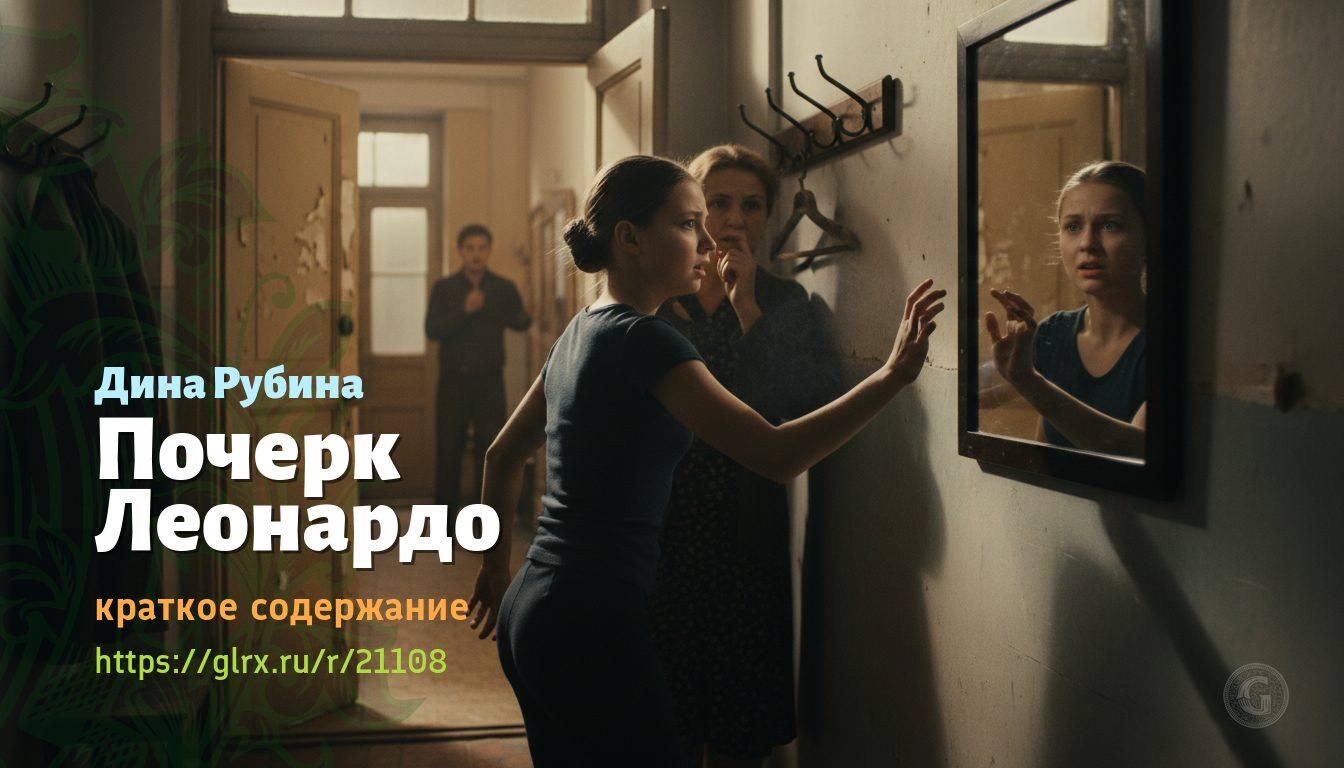
The baby looks alarmingly emaciated. From the first days, Masha notices odd behavior in her daughter. The girl confidently writes words backwards with her left hand. She spends long periods of time looking in mirrors and sees her late mother there. The nanny, Khristina, cruelly forces Nyuta to use her right hand. She literally ties the child’s left arm to her torso. The girl becomes ambidextrous, acquiring the enviable agility and coordination needed for circus tricks.
Guests occasionally drop by the Nesterenko house. One day, Masha welcomes bassoonist Senya, an elderly musician. Little Nyuta runs down the hallway and suddenly, without a trace, accurately recites Senya’s birthday. The guest is startled and tries to leave quickly. Senya grew up in Guryev, raised by his grandfather, a watchmaker, and learned to play the bassoon from a drunken teacher. The grandfather left his grandson a pair of captured Italian soldier’s boots. The musician leads a nomadic life, constantly traveling from town to town.
Nyuta is growing up and spends a lot of time in the courtyard, socializing with her neighbors. She befriends Arisha, the granddaughter of the blind and wise Firavelna. Their large communal apartment is inhabited by a colorful old woman, Panna Ivanna, a former acrobat who writes warning poems to her neighbors. The girls run to the dairy to beg for waffle crumbs, hide in attics, and risk their lives riding a wheelchair down the steep slopes of Kyiv. Her father often takes Nyuta to the circus. The magic of the arena, the smell of the wings, and the flight of the gymnasts under the dome captivate the girl.
Circus youth and escape
In high school, Nyuta meets a strange boy named Eliezer. A brilliant physics dropout who suffers from depression, he works in the mirror shop of a furniture factory. Eliezer teaches Nyuta about optics, the theory of mirror matter, and particle twins. He teaches her how to polish amalgam using ancient Egyptian methods. Eliezer has a twin brother, Buma, a cold albino. Buma hates Anna fiercely, believing her to be a witch and threatening to take his brother to America. Anna predicts the albino’s imminent death in a foreign land. Eliezer does indeed leave, but the brothers continue to communicate with Anna by mail. They write their letters in an illegible mirror-image font.
Meanwhile, Nyuta’s classmate, Volodya Streletsky, falls madly in love. Anna reciprocates his affection. The young lovers run away from home. They hire themselves out as part of a traveling amusement park, racing heavy motorcycles up sheer wooden walls. The constant risk, the roar of the engines, and the spartan life of the tent camps bring the young people together. After a summer of wandering, Anna and Volodya enroll in the Moscow Circus School.
At the school, the couple trains around the clock. The strict teacher Lazurin teaches Anna brilliant trapeze technique. Toe drops, pirouettes, and somersaults become routine for the girl. During classes, Anna’s gift resurfaces. In the shower, she sees the transparent silhouette of fellow student Tanya Manevich, resembling a dead body. Anna becomes hysterical and begs Tanya not to go out onto the arena. Tanya ignores the warning. Soon, during rehearsal, the safety harness breaks, and Tanya falls to her death. The students begin to fear Anna. Volodya resorts to using his fists, protecting his wife from any sidelong glances.
After graduating, the young performers bought old props and created their own unique act. They set up a long, springy board across a taut rope. To Dunaevsky’s music, Anna and Volodya swing on the board high under the circus big top. The act is a huge success, and the performers tour the country.
Family breakdown and the search for freedom
Anatoly and Masha’s family life is falling apart. Masha can’t stand her daughter’s mystical abilities. She goes mad. She imagines mirrors emanate a threat, that reflections replace living people. Terrified, she smashes glass and mirrors in her Kyiv apartment. Anatoly places his wife in a psychiatric hospital. Anna comes to visit her adoptive mother. Distraught, Masha screams that it’s not Nyuta before her, but an evil doppelganger from the looking glass. Anna runs away in tears. Masha soon dies, leaving Anatoly a broken and lonely old man.
Anna and Volodya’s circus life continues. During one of their tours, Anna accidentally meets bassoonist Senya. She realizes Senya is destined for her. She calmly tells Volodya she’s leaving him forever. In a fit of rage, Volodya brutally beats Anna. She miraculously survives and spends a long time recovering in the apartment of her old Trotskyist neighbors. Then Anna leaves the country for good. Volodya leaves the arena, creates a stunt school, and stages stunts for films, constantly risking his life. During the filming of a movie, Volodya suffers terrible burns in a burning tank. Anna flies to Vyborg and nurses her ex-husband back to health, then disappears again.
Anna travels the world, designing complex optical illusions for shows. In Montreal, she collaborates with Canada’s Cirque du Soleil, creating magnificent apparatuses from lenses and prisms. Anna devises a number with a ring of fire, where the flames multiply, creating a solid wall of flame around the dancer. Director Philippe Gauthier engages in lengthy negotiations with Anna about a new project. Anna spends long periods of time living in a tiny attic on Genevieve’s roof. Genevieve works as a molder, casting plaster casts of circus performers’ heads. Genevieve has a pet African grey parrot named Howard. The intelligent bird adores Anna and cries, "Anna’s a boy! Give me a kiss!"
The end of the journey
Anna’s gift brings her unbearable torment. She sees people’s secret, dirty, and pitiful thoughts. The girl begs an invisible force to set her free. She frequently communicates with Senya, who plays in the Boston Symphony Orchestra. Anna comes to visit the musician. Together they visit the elderly professor Andrzej Miatlicki. The professor’s priceless Stradivarius violin has been stolen. Miatlicki asks Anna to use her clairvoyance and find the thief. Anna peers into her inner mirror. She sees that the violin was stolen by the Mexican lover of the professor’s granddaughter, Edna. Anna pities the old man and refuses to tell the truth, lest she destroy her family. The police soon catch the criminal themselves.
Returning to Montreal, Anna meets Genevieve at a café. Genevieve brings her new lover, the haughty gymnast Hélène. Suddenly, Anna sees Hélène hanged in the café’s wall mirror, her tongue hanging out. A headache and nausea wrack Anna. She asks Genevieve to stay away from the woman. Genevieve dismisses the warning as mere jealousy.
Soon, Elena does die, accidentally choking to death in a safety harness during a rehearsal. The circus performers learn of Anna’s prediction and begin to hate her. Genevieve, drugged and grief-stricken, locks Anna in her apartment. The enraged woman throws herself on her friend’s back and begins to strangle Anna violently. Anna does not resist, meekly accepting death. Suddenly, Howard the parrot lunges at her owner. He rips Genevieve’s face and hands with his beak, causing her to release her grip. A bloodied Genevieve falls to the floor, and Anna leaves the apartment forever.
Tired of the burden of premonition, Anna decides to break the chain of tormenting reflections. She goes to the old port of Montreal. The city is hosting a fireworks festival. The sky is ablaze with thousands of lights. In the crowd of onlookers, Anna sees the figure of a fat albino man in a Tyrolean hat — a doppelganger of Brother Eliezer. She realizes this is a messenger, allowing her to leave this earthly world. Anna mounts her heavy motorcycle and rides onto the Cartier Bridge. Accelerating to maximum speed, Anna steers the motorcycle straight into the guardrail. The motorcycle flies over the barrier and falls into the black waters of the Gulf of St. Lawrence. Divers find only an empty backpack. Anna’s body disappears without a trace.
Interpol investigator Robert is leading the case of Anna’s disappearance. He interrogates Volodya. The ex-husband hands the investigator a stack of Senya’s unopened letters. Volodya still grieves for his ex-wife. Robert reads the bassoonist’s letters and is struck by the depth of the musician’s grief. The investigator wants to write a detective novel about this mystical story.
Shortly before the finale, Senya is driving along a highway near Boston. A sudden October snowfall paralyzes traffic. The car is buried in wet, heavy snow. Senya is unable to extricate himself from the drifts. While waiting for help, the musician takes his cherry bassoon out of its case. He begins playing his favorite tunes by Tchaikovsky and Stravinsky. Frost slowly envelops the car. In the rearview mirror, Senya sees the image of Anna with a harmonica. She plays their favorite song, "Lili Marlene." Senya smiles blissfully and plays along. Road workers find the bassoonist dead. The musician sits in the frost-covered car, smiling, looking out the frozen windshield.
You cannot comment Why?