"Sugar Glow" by Dina Rubina, summary
 Automatic translate
This book is a collection of short stories and novellas, published in 2017. In it, the author draws on the history of her family, the fates of random fellow travelers, and her own memories, masterfully combining documentary evidence with fiction.
Fates and Porcelain
The text opens with the author’s preamble. The narrator recalls a time of happy wanderings across Europe, a profound understanding of Israel, and a realization of herself at the midpoint of her life. The author turns her attention to family legends.
The first novella, "Porcelain Ventures," is presented as an interview with the legend of Soviet porcelain, Evgenia Leonidovna. The veteran sculptor recalls her childhood in Penza, the death of her tame drake, Vaska, her escape to Crimea from the Red Army gangs, and her failure to pass the Young Pioneer exam due to her attraction to Charlotte Corday. She describes assisting the famous pilot Chkalov and studying with the sculptor Alexander Matveyev.
The artist details the stages of figurine creation at the Dulevo factory: sculpting, dipping the enormous statues in glaze, and firing them at 1400 degrees Celsius. She recalls her husband, Boba, winning antiques at cards, and the creation of the "Princess Turandot" series. Evgenia Leonidovna found true freedom in the studio, working with pristine clay.
Family Chronicles
The story "The Murderer" is dedicated to the author’s great-aunt, Berta. Before the revolution, in the town of Zolotonosha, she kept the books at her father’s candy factory. In her youth, she threw sulfuric acid in the face of a cousin who had dishonored her. The cousin died, but his brothers stood up for Berta at the trial. Years later, she married her longtime admirer, Misha Leshchinsky, a Charlie Chaplin resemblance.
Berta became a stern communist with a unique gift for mathematics. After surviving the evacuation to Chirchik, she ran a cafeteria, secretly consulted with shady business moguls, and lived to a ripe old age.
The story "Gypsy" explores a family’s Romani roots. A great-great-grandfather brought a Romani woman home from a fair, who became his wife. In the spring, she always went to the camp. The great-grandmother possessed the gift of foresight. During World War II, the Nazis executed her and her family. Before her death, the woman cursed the executioners with a wild howl, and soon afterward, a stray spark blew them up.
The author herself also feels a gypsy streak. In Segovia, Spain, she furiously bargains with gypsy women for a tablecloth, receives a curse, and falls gravely ill. Yet, the narrator is confident of her invisible protection: all those who offended her invariably received harsh retribution.
Voices of the past
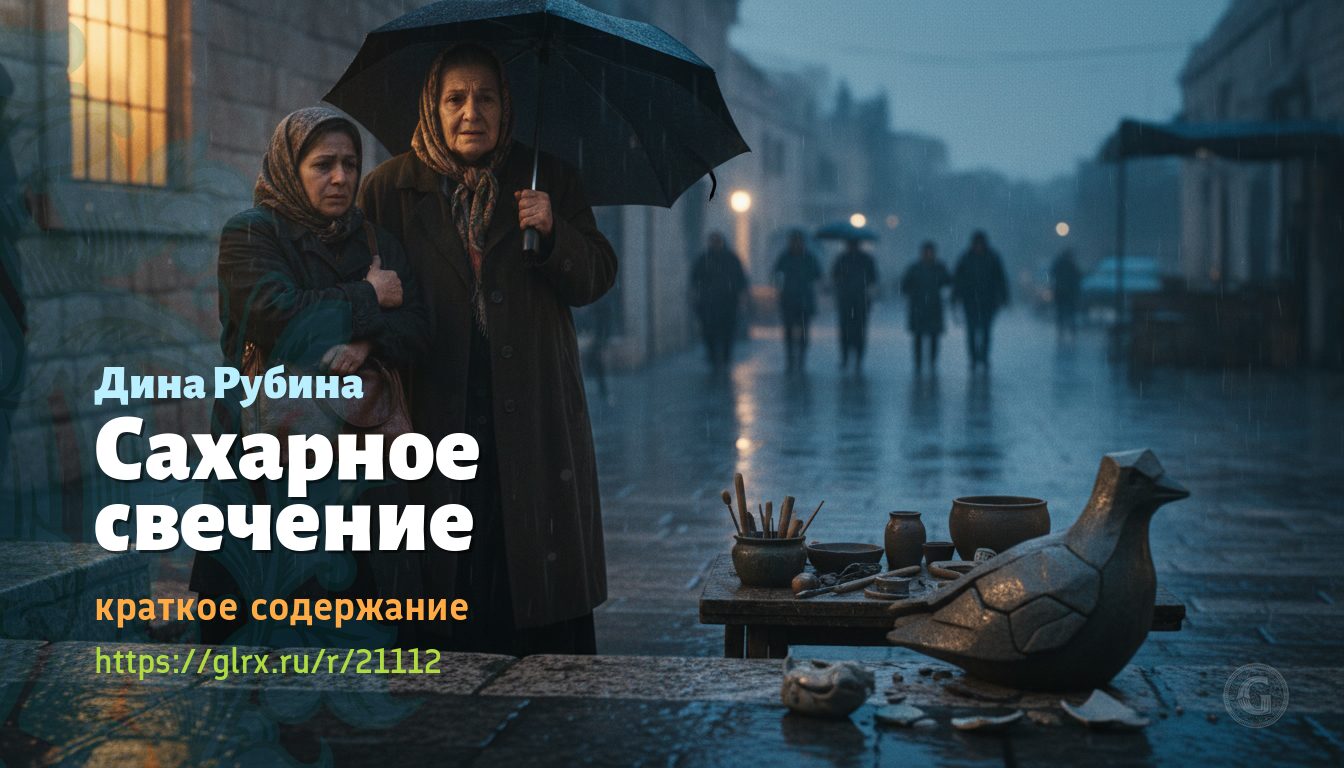
The heroine of the novella "Adam and Miriam" is an elderly woman the author meets in rainy Jerusalem. Miriam shares the story of her escape from the Grodno ghetto. During a mass execution, she miraculously escaped from her grave. A huge boar saved her from a patrol by hiding her in a barn with its body. The peasants then hid her in a pit under a stove for two years.
Later, the rescuers, tired of being afraid, dumped the emaciated escapee at the concentration camp gates. There, an American doctor nursed her back to health, forcing her to eat eggshells for calcium. Decades later, at a congress in San Francisco, Miriam accidentally met Adam, her first love from the ghetto. They married and lived together for twenty-one years.
The story "Grandfather and Laima" was written as a letter to the Yad Vashem museum. Grandfather Moisei, a bank manager, was sent to the camps in 1938. His first wife, Panya, saved orphans by securing a train car for them, but died of blood poisoning. In the Siberian uranium mines, Moisei met a Latvian woman, Laima.
After being released with the baby, she walked to Riga. Her grandfather was later released, found Laima, and, through a newspaper article, found his children from his first marriage in Saratov. They had twins, and Moses loved winning the lottery until his old age.
The short sketch "Ralph and Shura" depicts the strange friendship between the hunting dog Ralph and the domineering cat Shura. When the cat is killed by bullies, the huge dog suffers, howling for hours on the sunny spot of the carpet where his friend washed him.
Theatrical and life realities
In the story "Santa Claus’s Staff," a young actor from the Youth Theater, Misha, goes to a New Year’s matinee at a pioneer camp without a beard or a coat. The performance turns into a complete disaster until professional animators burst onto the stage. The camp’s sullen director takes Misha to live with his squabbling family and then leaves him to spend the night in the gym. The director’s red-haired daughter, Tanya, sneaks in.
Inspired by her rapt attention, Misha performs "Cyrano de Bergerac" for the teenager all night, flying across the mats and bars. In the morning, he retreats into the frosty forest, thrilled by the spontaneous creative triumph.
The essay "In Russia, You Must Live Long…" is dedicated to the memory of the writer Lidia Borisovna Libedinskaya. The author admires her clear mind, impeccable taste, and courage. Libedinskaya always taught her not to be afraid, jealous, or envious. The women visit Blok’s restored estate in Shakhmatovo, destroyed by peasants before the Revolution. Korney Chukovsky’s words, "In Russia, you must live long," become a symbol of the connection between generations and cultural memory.
Criminal cases and travel notes
The story "Fog" is set in the mountainous city of Safed. Investigator Arkady, a former conservatory musician, is investigating the death of an Arab woman named Jamila. The deceased’s brother, Salah, confesses to forcing his sister to drink agricultural poison, washing away the family’s shame: she had been secretly dating a young soldier. However, the woman took four days to die, the chemicals disintegrated, and the forensic examination in Abu Kabir is inconclusive. Salah recants his testimony.
During a reserve training camp, the commander sends Arkady and Salakh home to avoid a shootout. Arkady is forced to let the suspects go. Frustrated by the impunity of these savage customs, the investigator gets drunk in an underground bar, where he listens to a Kabbalist philosophical debate about light and darkness. The next morning, he resigns himself to the way the world works, watching the sunrise over an ancient cemetery.
In her travelogue "The Surface of a Lake in the Cloudy Gloom," the narrator travels through Italy with her artist husband, Boris. The couple explores Amalfi, Sorrento, and Pompeii, and strolls through Naples and Venice. Along the way, they interact with Russian émigrés: Victoria, a nanny disgruntled by her Italian son-in-law, and a Polish gondolier whose sister was murdered by the mafia in Sicily.
Art is seamlessly woven into everyday life: the author discusses the aesthetics of Venetian glass, Leonardo da Vinci’s sfumato technique, and observes an old Italian postman in Positano. The writer comes to the conclusion that the desire for travel temporarily cures human melancholy.
The book concludes with the story "The White Donkey in Awaiting the Savior." It’s a rich walk through Jerusalem. The author’s daughter takes her to the German Colony, to the Templer cemetery. The caretaker, Meir, shows the grave of Slava Kurilov and slyly tells of the buried Germans, whose descendants supported Nazism and were deported to Australia by the British. This is followed by a visit to the Russian convent on the Mount of Olives. Abbess "Mother Hammer" shows off Byzantine mosaics and introduces the guests to the iconographer nun Alexandra.
The finale is a descent into the Tomb of the Minor Prophets, where an Arab family has lived since the Six-Day War. A decorated white donkey stands guard at the side of the steep road: according to local belief, it is ready to serve the Messiah, who will descend from this mountain to resurrect the dead. The ancient city pulsates with the polyphony of muezzins, church bells, and prayers, compressed into a single spiritual impulse.
You cannot comment Why?