Vasily Shukshin’s "Strokes for a Portrait," a summary
 Automatic translate
This book is the story of Nikolai Nikolaevich Knyazev, a television repairman from the provincial town of N., written in 1973. The hero is obsessed with the grandiose idea of creating an ideal, efficient state, and to this end, he fanatically writes a voluminous treatise consisting of eight notebooks. He constantly tries to convey his ideas to the most casual of strangers, but invariably encounters rejection, rudeness, and aggression.
Meeting with athletes and a model society
The Kaigorodovs, a married couple, arrive in the district town. They earn their living by extreme motorcycle riding on vertical walls in a canvas booth in the market square. Forty-five-year-old Knyazev shows up uninvited at the performers’ hotel room. Wearing a tie, he acts unceremoniously, giggling, and insistently invites Grigory Kaigorodov to his home for tea. As an excuse, the TV repairman promises to show him his aunt’s rare icons. Kaigorodov is genuinely angry.
He’s a straightforward man and doesn’t understand his guest’s strange motives. Knyazev admits that his constant laughter is merely a defense mechanism against years of dealing with human stupidity. At first, he wants to scream, but then it becomes funny. The TV repairman invokes the story of Spinoza, whose works also drew ridicule from ordinary people.
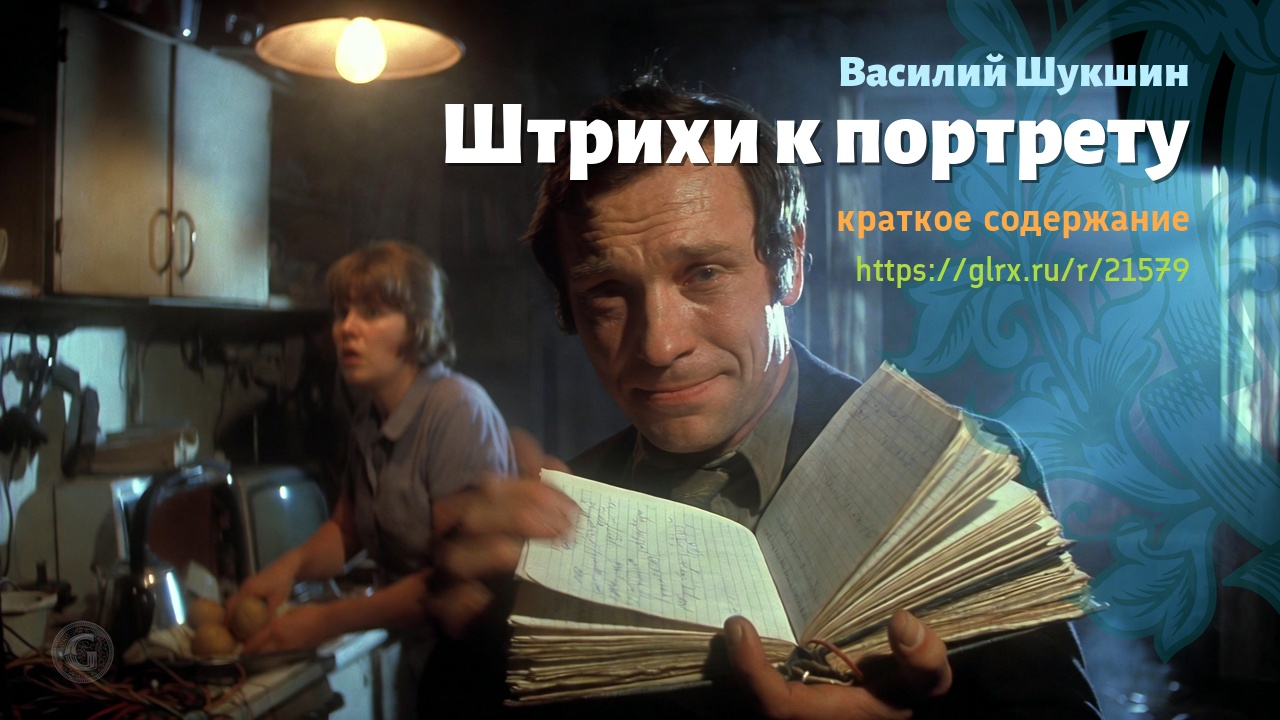
Grigory relents and goes to visit. At Knyazev’s house, Kaigorodov sees numerous disassembled televisions. The TV repairman’s wife is peeling potatoes and looking at the guest with extreme hostility. Knyazev quickly takes out his notebooks, filled with writing. He reads the first chapter about the plan for building a rational state. The state is depicted as a multi-story building. On each floor, human figures stand, supporting the ceiling.
On the top floor is the control panel. If the figures on the floor below shirk their duties, the ceiling inevitably caves in. An alarm sounds at the control panel. Kaigorodov interrupts this monologue, asking if Knyazev is seriously engaged in such nonsense. The TV repairman slams his notebooks shut and bids farewell in a dull voice. Kaigorodov takes pity on the enthusiastic eccentric and suggests they go for a drink, but is refused. After the athlete leaves, Knyazev stubbornly continues writing, rudely ordering his wife not to disturb him.
Conflict over a mound and a log
July arrives. Knyazev and his wife, Alevtina, travel to the village to visit her parents, the Nekhoroshevs. He dislikes these greedy people. Alevtina is ashamed of her husband’s compulsive writing and begs him to quit, but he categorically refuses. In the village, Knyazev goes to visit some friends. In the courtyard, he meets Silchenko, a make-up artist from Tomsk. The make-up artist is fixing fishing rods with the old man. A heated discussion ensues about the usefulness of free time.
Knyazev divides leisure into passive and active. Active leisure necessarily requires a purposeful event. Silchenko objects. He’s come to nature and wants to relax without worries. The TV master calls this philistine reasoning Stone Age nonsense. He gives the example of building a burial mound. People walk, each throwing a handful of earth. A huge mound grows. This is the law of accumulation. This is how all empires have been built, from ancient Urartu to modern superpowers. If a citizen refuses to throw away their handful, their life loses its meaning.
Silchenko is furious. He believes a person’s duty is to work honestly and defend their homeland. Knyazev dismisses these as mere offshoots, demanding that they find the main trunk of life’s meaning. He offers a new analogy: three people carrying a log, with one dropping the load to rest. Silchenko loses his temper. He shouts, curses, and threatens to chase his interlocutor away with a log. Knyazev flees, quietly complaining about the utter rudeness.
In the morning, the village council chairman, stiff and official-looking, comes to the Nekhoroshevs. He calls Knyazev aside and sternly asks him to stop his propaganda among the vacationers. Nikolai Nikolaevich tries to justify himself. He wanted to encourage the makeup artist to give a lecture on theater at the village club. The chairman refuses to listen to his philosophical musings and rushes off to a meeting. Knyazev smiles bitterly, dismissing the bureaucrats as "waifs" sitting on their heels.
Clash at the zoo cafe
Soon Knyazev arrives in the regional center. He has plenty of free time before the evening train. He goes to the zoo. Nikolai Nikolaevich watches children riding small ponies. He silently praises the government for the reasonable financial benefit of the tickets. A young man in a hat stands nearby. The man is touched by the children’s joy, but he reeks of moonshine. Then Knyazev goes to a café. The same drunk sits down at his table. It turns out the guy works as an electrician. He takes out a bottle, pours himself some vodka, and eats some pancakes with aspic.
The TV repairman launches into a stern, educational lecture. He threatens to report his drinking buddy to the police. They move to a street bench. Knyazev elaborates on the concept of a useful day off. The state grants citizens days off not for drinking, but for intellectual growth. Society is a fast-moving jetliner. Drunkards, however, slow down the movement, clinging to their faceted glasses. The electrician suddenly flies into a rage. He decides the intellectual is trying to curry favor at his expense. The young man begins methodically hitting the TV repairman in the stomach with short, jabbing blows. Knyazev screams, breaks free, and hits the hooligan on the hat with his heavy briefcase filled with television parts. The electrician delivers a crushing blow to the jaw. The police arrive.
At the station, the electrician brazenly lies, pretending to defend himself. Knyazev is fined fifteen rubles. The humiliated philosopher leaves for the station. He sits in the waiting room for a long time, clutching his sore jaw and fuming at the scum of the earth.
Riot at the post office and a visit to the police
The TV repairman completes his monumental task. He heads to the post office to send a parcel to the Center. His wife’s friend sits at the window. She sincerely pities Nikolai Nikolaevich. The worker advises him to hold off on sending it and think it over. Knyazev suffers a nervous breakdown. The accumulated tension of years explodes instantly. He begins insulting the woman, calling her a fool and a dead chicken. He’s sure she misspells the word "state." Hearing his outburst, Sergei Nikolaevich comes out. He firmly binds the boisterous thinker’s arms with a strong belt.
Knyazev is led down the street to the police station. His notebooks are carried behind him. The TV repairman shouts to passersby that they are escorting Yemelyan Pugachev himself, wearing a tie. He mocks the crowd, calling everyone idiots. At the police station, the rebel calms down. He complains of a headache. The doctor on duty examines the arrested man and declares him completely sane. The police chief knows Knyazev personally. He invites him into a closed office. The TV repairman admits he exploded from sheer stupidity. He is infuriated when his years of work are judged by people who haven’t read a single line. The chief asks him to apologize to the postal workers. An exhausted Knyazev agrees and goes home. He deliberately leaves his notes on the table.
The chief opens the first notebook and reads the author’s short autobiography. Knyazev was born the ninth child of a poor peasant family. He was raised by hard labor and the streets. His father forbade him from reading much. From childhood, the TV repairman noticed the selfishness of those around him and the general chaos. No one sincerely thought about the interests of their native country. He realized that only a proper structure could support this enormous machine. If all citizens stopped being lazy and stealing, they would have long ago paved the entire world and built a giant staircase to the moon. This global idea of expediency became the main refuge of a lonely provincial genius. The police chief thoughtfully puts the papers aside and decides to take them home for thoughtful reading.
You cannot comment Why?