Bernhard Schlink’s "The Granddaughter," a summary
 Automatic translate
After the sudden death of his wife, elderly Berlin bookseller Kaspar Wettner discovers her drafts and learns of his daughter, abandoned fifty years earlier in East Germany. The search for her leads the old man to a closed village of far-right settlers, where his fourteen-year-old granddaughter lives. This family drama exposes a deep rift between generations and two parts of German society, where long-held guilt collides with neo-Nazi retribution. Written in the silence of quarantine, this book is a profound reflection on the legacy of the Berlin Wall and the ghosts of recent history. It was written in 2020–2021 and published in 2021.
The Secret of Birgit
On Thursday evening, the shop closed late. Kaspar strolled home along the damp gravel paths of the park, trying to shake off the fatigue accumulated from a long workday. Everywhere was a mess. A stain of spilled red wine darkened the floor, a woman’s shoe lay forlornly near the tiled stove, and unwashed dishes piled high in the sink. His wife lay in cold water. An empty pack of Valium at the bottom of the trash can rendered calling an ambulance pointless, turning the inevitable police patrols into an ordeal.
The screen was silent for a long time. With the help of a repairman, the elderly merchant hacked into someone else’s laptop by scrambling the letters of their names, obtaining a sizable stack of printed files containing a text titled "The Harsh God." Birgit’s drafts mercilessly laid bare the past. In the summer of 1964, the student became pregnant by party official Leo Weise, decisively rejecting the cynical demand that she hand over the unborn child to her lover’s legal wife to raise. Having met Kaspar at a Trinity rally, the girl hid her pregnancy, secretly gave birth to a daughter on a Baltic farm, and, using a false passport, fled via Vienna to Tempelhof, abandoning the child forever to her father.
Half a century of marriage had turned into an illusion. The woman drowned her unlived lives in alcohol, flitted between jewelry making courses and cooking, locked herself in a cramped attic room, and tried unsuccessfully to put her agonizing search down on paper. A postcard lay on the table. It featured a reproduction of "The Chocolate Girl," leading to the border village of Ritzow, to see midwife Paula Luckenbach. The widower started the engine.
Traces in Oderbruch
Ritzow smelled of apples and damp earth. The imperious, red-haired owner of the local clinic, with a bright birthmark on her right cheek, welcomed the unexpected visitor from Berlin into her quiet, shady garden. The woman confided, "The child was taken by the father."
In the Saxon town of Nisky, the aging secretary, Leo Weise, greeted his guest with the stern gaze of a former party boss. The girl was named Svenja. Her father had twice sent his rebellious daughter to a closed-type correctional facility in Torgau for disobedience, from which she emerged as an embittered rebel and joined skinheads. Unbeknownst to her husband, the elderly woman slipped the Berliner a note. Police reports from Frankfurt (Oder) pointed the old man in the direction of the Mecklenburg village of Lohmen, where the agitator for the far-right settlers had gone. The car stopped at a water tower.
Family from Lomen
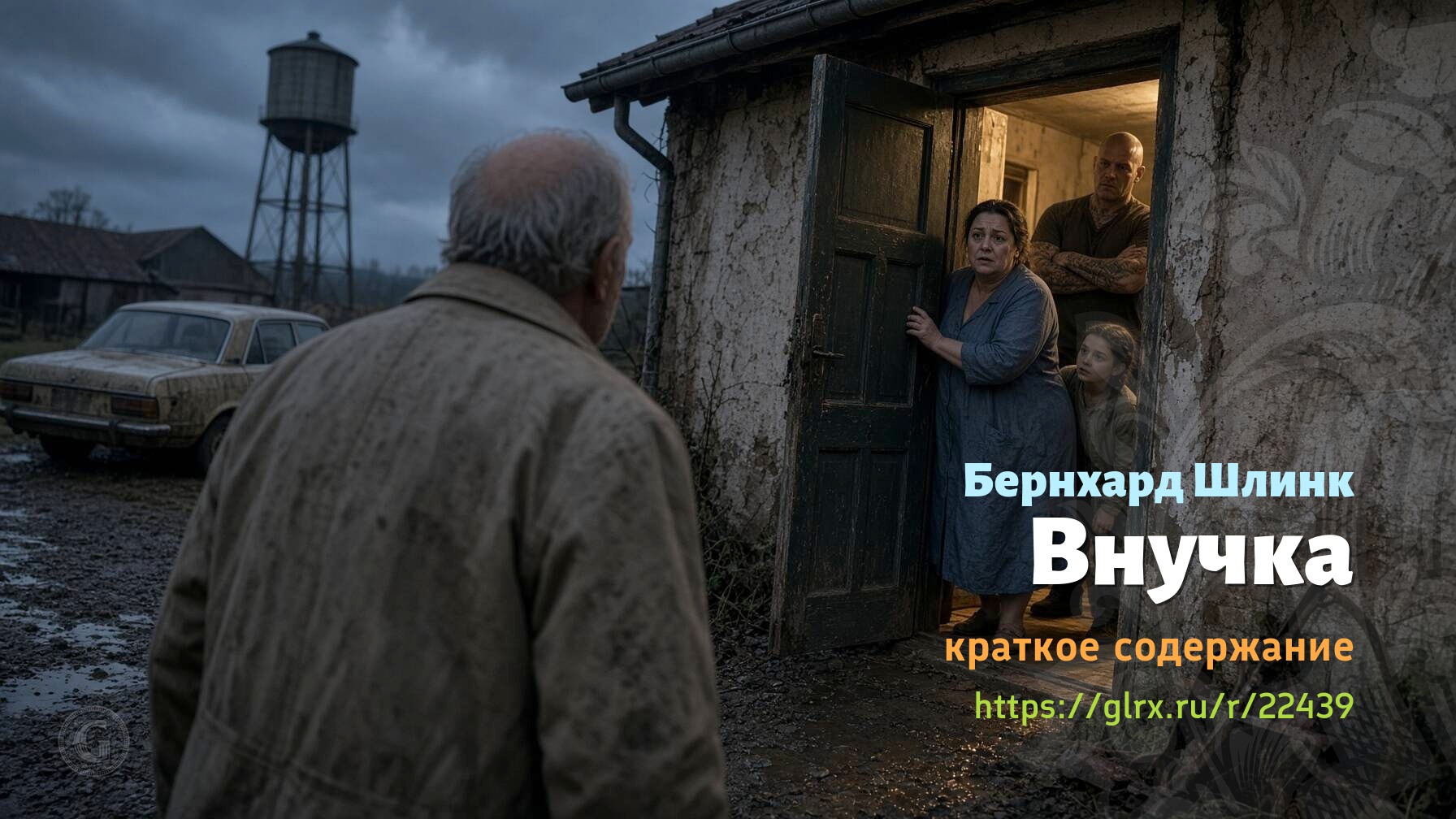
The courtyard was silent. The door was opened by a plump, dark-eyed woman in a simple blue dress, whose features shocked the visitor with their resemblance to the late Birgit. Following his mother onto the porch, the tall, tattooed head of the family, Björn Renger, strode heavily. His daughter loomed behind. Beneath a portrait of Rudolf Hess hanging on the kitchen wall, the rude host demanded a quarter of the man’s fortune from the doorway, forcing the visitor to resort to a risky ruse. The old man had concocted a fictitious will. According to this forged document, Svenja received twenty-five thousand euros annually until her daughter came of age, only on the condition that her granddaughter, Sigrun, would spend her holidays with her grandfather.
On Saturday, the village celebrated the harvest. Marching songs echoed across the clearing, and sturdy teenagers in traditional costumes competed in hand-to-hand combat and barefoot stubble runs. Sigrun set a tightrope record. That evening, Björn delivered a fiery speech from a raised platform about the purity of German blood, the pruning of interfering branches, and the imminent seizure of neighboring farmsteads, concluding the gathering with a chorus of sing-alongs around a giant bonfire. By the woodpile, Svenja bluntly told the Berliner her suspicions about the forged will, agreeing to let the teenager go to the capital solely for the payment. The old man returned to the capital.
Trials by music
In the fall, the guest arrived with a worn leather suitcase. Her Berlin room was devoid of makeup and posters, but breakfast was set on the kitchen table every morning by seven o’clock. Noticing a piano in the living room, the teenager timidly touched the keys. Kaspar immediately found an elderly Egyptian teacher who agreed to give the talented student daily piano lessons on the Spree embankment. The girl practiced for hours. In the evenings, her grandfather would play Bach piano concertos, Glass etudes, and Brahms symphonies for her, gently trying to awaken a sensitivity to beauty in her withdrawn soul. Books lined the shelves. Unbeknownst to her grandfather, the young settler pored over historical volumes about Auschwitz and the chemical properties of gas, comparing them with her father’s Nazi pamphlets.
Ravensbrück and Exile
In the spring, his granddaughter demanded a trip to Ravensbrück. Since childhood, the girl had idolized the camp guard, Irma Greuse, sincerely holding the merciless SS woman as a model of true devotion to duty. A deathly silence reigned. Kaspar wandered through the dark rubble between the outlines of demolished barracks, overwhelmed by the scale of the methodical state atrocity, while his companion stubbornly sought justification for the guards’ actions. On the way back, a thunderstorm struck. Huddled in the car seat under the pounding rain, the shocked granddaughter, for the first time, through tears, acknowledged the reality of the tragedy of those exterminated in the camps, asking in bewilderment why this shame must be remembered forever.
That summer, they went to Lake Lucerne. A Swiss boarding school lent the young pianist an antique piano, on which she practiced Mozart between mountain trails and swims in the clear water. The trip seemed like salvation. In the ancient alleys of Strasbourg and Heidelberg, the old man admired her delight at the European world she had just discovered.
A scandal erupted in the fall. Sigrun secretly borrowed an autobiographical novel from a shop about a girl’s breakup with a neo-Nazi sect. At home, his father discovered the seditious tome. Enraged, Björn accused the merchant of trying to destroy their home and, cursing furiously, threw the old man out. Kaspar left silently.
Shots fired in Kreuzberg
Two years passed in empty silence. One March night, a fugitive, trembling with fear and wearing a pulled-down black hood, knocked on the door of a Berlin apartment. It was Sigrun. Having dyed her hair a dark, pitch-black color, the girl had long since joined the capital’s radical groups, immersing herself in furious fights and secretly setting other people’s cars on fire at night. Their latest foray turned into a nightmare. Near their intended target, the arsonists were suddenly ambushed by leftist activists armed with chains, after which Axel, a distraught comrade, coldly drew his pistol and shot the student point-blank as he fell to the pavement.
The morning news was full of scandal. Fearing betrayal, a gunman, driven mad by fear of exposure, cold-bloodedly murdered his comrade Timo, whom he believed to be a police informant, in someone else’s apartment. Bloodshed demanded a choice. An elderly bookseller persistently urged his shocked granddaughter to immediately turn herself in to the prosecutor’s office to clear herself of the grave suspicion of complicity in the double murder. The girl wept bitterly. That evening, the fugitive played Mozart’s A-major sonata on the piano for a long time, filling the silence of the rooms with the fragile tenderness of the melody, and before bed, she asked the owner for her grandmother’s drafts. The teenager devoured Birgit’s confession about flight, guilt, and the fear of judgment.
In the morning, the attic was empty. A detailed farewell letter, unenveloped, lay white on the neatly made bed. Sigrun explained her escape by refusing to betray her former comrades for a plea bargain, taking the blame and thanking her grandfather for opening her to a world of great music. Taking her suitcase and bank card, the granddaughter vanished forever. An experienced lawyer managed to carefully lead the police to the crazed gunman’s weapons cache, sparing the fugitive from prosecution. A search cleared the suspicions.
Escape overseas
Bank statements soon arrived. The fugitive reached Sydney, Australia, withdrew some cash, dined at a cheap diner, and immediately bought herself a portable electric piano. She found work in Brisbane. The bank statement duly reflected modest expenses on a mattress, used kitchenware, vegetables, and music books until her grandfather’s account expired.
Svenya received the news with a dull bitterness. On a park bench, her mother silently handed the old man a childhood photograph of a girl laughing in the wind, refusing to read Birgit’s drafts. Kaspar buried himself in Australian books. Having thoroughly studied the Brisbane conservatories, he firmly resolved to fly to the student concert on time and get past the strict security to see his grown granddaughter.
You cannot comment Why?