A summary of Mikhail Lermontov’s "A Strange Man"
 Automatic translate
This romantic drama was written in 1831. With documentary accuracy, it captures real events from the lives of the Moscow nobility of the time, revealing the cruelty of class prejudices and family despotism. The text is rich in autobiographical motifs, reflecting the author’s personal experiences.
Conflict of generations
The action takes place in Moscow. Wealthy official Pavel Grigorievich Arbenin ponders the future of his twenty-year-old son, Vladimir. The young man refuses to join the military due to his wayward nature, and lacks the mathematics skills necessary for civilian service. His father plans to marry his son off to a wealthy bride. He blames his ex-wife, whom he sincerely hates, for his financial woes.
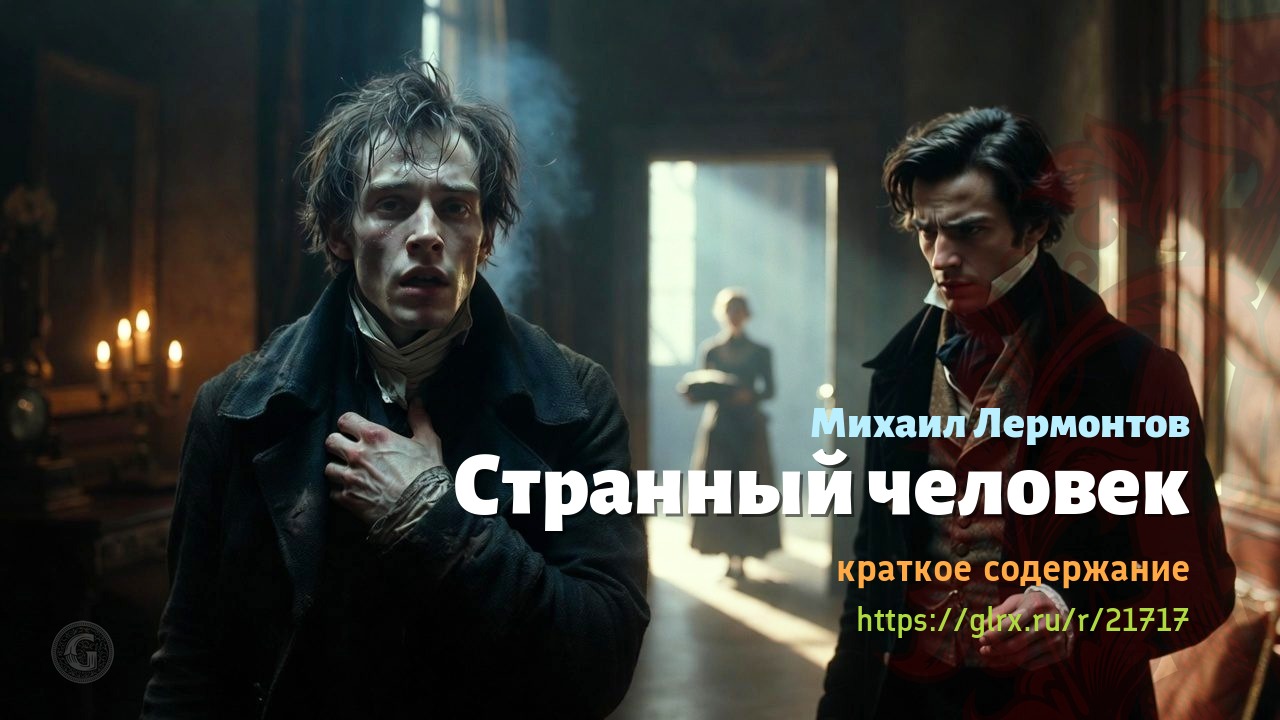
A pale Vladimir enters the room. The young man has just visited his ailing, impoverished mother. Society has long rejected this woman for an ancient offense. The son begs his father to forgive the dying woman. He describes her bitter tears of remorse. Pavel Grigorievich responds with a cold refusal. He categorically forbids his son from seeing his mother.
After his father’s departure, Dmitry Belinsky appears. This richly dressed young nobleman is distinguished by his pragmatic approach to life. He cynically ridicules his friend’s romantic aspirations. Vladimir complains of a spiritual emptiness. He tells Belinsky of his pure love for Natalya Fedorovna Zagorskina.
Secular gossip
Guests are gathering at the Zagorskins’ house. They are enthusiastically gossiping about young Arbenin. One calls him a dangerous rake and a cruel mocker. Natalya ardently defends the young man, insisting that Vladimir has a kind heart.
Natalia’s cousin, Princess Sophia, arrives. She is secretly in love with Vladimir. The girl notices her cousin’s attraction to the young poet. Sophia decides to ruin their relationship out of jealousy. She convinces Natalia of Arbenin’s fickleness.
Soon, Vladimir himself appears. He shuns the crowd, disdaining the empty card games for five kopecks and the vulgar self-expression of the guests. Princess Sophia sarcastically hints at his feelings for Natalya, but the young man retreats to the drawing room, trying to maintain his composure.
Mother’s last days
Marya Dmitrievna, Vladimir’s mother, is living out her final hours in a modest room. Her faithful servant, Annushka, cares for her. The ailing woman came to Moscow with the sole purpose of seeking her husband’s forgiveness before his death.
Dr. Khristofor Vasilyevich comes to see her. The doctor doesn’t recognize his patient and begins discussing the Arbenin family. He recounts Pavel Grigorievich’s scandalous divorce due to his wife’s affair with a Frenchman. The doctor also mentions her son’s bad reputation. Marya Dmitrievna listens silently to these cruel words. She pays the doctor and refuses his services. She dreams of dying in her village, home to thirty peasant families.
Student party
Young people gather in student Ryabinov’s room. The friends drink champagne, smoke pipes, and debate heatedly about Moscow theater. Student Zarutsky reads Vladimir’s poems dedicated to Natalya Zagorskina. The lines describe a night vision of a horseman galloping toward his beloved. The students praise the fire of Moscow in 1812. Zarutsky asserts that this act proves the true greatness of the nation.
Meanwhile, Belinsky is considering buying an estate. He’s short one thousand rubles and decides to marry the wealthy Natalya Zagorskina. Suddenly, Arbenin bursts in. The young man is devastated by Princess Sophia’s behavior. The day before, the girl had offered to deliver his love letter to Natalya. Instead, she returned the message mockingly, declaring that her cousin would laugh at it. Vladimir tore up the paper.
The conversation is interrupted by the arrival of an old peasant. The serf falls at Belinsky’s feet, begging him to buy their village. The old man recounts horrific torture: the steward orders people’s arms twisted, the landowner stabs girls with scissors, and plucks out the peasants’ beards. Vladimir is furious at what he hears. He immediately gives Belinsky his promissory note for a thousand rubles to save the peasants.
At this moment, a servant brings Vladimir disturbing news from his mother. The young man quickly abandons his comrade.
Father’s curse
Pavel Grigorievich rudely demands the attorney repay the debt immediately. Vladimir rushes into the office. He insists that his father go immediately to the dying Marya Dmitrievna. The young man falls to his knees before his father.
At first, the father hesitates, fearing the public’s condemnation. Then he begins to suspect deception. He declares the illness a clever ruse. Pavel Grigorievich flatly refuses to go. Vladimir accuses his father of heartlessness. The elder Arbenin curses his son and throws him out of the house.
Alone in his room, Vladimir falls into a deep apathy. His faithful servant, Ivan, tries to console his master. The young man offers the old man thirty chervonets, asking him to leave him alone. The honest servant refuses the gold. Vladimir indifferently throws his wallet out the broken window. He gazes at the night sky and the stars, feeling completely alienated from the world.
Death and the Oath
Marya Dmitrievna lies on her deathbed. Vladimir enters. The son is forced to tell the truth — his father refused to come. The dying woman gathers her last strength. She confesses that in her youth she fell in love with another man. She revealed the secret to her husband herself. He drove her out, forcing her to abandon their young son.
The woman dies quietly. Vladimir doesn’t cry. His heart turns to stone. He swears terrible revenge on his father for his mother’s death and runs away. Old Annushka takes the deceased woman’s money and calls people to perform rituals.
Betrayal of a friend
The Zagorskins’ house is filled with old women discussing the expensive funeral of a certain count. Belinsky arrives. Anna Nikolaevna persuades Natalya to accept his proposal. Her mother cites the benefits: the groom expects an inheritance of fifteen hundred souls. Confused, Natalya agrees. Sophia is triumphant.
That evening, Natalya chats cheerfully with Belinsky. Sofia begins to feel pangs of conscience. The girl asks Natalya to show her fiancé Vladimir’s poems. Natalya removes the cross from her neck with the paper tied to it. Belinsky indifferently reads the heartfelt lines. Natalya immediately tears up the sheet of paper.
Vladimir appears. Hearing about the upcoming wedding, he asks Natalia to tell the truth. She confirms the engagement.
Arbenin is crushed. He begs for at least one kind word. He says, "If a dog, parched from hunger, crawled to your feet with a pitiful yelp… wouldn’t you give it a piece of bread?" Natalya coldly asks him to forget her forever.
Belinsky hypocritically tries to calm her former friend. Vladimir hurls accusations of meanness in his face and storms off. Princess Sophia collapses into a chair, unconscious.
Epilogue of the tragedy
On May 12th, high society gathers for the Count’s ball. The guests indifferently discuss Natalya Zagorskina’s wedding the following day. The name of Vladimir Arbenin comes up in conversation. It turns out the young man has gone mad from unbearable suffering. He cries, laughs, doesn’t recognize his father, and accuses him of murder.
The carefree conversation is interrupted by a servant. He brings the Count a black-bordered invitation. The text states that Vladimir died on May 11th. The funeral service and removal of the body are scheduled for May 13th — the same day as Natalia’s wedding.
The crowd briefly mourns the young man’s death. Only one guest notes that Vladimir had a brilliant mind, but it was destroyed by the passions and hypocrisy of society. The guest compares madmen to people who have looked too closely at the picture of life, causing the colors to blur before their eyes. Those around him remain indifferent to the tragedy that has unfolded.
You cannot comment Why?