"War Thunders Somewhere" by Viktor Astafyev, summary
 Automatic translate
 This book is a collection of short stories and novellas, created between 1958 and 1988. The collection is distinguished by its harsh autobiographical sincerity, conveying the bitterness of a Siberian teenager’s coming of age against the backdrop of the Great Patriotic War.
This book is part of the autobiographical series "The Last Bow." The series includes the stories "A Photograph in Which I’m Not In It," "A Horse with a Pink Mane," "Trees Grow for Everyone," and others. The collection does not have a precise number, as the author developed the series over decades. The story "Starfall" was adapted for the screen in 1981 by director Igor Talankin. The story of the same name also inspired a 1986 film. The author was awarded the USSR State Prize for the entire series.
Pass
A boy named Ilka lives in the remote taiga village of Shipichikha. His father, a hunter, constantly disappears into the forest. Ilka’s relationship with his stepmother, Nastya, reaches the point of open hostility. The stepmother insults the boy’s late mother. Defending the memory of the person dearest to him, Ilka hits Nastya with a hammer and runs away from home. He kisses his little brother, Mitka, goodbye.
Ilka hides in a hut on Verbny Island. Loggers are working on the Mara River. Foreman Trifon Letyaga finds the orphan and leaves him on a kazenka — a large raft with a barracks. Ilka catches grayling, cooks fish soup, and tidies up. Former student Derikrup, old Uncle Roman, and the other workers take pity on the boy. The rafters officially enroll Ilka in the brigade.
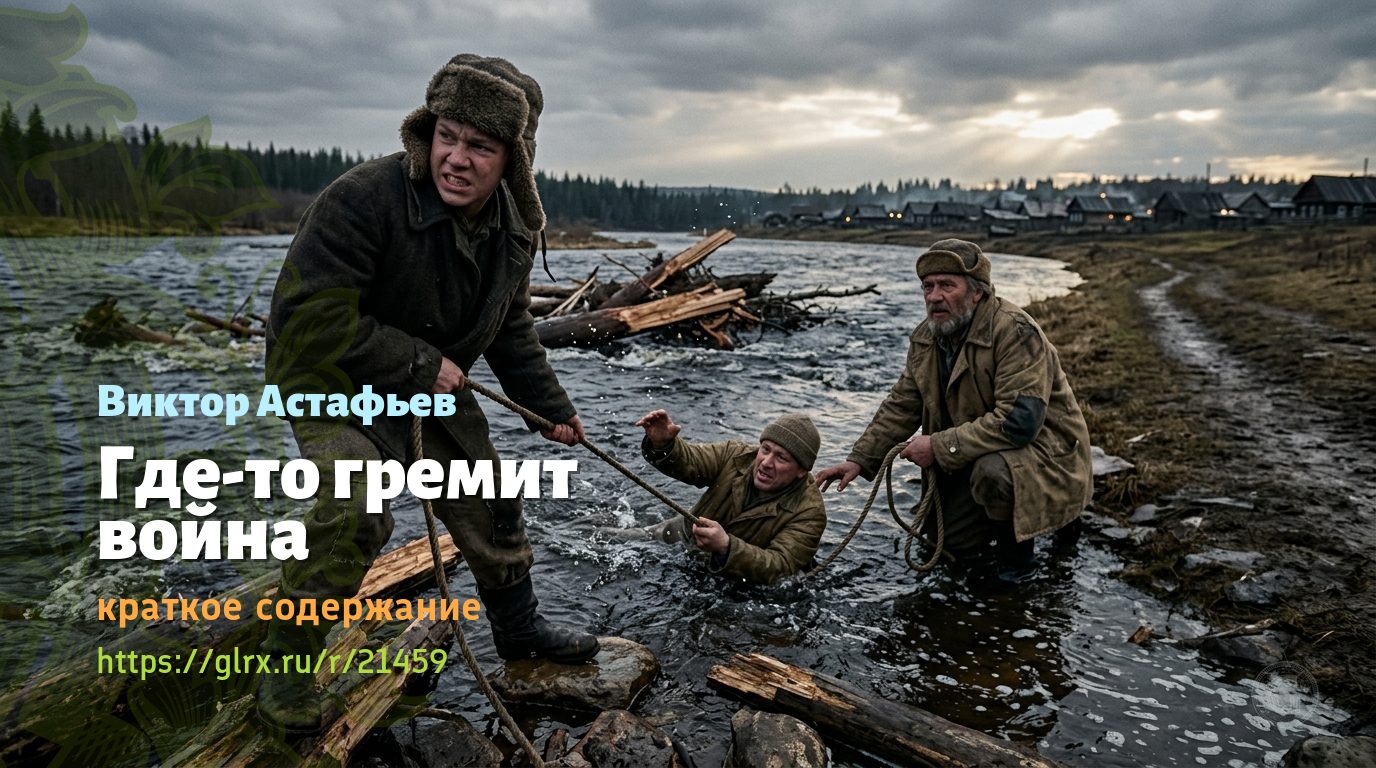
A dead log jam forms near the Oznobikhinsky Pass. The crew, risking their lives, begins to clear it. A cowardly worker named Isusik slips on a wet log. Trifon Letyaga rushes to his aid. Both fall into the raging torrent, pinned between logs and sharp rocks. Ilka fearlessly steers the boat into the roaring rapids and saves the drowning pair.
The rafters break through the jam with an artificial flood. In the evening, they drink alcohol and sing long songs. Ilka receives his first salary — almost 85 rubles. After saying goodbye to his comrades, the boy sets off on foot to visit his grandparents in the village of Uvaly.
Starodub
The Old Believer village of Vyruby stands on the banks of the turbulent Onya River. Local Kerzhaks fled into the taiga to escape the outside world. After a raft sank, a tortured, mute boy washes ashore. Fanatical Old Believers try to push him back into the river, condemning him to certain death. Hunter Faefan, who served a prison sentence for killing an officer, saves the orphan. The boy is named Kultysh because of his crippled arm.
Kultysh grows up in the forest, absorbing the laws of nature. Fayefan’s biological son, Amos, chooses to remain in the village under the influence of his domineering mother, Mokrida. Fayefan dies of a severe epilepsy. Kultysh buries his adoptive father in a forest clearing overgrown with flowering old oaks.
Kultysh is in love with a local girl, Klavdiya. On the day of her wedding to Amos, he runs across the river on the breaking spring ice floes and gives her an old oak tree from the forest.
Many years later, a drought hits the village. A visiting Kyrgyz man and his young grandson die of starvation. Kultysh kills an elk and distributes 150 kilograms of meat to his starving neighbors. Amos decides to secretly enrich himself. He goes to Kultysh’s salt licks, where he kills a young maral and fatally wounds a female maral.
Greed drives Amos deep into the taiga, following a bloody trail. He eats undercooked meat and contracts dysentery. Lost in the Blue Rocks Gorge near a vanishing river, Amos dies of complete exhaustion. Kultysh finds his half-brother’s body and drags it back to the village. The embittered villagers blame the hunter for Amos’s death. Klavdia intercedes for him. Kultysh throws a handful of earth into the grave and departs for the taiga forever. Klavdia plants a cedar tree on his grave.
Starfall
Nineteen-year-old soldier Mikhail suffers a severe bone and nerve injury to his arm. He is being treated in a hospital in the Kuban city of Krasnodar. Coming out of the chloroform, Mikhail sees nurse Lida. A timid first love blossoms between the young people. Lida keeps vigil by Mikhail’s bedside, reading books. Mikhail is jealous of the nurse’s affections towards the young lieutenant with the mustache.
The hospital routine is filled with pain. Mikhail is joined by the cheerful Rurik and the stern intelligence officer Gusakov. Medical students stage a concert for the wounded. A song about home triggers a terrible attack in the shell-shocked soldier Ivan. In the ensuing panic, the wounded rush for the exit. Mikhail shields Lida from harm and suffers a head injury.
Lida’s mother invites Mikhail home and treats him to corn mamalyga. She asks him not to ruin her daughter’s life. She speaks directly about his disability and the difficult post-war future. Mikhail realizes his mother is harshly right.
The medical commission declares Mikhail fit for non-combatant service. He goes to a transit camp located in an old grain warehouse. Lida finds him there and brings him a letter. Mikhail hides his true feelings behind rudeness and asks her to leave. Wrapped in his overcoat, he weeps silently on the hard bunk. Mikhail leaves for another unit, forever keeping the memory of the pure Kuban girl and the twinkling stars in his heart.
Somewhere a war is raging
Mikhail is studying to be a train conductor at the Krasnoyarsk Railway College. One winter, he receives a disturbing letter from his aunt, Avgusta. He hides 500 grams of bread in his pockets and walks about 16 kilometers across the frozen Yenisei River. Wearing cold work boots, he quickly freezes. That night, a severe snowstorm begins.
Mikhail loses his way. He wanders among jagged ice hummocks and falls into a deep hole between stacks of logs. After eating his packed lunch, he warms up, burns the pages of his notes, and climbs out. He stumbles upon a saddler’s hut at the local state farm. The old farmer saves the boy from certain death, scrubbing his frostbitten feet and swollen cheeks with snow.
In the morning, Mikhail reaches his native village of Ovsyanka. Avgusta delivers the sad news. She has received word of her husband Timofey’s death. Despair drives her to suicidal thoughts. The last hay in the hayfield is eaten by wild goats. Mikhail and his timid cousin Kesha walk into the taiga at night. In a snowy meadow, they kill an old male goat and a young female goat.
The brothers bring meat home. The family hosts a modest New Year’s dinner. Mikhail returns to school. After some time, the bitter truth comes to light. Timofey forged a death notice for the sake of his new wife, but soon died in a logging crane accident. Avgusta survives and saves her children.
The last bow
The grown-up hero makes his way back to his native village. The yard is littered with old boards, the vegetable garden overgrown with thick weeds. Blind grandmother Katerina Petrovna sits by the kitchen window, winding yarn. She has aged greatly. The skin on her arms is covered with terrible age-related bruises. The hero hugs her grandmother tightly.
Katerina Petrovna is crying. She is overjoyed at her grandson’s survival in the bloody carnage of war. The grandmother asks her grandson to come to her funeral and close her eyes.
Soon Katerina Petrovna dies. The head of the human resources department at the Ural railcar depot refuses to let the hero attend the funeral. The grown grandson cannot find the strength to quit his job and leave, despite strict orders. A deep, abiding guilt toward the person closest to him remains with him forever. The hero writes these lines of repentance as he pays his last respects to his grandmother.
Ode to the Russian Vegetable Garden
The narrator draws on his memory. He wishes to conjure up the image of a small village boy. Images of a difficult but joyful peasant life emerge. The boy experiences the vast world through work in his native garden. His grandfather sits his grandson on his lap and feeds him sweet scraps of raw rutabaga. His grandmother makes him weed the long beds and pull out thorny weeds. A strange pumpkin grows in a secret corner, and swift swallows fly in the sky. One day, the boy hits a swallow with a stone. He buries the bird under a bird cherry tree and vows never to kill another living creature.
The potato is presented as the true savior of the Russian people. The narrator recalls the damp autumn of the war. Potatoes saved the lives of exhausted soldiers at the front and the starving residents of besieged Leningrad. A horrific vision of war emerges: a murdered mother with her baby bayoneted to her chest right in a burned-out vegetable garden.
Memory returns the hero to a peaceful Siberian childhood. A sick boy lies feverish, and a little girl in a blue dress holds his hand and cries. These images merge into a powerful hymn to his native land. The vegetable garden becomes an eternal symbol of rebirth, giving people the strength to live, love, and resist death.
- A summary of Viktor Astafyev’s "Pass"
- A summary of "Vasyutkino Lake" by Viktor Astafyev
- "A Photograph in Which I Am Not" by Viktor Astafyev, summary
- The premiere in the Moscow Provincial Theater - the play "Merry Soldier" based on the prose of Victor Astafiev
- Poster as a direction in art
- "The Kukotsky Case" by Lyudmila Ulitskaya, summary
You cannot comment Why?