"Eisen:
A Novel-Buffoonery" by Guzel Yakhina, summary
 Automatic translate
This book is a fictional biography of the renowned Soviet director Sergei Eisenstein. The author completed the text in 2025. The narrative deliberately departs from the strict canons of classical biography. The work is structured according to the principles of "montage of attractions," with each section bearing the title of a famous film from world cinema. Dziga Vertov’s poems serve as epigraphs to the chapters. Vertov constantly appears in the novel as Eisenstein’s ideological opponent.
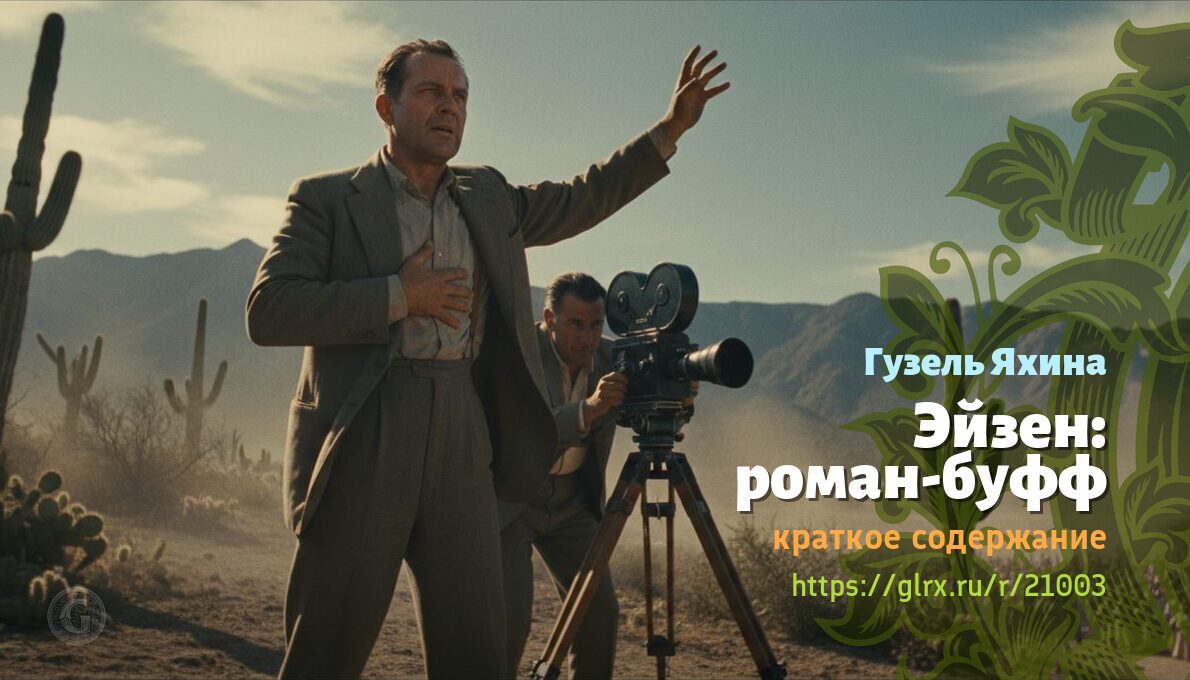
The events begin with a tragic episode. The protagonist is dancing a waltz with a famous Soviet actress at a gala reception. Suddenly, the director’s heart gives out. Pain pierces his chest, and the world around him begins to blur. He falls onto the slippery parquet floor amid the screams of those present. The people around him, Stalin laureates, merge into a single visual image. Doctors immediately rush to his aid.
Becoming a director
Sergei Eisenstein recalls his past. He spent his youth searching for his own artistic language. Theatrical experiments gave way to cinema. The director quickly grasped the power of visual impact on the masses. He worked with huge crowds of extras and constructed vast scenes. Every movement in the frame was subject to a strict internal logic. The work process demanded incredible dedication from the entire crew.
Cinematographer Eduard Tisse became Eisenstein’s faithful companion. Together, they devised new filming techniques. The camera moved along incredible trajectories, capturing facial expressions in close-up. Grigory Alexandrov helped organize the shoot. This trio created films that changed the language of cinema. Eisenstein was constantly in a state of nervous tension. Fame brought no satisfaction, but a constant fear of making a mistake.
Dziga Vertov, a proponent of documentary film, regularly criticized Eisenstein for his staged shots. Vertov demanded that he capture "life unprepared." Eisenstein, however, insisted on the need for direction to achieve maximum emotional impact. Their arguments often degenerated into open conflict.
A Journey Overseas
A creative crisis forced Eisenstein to travel abroad. The trip to Europe brought new acquaintances and impressions. The director met with prominent cultural figures and discussed montage theory. He sought funding for new projects. The Soviet leadership expected him to make a triumphant return.
The film crew’s journey took them to the United States. America greeted the Soviet filmmakers with suspicion. Eisenstein struggled to find common ground with Hollywood producers. Script development took a long time, but not a single project ever made it into production. The dream factory rejected the director’s ideas.
The next stop was Mexico. This country amazed Eisenstein with its colors and customs. Here, he began shooting a large-scale film about the history of the Mexican people. Filming took place under difficult conditions. Funding was frequently interrupted. The local flavor intoxicated the crew, but relations with investors became increasingly strained.
The footage was incredibly beautiful. Édouard Tisse masterfully composed the shots under the scorching sun. However, the work was never completed. The film was confiscated by the producers. Eisenstein returned to Moscow without the finished film, feeling devastated.
Life under control
The Soviet Union changed during the director’s absence. The ideological dictates became much harsher. Eisenstein faced harsh criticism of his new ideas. He had to spend a long time proving his loyalty to the authorities. The state demanded patriotic films with a clear historical message.
Filming a movie about Alexander Nevsky became a kind of compromise. The director worked under the strict supervision of party officials. Sergei Prokofiev wrote the music for the film. Their collaboration was built on complete mutual understanding. Image and sound merged into a single whole. The film’s success briefly restored Eisenstein to the leader’s favor.
During the war, the film crew evacuated to Kazakhstan. Life in Alma-Ata was difficult, but the creative process never stopped. Eisenstein began work on a monumental film epic about Tsar Ivan the Terrible. This project drained the director of his last energy.
Work on Ivan the Terrible
The film’s script was created in agonizing thought. The director struggled to understand the nature of absolute power. Actor Nikolai Cherkasov was ideal for the lead role. His graceful demeanor and expressive face accurately conveyed the monarch’s inner torment. Filming took place at night, as there was a shortage of electricity during the day.
The first part of the film was well received. Stalin saw it as a justification for harsh methods of governing the state. Eisenstein received an award. However, the second part angered the country’s leadership. The portrayal of the tsar seemed too dark and doubtful. The oprichniki resembled modern-day secret service agents.
Criticism rained down on the director from all sides. The film was banned. Eisenstein was forced to publicly repent and promise to remake the film. The director’s health rapidly deteriorated. Nervous breakdowns followed one after another. Doctors urged complete rest, but Eisenstein continued to work on his theoretical works.
Theory and Legacy
In the last years of his life, the director wrote prolifically. He analyzed his own experiences and formulated the laws of cinematic language. His articles were distinguished by their profound insight into the psychology of art perception. Eisenstein taught at VGIK. Students adored his lectures. The master generously shared his knowledge, drawing diagrams with chalk on a blackboard.
His heart was increasingly acting up. Attacks of angina were becoming commonplace. That dance at the reception became the final chord. Eisenstein lost consciousness. A long period of recovery followed, but his former energy was gone forever. The director found himself bedridden.
In his hospital ward, Eisenstein continued to draw. His graphic works were striking in their candor. He reconsidered his relationship with his parents and recalled childhood traumas. His attempts to understand himself led to bitter conclusions. Loneliness became the great filmmaker’s constant companion. Guzel Yakhina’s novel paints a complex portrait of a genius who paid too high a price for his art.
- Sergei Eisenstein. Outlines of a Concept
- "Graduated" film experts from Harvard are obliged to know Eisenstein, Tarkovsky, Sokurov and several other names. The rest is optional
- "Zuleikha Opens Her Eyes" by Guzel Yakhina, summary
- "Butterfly" by Guzel Yakhina, summary
- "Echelon to Samarkand" by Guzel Yakhina, summary
- "My Children" by Guzel Yakhina, summary
You cannot comment Why?