"Emigration, a Shadow by the Fire" by Dina Rubina, summary  Automatic translate
This book is an autobiographical chronicle of a change of homeland, published in 2022. The text is compiled from short stories and novellas describing the move to Israel. Without false pathos, the author captures the bitterness of parting with her former life, the absurdity of adaptation, and the search for a new identity. The author focuses on everyday, tragicomic details, where the pain of losing one’s roots is revealed behind the comical absurdities. Emigration is depicted as a crash that breaks ribs, but gives a person a second chance.
What is it called here?
In the title essay, the author reflects on the shock of immigration. An acquaintance warns the heroine: in a new country, familiar landmarks will disappear, and life will become like a towel hanging in the void with its hook missing. Upon arrival, the family encounters a lack of understanding of the local mentality, language, and jokes. The author describes the painful process of finding one’s footing. The loss of one’s homeland doubles the melancholy, but simultaneously doubles the joy, multiplies freedom, and grants a person an additional dimension of existence.
At your gates
The story describes the heroine’s first months in Jerusalem on the eve of the Gulf War. She gets a job as an editor at the strange firm "Tim’ak." The firm is run by the domineering Yasha Khristiansky. He publishes a religious newspaper and constantly bullies authors, clients, and employees. Repatriates Rita and Katka work alongside him. The women edit absurd texts. The heroine edits a crazy, hackneyed novel by a certain Mara Druk.
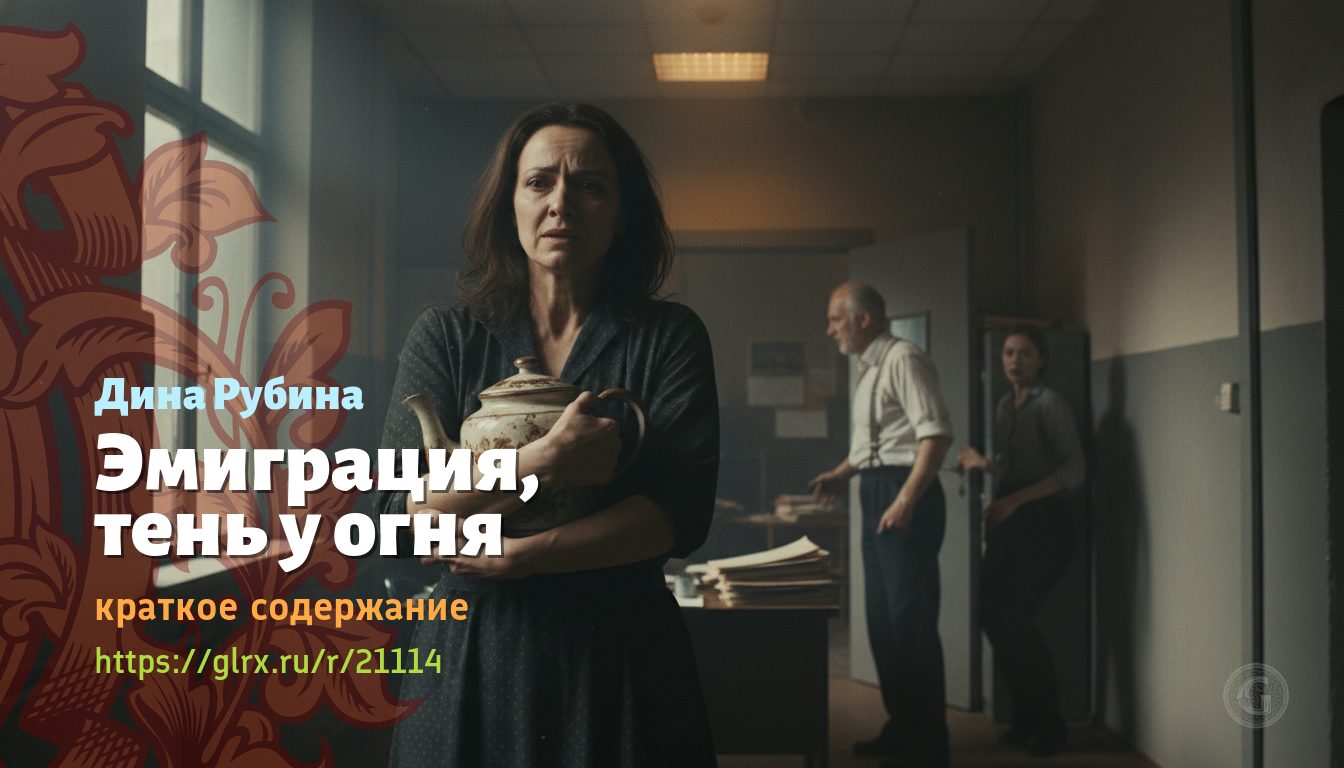
Iraqi forces begin shelling Israel with rockets. A siren wails at night, and the heroine’s family dons gas masks and hides in a sealed room. During the day, the employees work in the office. Soon, the company goes bankrupt. Management sells off its assets, Yasha panics, and the sponsors squabble over money. During the final air raid, the heroine takes the government-issued teapot and leaves. The story ends on the holiday of Purim. Crowds of people celebrate Iraq’s defeat on the streets of Jerusalem, and the heroine resigns herself to her unsettled life.
The camera is moving in!
The story transports the reader to Tashkent’s past. The heroine writes a screenplay based on her own novella about a police investigator. Director Angela, who works at Uzbekfilm, takes on the adaptation. Angela and editor Fanya Moiseyevna pressure the author to change the protagonist’s nationality. Fanya insists that a Jew cannot be a positive police officer in Soviet cinema.
The script is mutilated by numerous authorities. The lead role is given to Angela’s son, the arrogant young man Maratik. The filming process devolves into farce. The cameraman and the production designer drink and quarrel. The music is composed by the eccentric Hungarian Count Laszlo Tomasz. The heroine watches with disgust as her vision is destroyed. Years later, now living in the Judean Desert, she recalls this episode as a punishment and a foolish waste of time.
Apples from the Schlitzbuter orchard
The heroine is in Moscow. She brings a story from a Tashkent writer she knows to the editorial office of a Jewish magazine. In the shabby premises, she is met by a colorful woman and the elderly, tired editor, Grisha. Upon learning the heroine’s maiden name, Grisha realizes she is the granddaughter of his neighbor from the Ukrainian town of Zolotonosha.
Grisha recalls his youth. It turns out he was passionately in love with the heroine’s aunt, the beautiful Frida. The editor asks him to tell her story. The heroine tells him: Frida was hanged by the Nazis. Grisha falls into despair. He bursts into a bitter monologue about his broken life. The old man refuses to listen to calls for national rebirth. He gives the heroine the apples a colleague brought and sees her off onto the plane with a long, sad look.
Our Chinese business
The heroine and her companion, Vitya, are trying to secure a contract to publish a newsletter. The client is a society of Russian-speaking Jews who lived in China before the war. The society’s chairman, Maurice Lurye, and his associate, Yakov Moiseevich Shenzer, zealously guard the traditions of their organization. Vitya behaves insolently, is rude to the elderly, and demands huge sums of money and the publication’s conversion to desktop publishing.
Later, Yakov Moiseevich confesses to the heroine: they can’t update the newsletter. The newspaper is hand-pasted by a sick, disabled man named Alik. He is the illegitimate son of a woman once loved by both Yakov and Maurice. Working at the editorial office saves Alik from depression. The heroine refuses a lucrative contract, understanding the fragility of someone else’s family secret.
So, let’s continue!
A former electrical engineer, Raya works part-time as a model in an Israeli art studio. The artists are often without power due to blown fuses. Naked, Raya runs to the switchboard, fixes the power, and classes resume. Suddenly, Raya is accused of stealing diamonds from an old woman whose house she was cleaning.
Because of the investigation, Raya is banned from leaving the country. However, the artists raise money and send her to Amsterdam to take paintings to an exhibition. The studio manager vouches for the model to the police. In Holland, Raya finds peace of mind. Returning to Israel, she encounters a rude taxi driver, but still feels a strange attachment to this hectic country.
Big-eyed emperor, a family of sea breams
Michael, a Russian artist, works as a caregiver for elderly Israelis. He cares for Holocaust survivors. Later, he receives a commission to restore an Egyptian bas-relief from a powerful millionairess. Michael meets her son, Dani. Dani suffers from obesity and severe depression. The family plans to have him committed to a psychiatric hospital to wrest control of his condition.
Michael begins giving Dani painting lessons. They become close. Michael takes him to the seaside, telling him stories from Russian classics. At a family celebration, Dani’s haughty sister insults Michael. He loses it, starts a scene, and leaves with the fat man. At a diner, they encounter Michael’s escaped patient — an old man with a camp number on his arm. Local patrons make cruel jokes about the prisoner. In a rage, Michael smashes a display case, and a fight ensues. The story unfolds from a hospital ward, where the battered hero awaits trial but continues to believe in the immortality of the soul.
Signboard
The text tells the story of Israeli terrorism. The narrator’s mother is walking to a Jerusalem market. A woman stops to buy tomatoes. This momentary hesitation saves her life: a powerful explosion thunders ahead. Her neighbor, Valera, leaves his bags with a carp seller he knows. A second later, the seller and the stall are blown up.
Tanya, her friend, sends her son to get shawarma on Ben Yehuda Street. A terrorist attack occurs there, too. The boy survives thanks to the cafe owner, who promptly hides customers in the restroom. In gratitude, Tanya donates a huge sum to a beggar on the street. The author discusses how simple objects — tomatoes, fish, coins — become symbols of survival. The constant threat of death becomes an everyday sign of local life.
A gun for Eva
The heroine’s daughter, Eva, is conscripted into the Israel Defense Forces. Her parents frantically buy warm clothes, preparing their daughter for the nights spent in tents. The army oath-taking ceremony is more like a family picnic. A red dog runs around the parade ground, and relatives shout and take photos.
Female soldiers receive personal weapons. On her first leave, Eva brings a rifle home. Weapons are forbidden to be left unattended. The family puzzles over where to hide the heavy machine gun while the daughter goes out to a bar with friends. Ultimately, they hide two army rifles under the pillows in the sofa. Early in the morning, the tired soldiers sleep hugging their rifles, reminding the author of defenseless children.
"Mine jacket in weisse check…"
In the final essay, the writer formulates her views on national identity. She recalls her childhood in multinational Tashkent, where ethnic boundaries blurred. She cites examples from her travels abroad where shared cultural codes proved more important than blood kinship.
The author compares the chosenness of her people to a schoolboy being called to the board for a dangerous chemistry experiment. The flask explodes, and the student stands with a scorched ear, amidst the class’s laughter, but the next day he will be called again. The writer admits that she never found a definitive answer to the question of her identity. The text ends with a confession of bitter, weary, but unbreakable love for her compatriots. This connection defies logic; it is ingrained in human nature itself.
You cannot comment Why?